

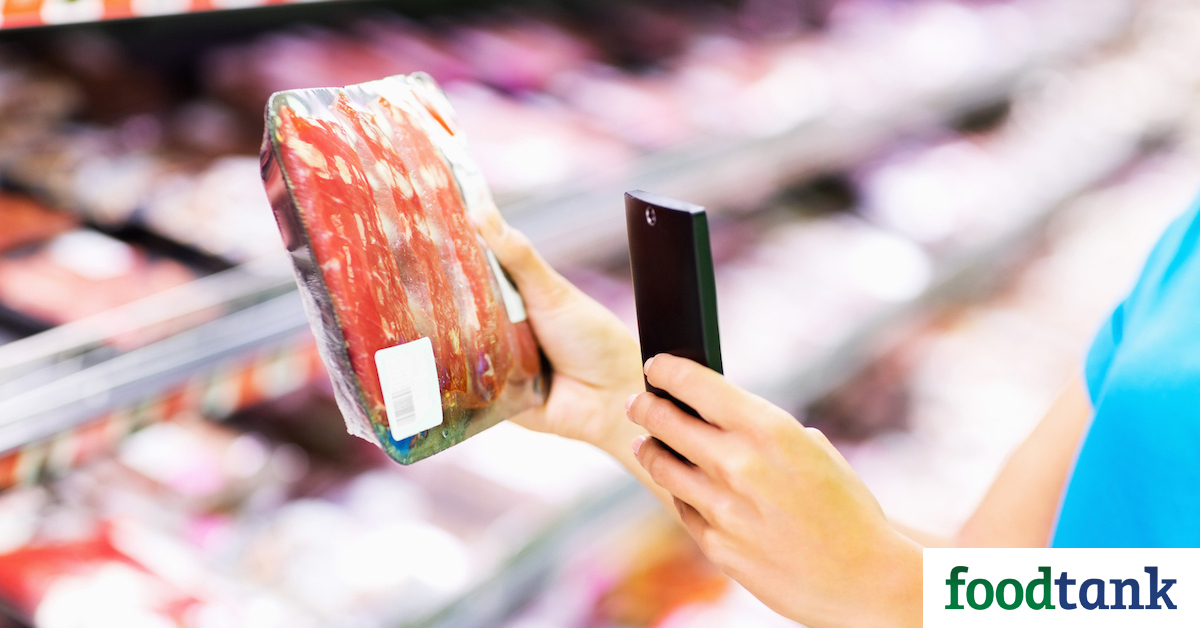

During a panel discussion organized by Food Tank and the Refresh Working Group, experts shared the ways that technology can make supply chains more transparent while supporting food access and sustainability.
Moderated by Food Tank President Danielle Nierenberg, and journalist Chloe Sorvino of Forbes, the event is part of a weeklong series about the intersection of food and technology. Panelists include Dana Gunders, Executive Director of ReFED, Mark Kaplan, Partner at Envisible, Matthew Wadiak, Founder and CEO of Cooks Venture, and Rick Whitted, CEO of U.S. Hunger.
Kaplan and Wadiak explain the potential for good that comes with more reliable data and technology. Kaplan says that blockchain technology helps Envisible track seafood as it moves from its source to distribution centers and retailers. In doing so, the company strives to support healthier environments for actors along the food chain and create standards that consumers can rely on. “By requiring full traceability, we’re able to have assurance of equitable conditions down the supply chain,” Kaplan tells Food Tank.
Wadiak is also interested in the ways that better data can support a more sustainable food system. He explains that most of the chicken raised in the United States today originates from a single breed that thrives off a diet of corn and soy—crops that degrade the quality of the soil when planted year after year.
While some farmers may try to introduce crops that regenerate the soil, that isn’t enough to support their land and flocks. “If you try to create alternative diets for [the chickens], they don’t do very well,” Wadiak says, “you have to selectively breed animals that can eat…feed that has more fiber and different kinds of nutrients that are more balanced to soil management.”
This is where data becomes important. Wadiak stresses that it takes a lot of time and effort to develop new breeds. And only by properly tracking and managing data can companies like Cooks Venture develop breeds that support more stable ecosystems.
But data and traceability, Whitted points out, is not only essential in food production and sourcing. U.S. Hunger, an organization dedicated to addressing food insecurity in the U.S., is also using technology to inform their work.
By collecting information on households that apply for food assistance from U.S. hunger, Whitted and his team have been able to demonstrate that food insecurity is often closely linked to issues such as housing insecurity or health crises.
“On the feeding side of things, we really should reevaluate and focus the feeding on understanding what’s driving the need for food,” Whitted tells Food Tank. This approach can help policymakers identify and address the root causes of hunger.
As Executive Director of ReFED, an organization focused on food loss and food waste, Gunders acknowledges that she takes a slightly different approach to issues of supply chain transparency. During the panel, she draws attention to confusion around date labels.
Gunders says that without standardization, consumers regularly misinterpret these labels and, out of an abundance of caution, toss food prematurely. But if federal regulations were introduced, it would reduce household food waste and allow retailers to donate items that are perfectly safe to consume.
While each of the panelists touches on different aspects of supply chain transparency, they note that it is important that these topics are not seen as distinct. Rather, policymakers and activists must understand them collectively to build a more resilient food system.
“Too often…whether it’s transparency in our food chain, in our distribution, or feeding people, we’ve just siloed these conversations,” Whitted says. “We’re grateful just to be a part of this dialogue…on how it all works together, not just one piece of it.”
Be sure to register for the remaining conversations in the series HERE.
Recent Comments