

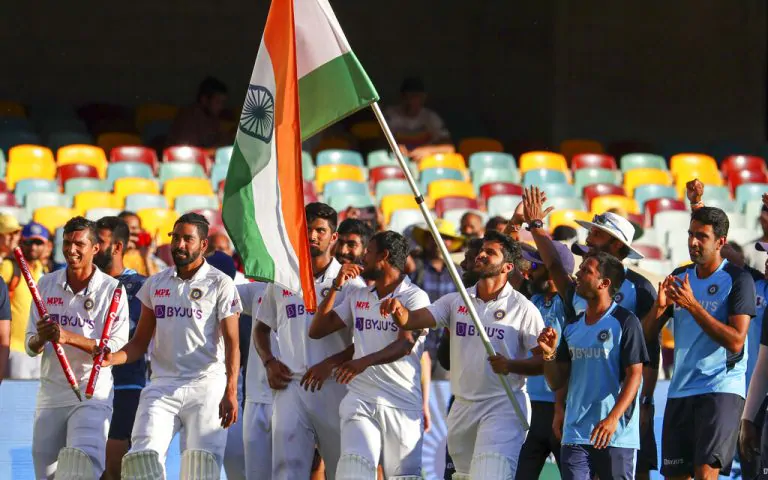

“There are many lessons from the team’s victory against Australia but this is the best one: Send the boss on leave, to get the best out of the team”
I had tweeted this after India’s victory in the series down-under and it caught the fancy of the “tweeple” but it was more in jest. There is so much to learn from this tour.
Every Indian who may or may not understand cricket is thrilled with the unexpected victory over the highly fancied and full-strength Australians. It was indeed an incredible triumph. The Indian team had lost most of the frontline bowlers and the star batsman, Virat Kohli. Despite an abysmal performance in the first Test, being shot out for their lowest ever total and being battered and bruised thereafter, India went on to win the Border-Gavaskar Trophy. There are huge lessons for all, especially the managers/leaders from this victory.
Perhaps the most significant lesson coming out of this visit was the never-say-die spirit. The team never lost hope despite the reversal at Adelaide. What really stood out was the reaction of the stand-in captain, Ajinkya Rahane when asked about being bowled out for 36 runs in the second innings of the Test. He stated that they were looking ahead and not behind. They learned from the mistakes made and stayed positive. It is difficult to pull yourself up after such a reversal and required a lot of character. There is no point in brooding over what has already happened. Most of us choose to be stuck in the past that continues to hang like a millstone. This attitude adversely impacts our future performance. The Indian team management, including the Chief Coach, Ravi Shastri made a conscious decision to leave the past behind and conveyed this to other team members in no uncertain terms. They stayed positive even in the most adverse set of circumstances and focused on the present.
The other attribute that helped the team succeed was the management’s ability to make the best use of available resources. They were never found cribbing over what they didn’t have and concentrated on making the best use of available resources. Even when Bumrah, Jadeja, Ashwin and Shammi were injured, the management reposed faith in the likes of Mohammed Siraj, Shardul Thakur, Nataraj and Sundar Washington who had virtually no experience as compared to their adversaries. And, what a stunning performance they came up with!
In a way, they also proved that no one, including Virat, was indispensable. Ravindra Jadeja replaced Virat in the second Test. India went on to win at Melbourne after the disaster at Adelaide, riding on all-round performance of Jadeja. He too got injured during the Third Test while India salvaged a hard-fought draw that left the series open.
The resilience, forbearance and never-say-die spirit of the team was in evidence throughout the series but who can forget the two injured “warriors” in the form of Ashwin and Hanuma Vihari who batted through the final hours of the Third Test to salvage a draw when all seemed to have been lost. They were handicapped on account of their injuries yet they managed to handle all the salvos that were thrown at them.
And, when we talk of warriors, who could be better than Cheteshwar Pujara whose monk-like demeanor was a true reflection of his persona. He was unflinching and took blows after blows on his body (and his psyche on account of his critics) but did not give up. When his character got tested during the crisis, he let his resilience get reflected in his batsmanship that would have made Rahul Dravid proud. The Australians found it difficult to breach this “second-wall”.
A leader has to lead from the front. Ajinkya Rahane demonstrated this through a scintillating yet measured century at Melbourne. This indeed was the turning point of the series. Here was a leader demonstrating to his team that the best attack in the world could be tackled on their home turf as well. His brief but aggressive innings in the final Test at the “Gabbatoir” clearly conveyed that the chase was on.
Ajinkya demonstrated that a leader need not be verbose to motivate the team. He did this by setting the example. He and the team management thought out-of-the-box in the context of team selection (going with a five-bowler attack despite having lost the first Test), planning and innovative field placements (the leg-side trap for Australia’s most dangerous batsman, Steve Smith), re-arranging the batting/bowling order as per the need of the hour (promoting Rishabh Pant during the Third and the Fourth Tests, and bowling Ashwin in the first ten overs during the second Test) were all master-strokes that unsettled the Australians.
The management studied each of the adversary at length and worked on their weakness. There was a clear definition of the role of each member of the team and they were given space to think, strategise and perform. Ashwin was totally a different proposition during this tour of Australia. He looked lethal because of the confidence reposed in him. Even when he was not taking wickets, he looked threatening.
While Australians were busy doing all the talking (though Tim Paine subsequently apologised for his unsavory chatter behind the stumps), the Indians preferred to let their bat do the talking. There was indeed some chatter by the unstoppable Rishabh Pant but it was more in the form of light banter as compared to the vituperative innuendos by his wicket-keeping counterpart.
The series also proved that hubris could prove one’s undoing as the overconfident Australian team and some of the former Australian captains discovered to their dismay. Many of them had written-off the Indian team after the first Test but they had to eat a humble pie.
It was indeed a historic series win for India but provided excellent material for a case study in management.
—Anil Swarup is former Secretary, Government of India and author of the book ‘Not Just A Civil Servant’. Views expressed are personal
Recent Comments