


“Vietnam is rapidly emerging as one of the world’s new manufacturing hubs as multinationals are diversifying their production to build greater resilience in their supply chains following severe production disruptions during the Covid-19 pandemic,” said Rajiv Biswas, Asia-Pacific chief economist at IHS Markit, a world’s leading company providing analytics for major industries and markets.
In a note titled “Economic Preview- November 2020,” he said after a decline in the first nine months of last year, Vietnam’s exports of phones and components rebounded to achieve growth in the final quarter.
Phones and components fetched the biggest value among Vietnam’s exports last year, at $50.9 billion, or 18.1 percent of the country’s export turnover, according to the General Statistics Office.
Biswas said exports of computers and related products rose by an estimated 20 percent in the third quarter as a global shift to remote working boosted demand.
Vietnam significantly increased its share of global exports of computers in the past five years, and is now competing with China in terms of total exports.
 |
|
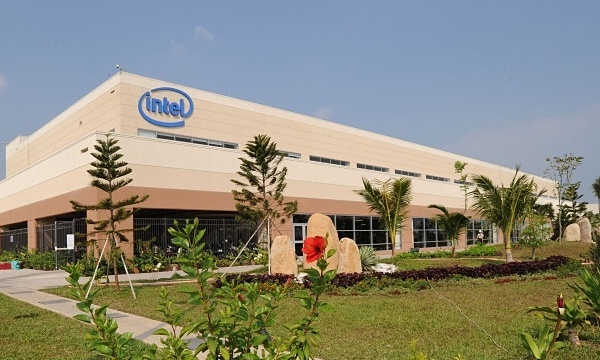
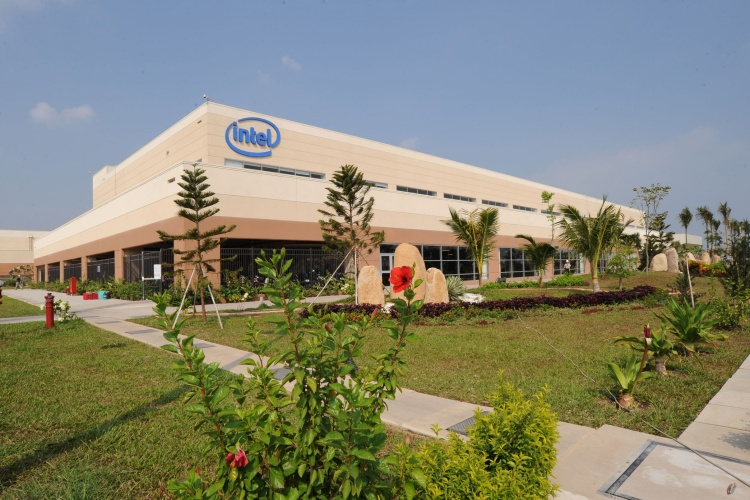
An Intel’s facility in Saigon Hi-Tech Park, HCMC. Photo by Intel Corporation. |
According to Biswas, a key factor driving supply chain diversification is the massive disruption to industrial production in China during the Covid lockdown in early 2020.
This created supply chain vulnerabilities for many multinationals due to excessive reliance on manufacturing in China.
Other factors to seek diversification include the U.S.-China trade war. With the U.S. imposing punitive tariffs on imports from China, multinationals are looking for alternative manufacturing locations for exports to the U.S.
Vishrut Rana, an economist at S&P Global Ratings focusing on the Asia-Pacific region, said in 2020 Vietnam became a key part of the electronic supply chain in this part of the world.
It means there is continued interest from companies across Asia in particular to move to Vietnam or expand existing operations in the country after it had a strong 2020 in terms of FDI, he said.
He explained that though last year was poor for the global economy, it was good for electronics, helped by work from home measures and people buying new accessories.
Competitive advantages
Biswas said Vietnam has been one of the biggest beneficiaries so far of the supply chain diversification thanks to its relatively low manufacturing wages compared to China, a skilled and well educated workforce and good infrastructure following massive investment over the past decade.
Another important competitive advantage for Vietnam is its plethora of bilateral and regional free trade agreements.
The new EU-Vietnam FTA has for instance provided a big fillip to Vietnam’s competitive advantage as a global manufacturing hub.
Vietnam is also a member of ASEAN and a part of two major regional free trade agreements, the Regional Comprehensive Economic Partnership (RCEP) and the Comprehensive and Progressive Agreement for Trans-Pacific Partnership (CPTPP).
Rana said, “Vietnam is in a good position as it has been open for FDI, and FDI regulations have been favorable.”
Dr Seckin Ozkul, director of the supply chain innovation lab at the University of South Florida in the U.S., said Vietnam has around 10 deepwater ports and a well-trained labor force in the textile and many other industries.
Vietnam has proved that it could produce goods and ship and deliver them, he said.
Rana said the country plays an increasingly important role in global supply chains, particularly in technology, but could easily expand into other areas of manufacturing.
Many major global firms already have operations in Vietnam or are actively considering investing in the country, he said, citing the examples of Samsung 10 years ago and firms from Japan and Taiwan more recently.
This provides confidence to firms considering moving to the country and serves as reference points for them, he said.
As more and more firms move to or expand in Vietnam, the local supply chain grows and firms get access to shared labor markets and better procurement options and suppliers, he said.
In short, as more and more firms build up their capacity in Vietnam, people get this critical mass that attracts even more investment, he said.
“So it’s like a virtuous cycle which is quite helpful.”
Vietnam could compete with China as a key supplier of some niche technology products because the electronic supply chain is very fragmented with a lot of small products requiring specific expertise, he said.
For example, Singapore has very specific memory microchips, while Vietnam has a big advantage in phone components in which Samsung invested several years ago, he pointed out.
Vietnam and other emerging technology players can aspire for a larger slice of the overall technology manufacturing pie. For instance, South Korea and Japan began automobile production on a small scale but managed to grow into dominant players.
From 2020 experience, the U.S. and China have emerged as big buyers for technology and related products. Europe is another critical market for Vietnam. Rana said these markets will remain Vietnam’s buyers this year.
Southeast Asia too offers good opportunities for Vietnam to widen market size since intra-ASEAN trade is becoming increasingly freer.
Electronics and infrastructure networks in ASEAN are very strong, with Singapore, Malaysia, and Thailand key technology manufacturers in the supply chain, so Vietnam can leverage that to develop its market.
Ozkul said many companies are still thinking about how to diversify their supply chains after getting hit by Covid-19 and potential uncertainty in the U.S. and China relationship. There have been some tensions between the two powers and they may impact companies planning to go to Asia. They may consider going to Vietnam rather than to China because they don’t know how things are going to play out between the new administration of Biden and China’s.
In the U.S., things are improving with the Covid-19 vaccine being rolled out. Companies can escape lockdowns and actually plan ahead and look to make investments.
“I see that Vietnam’s prospects in the next couple of years are pretty good.”
Singapore is a major hub and many things flow through that country, but if Vietnam could cut Singapore out of the picture by directly shipping things to different locations, it could become the center of logistics, he said.
But he admitted there are some questions about deepwater ports in Vietnam like if they could berth new giant ships of 18,000-20,000 TEU and if goods from California in the U.S could be shipped to Vietnam without going through other places.
Ozkul said reliability is also crucial for Vietnam in attracting foreign investors as a new supply chain hub, and the country’s success in controlling the pandemic bodes well in this regard.
The speed at which companies move to Vietnam future depends on several things, he said.
Firstly they would check infrastructure such as the road network, ports and intermodal rail yards and talk to authorities in various places to see what incentives they offer, he said.
The government has a role to play in attracting them by offering incentives.
As for sectors in the supply chain, he noted that electronics companies prefer clusters. For instance, a phone company needs various parts from other suppliers such as microchips, motherboards and screens, and would come to Vietnam if these are available locally to minimize the cost of shipping them from elsewhere, he pointed out.
He recommended that Vietnam should have a deep discussion with foreign investors about the ready workforce in different sectors to attract them.
For instance, if Tesla, the U.S. electric car company, is looking to invest in Vietnam, it would consider if the workforce has basic knowledge it could develop or it has to begin from bottom up, he said.
Vietnam should invest in developing human resources for the logistics industry and supply chain management enabling locals to work such as operations and procurement managers, he said.
“On top of all this, Vietnam could highlight its success in controlling Covid-19 to show there is no disruption for investors.”
Recent Comments