


In February 2020, BP announced that it aims to be “net zero across its operations on an absolute basis by 2050 or sooner”. In April 2020, Shell announced “we aim to be a net-zero emissions energy business by 2050 or sooner”. These ambitions relate to the three Greenhouse Gas Protocol ‘Scopes’. Scopes 1 and 2 relate to emissions directly and indirectly produced by a company, while Scope 3 emissions are much broader and relate to all other indirect emissions throughout a company’s value chain. Scope 3 goes far beyond Scopes 1 and 2 and requires collaboration across the entire value chain for compliance to be achieved.
The strategic questions facing oil and gas majors of how to adapt to climate and environmental challenges is most notably seen in the transition of DONG Energy to Ørsted. Ørsted moved entirely out of oil and gas and exclusively into renewable energy. It is now one of the leading global offshore wind developers. Such dramatic business model shifts are rare. However, this does highlight the level of action market participants are taking and the scale of change that can take place.
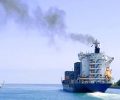
Even without the additional pressures Covid-19 has placed on oil and gas companies (with oil prices having turned negative for the first time ever due to Covid-19 induced demand drops and concerns about limits on storage capacity), as BP and Shell’s announcements indicate, the questions of climate and emission reductions is one that will dominate the landscape for decades to come. The task of becoming ‘net zero across operations’ will involve a fundamental re-shaping of their business operations (Scopes 1 and 2) and the value chain of their industry (Scope 3). The changes required will be multi-faceted, ranging from sustainability (business operations) to power (sourcing green energy) and, crucially, to transportation (shipping operations).
Much has been written about corporates procuring additionality through entering into corporate power purchase agreements with renewable energy projects (Scope 2), but for the major oil and gas companies who manage some of the largest fleets in the world, the changes needed to the transportation industry and how the next generation of freight capacity will look (Scope 3) has often been a neglected conversation. We outline four key ways the freight industry will change and what is needed to secure freight capacity in the decades to come:
Legal Frameworks
An environment exists of increasing levels of legal and regulatory scrutiny in the maritime sector. At the broadest level, the Paris Agreement’s ‘20-20-20’ target which involves a reduction of carbon dioxide (CO2) emissions by 20%, will undoubtedly impact the fuel-heavy shipping industry. The Poseidon Principles, which are an international framework for assessing and disclosing financial institutions’ shipping portfolios in relation to their impact on climate change, is also placing greater awareness on such matters.
More specifically, the International Maritime Organisation (IMO) set new low sulphur emission standards that had to be complied with as of 1 January 2020 (IMO 2020). IMO 2020 has required a move away from the use of heavy sulphur fuel oil (HFO) in ship propulsion (unless combined with the use of exhaust gas cleaning systems (Scrubbers)) to that of lower sulphur content fuel oils or other low sulphur emission fuels such as LNG. Further, the IMO is targeting a 40% reduction in carbon emissions by 2030, and 70% by 2050, together with a total reduction of 50% of all greenhouse gas emissions from their 2008 levels by 2050 (IMO 2050).
Such regulations align with the objectives of BP and Shell. However, despite the IMO standards being in place, if these are not met, the consequences will not only be felt by shipowners. A failure to meet these standards will mean companies such as BP and Shell’s Scope 3 emissions will not reduce at the expected rate. While the market forces are currently such that the balance of power lies with the oil majors and not tonnage providers, when these regulations bite, creating a decreased supply of available compliant tonnage, a shift will likely take place with owners of compliant vessels holding a stronger negotiating position. It is therefore not just in the interest of shipowners to take a lead in this transition, but oil majors and others such as commodity traders alike. These freight capacity users will require compliant vessels to meet their emission targets. To achieve this the users must on one hand work together with shipowners, but also embrace a new era of procuring compliant freight capacity. Evidence of this mindset can already be seen in the transportation procurement strategies of conglomerates BHP and Anglo American and their long-term chartering of dual fuel bulk carrier vessels.
Procurement Strategies
The changes to the legal and regulatory framework have already impacted freight capacity procurement strategies. We are seeing a multi-staged transitional approach by some leading market players. This includes a portfolio approach to contracting freight capacity, which is sculpted to meet the reduced supply of compliant vessels and to match the user’s asset portfolio mix. This approach needs to be tailored for each company, but will often involve a blend of owned, partially owned and chartered vessels on a spot, short- and long-term basis. To reach the 2050 targets, the implementation of such a portfolio mix will need to be phased; with short-term demand addressed by moving to low greenhouse gas emissions (through LNG, LPG dual fuel and/or lower sulphur content fuel oils) and moving to targeting zero emissions leading up to 2050. In addition to the benefit of securing supply, ownership or long-term rights to the capacity of vessels can turn an overhead into a balance sheet asset, if excess capacity can be provided to the market providing an upside benefit to those who have secured zero emissions freight capacity.
Propulsion
The biggest challenge required for the net zero emission objectives of BP and Shell, and the targets set by the IMO, however, is that the existing technology and practices of the shipping industry are not sufficient to meet these ambitions. This is why the transition has to be undertaken in transitional stages. The current approaches are the use of scrubbers, lower sulphur content fuel oils LNG and LPG; these are driving the movement towards lowering greenhouse gas emissions. Other fuel types and associated technologies are in the pipeline.
To reach net zero emissions there is no ‘silver bullet’ yet, and it is unlikely that there will be one; rather an evolutionary approach of continuous improvements is needed, including improvements in ship designs to minimise fuel consumption and maximise energy efficiency, as well as utilising ‘big data’ to improve weather forecasting and navigation (which will further minimise fuel consumption and maximise energy efficiency). One of the leading contenders for a revolutionary solution is the use of hydrogen as a fuel source, especially green hydrogen which is produced by electrolysis of water using power generated from solar and wind (for more on hydrogen see Hydrogen – What is the hype about?). Difficulties exist for any deployment of hydrogen, however, with technological advances still being required, liquefaction capabilities and the cost and complexity of building out hydrogen bunkering infrastructure clearly place this in the ‘long term’ category; but in order to reach net zero emissions actions need to be taken now in order for such bold visions to become feasible by 2050. The use of grey and blue hydrogen as transition to green hydrogen is one option being considered.
The ability of companies to reach net zero Scope 1 and 2 emissions are individual, but in order to achieve net zero Scope 3 emissions, the solutions and path to get there cannot be borne alone. Indeed, an irony exists that a company’s short-term competitive advantages will likely be eroded, and also face risings costs, if challenges such as hydrogen propulsion are tackled without industry collaboration. Rather a collective approach is required, and is one that serves the interests of shipowners, commodity traders, oil majors and other stakeholders alike to participate together in.
Financing Options
The targets of net zero emissions are largely driven from a combination of increasing Environmental, Social, and Governance awareness, a desire for improved brand equity, and over time lower costs due to operational efficiencies. In the short term, though, capital expenditure will be required. Green and sustainability-linked finance show an avenue not yet fully tapped into by the shipping industry.
Conclusion
The coming decades will witness an environment of increasing legal and regulatory scrutiny in the maritime sector. Without concerted efforts this will result in a failure to meet Scope 3 emission targets and a reduced supply of compliant vessels. Developing new strategies toward contracting freight capacity, with a more diversified portfolio approach, will be an imperative risk mitigation tool. As too will be taking action early, and in collaboration with other like-minded industry participants, to take the lead in developing technologies and approaches that are needed to turn net-zero emissions from a 2020 objective to a 2050 reality.
Source: Watson Farley & Williams
Recent Comments