

![[Techie Tuesday] Meet Saiman Shetty, who went from a small town near Udupi to building powertrain systems at T](https://usscmc.com/wp-content/uploads/2021/02/TechietuesdaySaimanShetty-01-1613389288802.png)

Saiman Shetty got a computer at home when he was in Class 4, but his love for technology and engineering was driven by hardware. Today, he’s a technical program manager for robots at Nuro, a Valley-based robotics company,
Saiman, who has also been the powertrain engineer at Tesla, works on building robots that are changing local commerce through driverless delivery.
“I liked taking things apart and seeing how they worked. I realised early that I needed to understand how each part works and just wouldn’t accept the thesis. I would open things, see how batteries work, how the light connects to the power systems,” Saiman says.
Hailing from a small town in Udupi, Karnataka, Saiman’s early schooling was done in Doha, Qatar, where his father was a sales manager for a construction company and mother is a homemaker. Saiman returned to Udupi for his high school graduation. In 2009, he joined a local engineering college where he pursued electrical engineering.
“The first year of engineering was a bit difficult. I had moved to state board syllabus from CBSE education in Doha. It got me an engineering seat, but it was difficult to cope in the first year. Most CBSE students found the first year easier. In the second year, I opened clubs and started a computer literacy initiative. The impact it created was meaningful, and kept me going,” he recalls.
The Tesla coil
Saiman says his turning point was in the fourth semester when a professor with deep industry experience began working with them. He would work closely with students, help with projects, and encourage them to think differently.
It was during this time that Saiman worked on building a Tesla coil – designed by scientist Nikola Tesla as a wireless method of transmitting electricity.
“We had to be really thrifty as the capacitors and inductors that we needed would cost around Rs 25,000 to Rs 35,000 per piece and we needed plenty of these. We wondered how to make our own capacitor-like setup? I took a few empty beer bottles, wrapped them in aluminium foil, and filled them up with saltwater. Saltwater acted as one plate, the foil as another, and the glass as the third. All these were connected,” Saiman says.
This project helped Saiman to “think differently” and was “a great learning experience”. While at college he also built a platform to sell merchandise and other personalised products along with his batchmates.
In 2013, after completing his engineering, Saiman had to choose: work or study further? He decided to pursue another course.
“I got through Arizona State University, and began a master’s course in controlled systems. I was the first person in my family to go to the US. Nobody had ventured beyond the Middle East. Multiple degrees were also new in my family. There was a lot of adjusting to do…many of my roommates hinted that placements would be tough.”
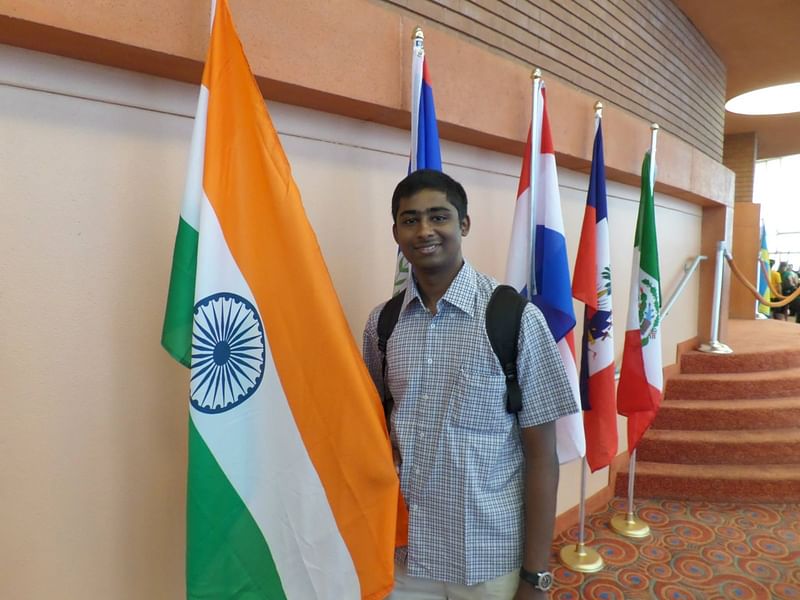
Saiman Shetty
Controlled systems or not?
His self-esteem took a hit, but Saiman continued to work hard. He knew that his chosen field of study – controlled systems – offered limited job avenues in the US. Most were with the defence forces, and the US government didn’t give defence jobs to immigrants.
Saiman also interned as an automation engineer at Integra International in 2014. Here he built low-voltage control panels for lighting applications. He also participated in the installation of the HVAC system at QatarGasTM Laboratory and took up work as a lab assistant and data analyst at college.
“I continued with controlled systems because that is where my heart lay. It wasn’t easy. Around 2014-15, there were many immigration issues in the US, and many of the job offers that I had were withdrawn at the last minute,” he says.
After 600 applications and 50 interviews, Saiman in 2015 got a job at Atronics Engineering, a small company that catered to the automation needs and equipment for companies like FedX. Saiman was sending in numerous applications and ended up getting the offer before he graduated.
“I hadn’t graduated and had to move. I explained the situation to one of the professors, who happened to be very understanding. He agreed that I move and start working and complete my graduation remotely.”
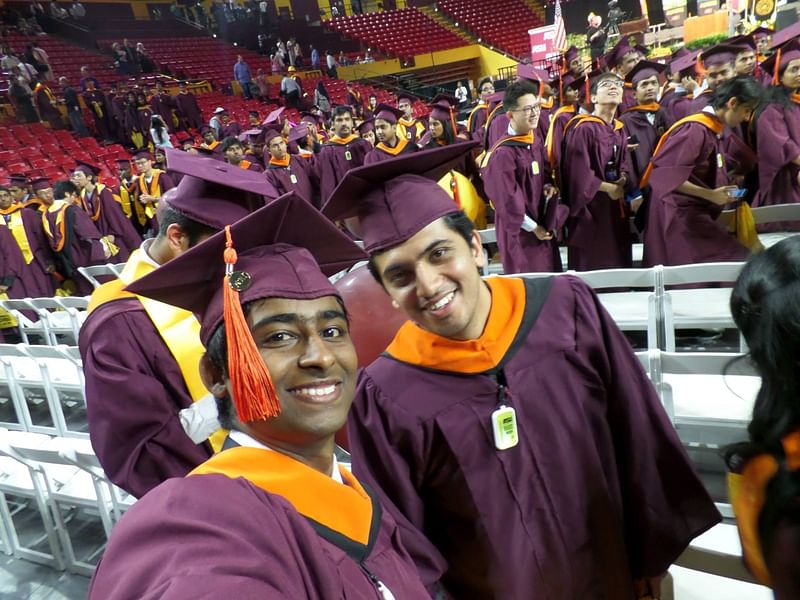
Building systems
For the next five months at Atronics, he worked on building vision systems to detect bottle caping defects on a detergent’s filling line, and automation of large-scale sorting and material handling processes for freight clients.
“After five months, another company approached me – Container Automation Systems. At Atronics, I had people guiding me and they had an understanding that I was a fresher. But, not at Container,” Saiman says.
Here, he worked on designing the control logic and UL-compliant electrical scheme for take-out units, spray booth lubristat, and leak detectors of a content manufacturing line. He also programmed FANUC robots and servo systems.
As the only electrical and controls engineer, Saiman had a lot of exposure and learning at Container Automation systems where he was responsible for building, testing, and deployment.
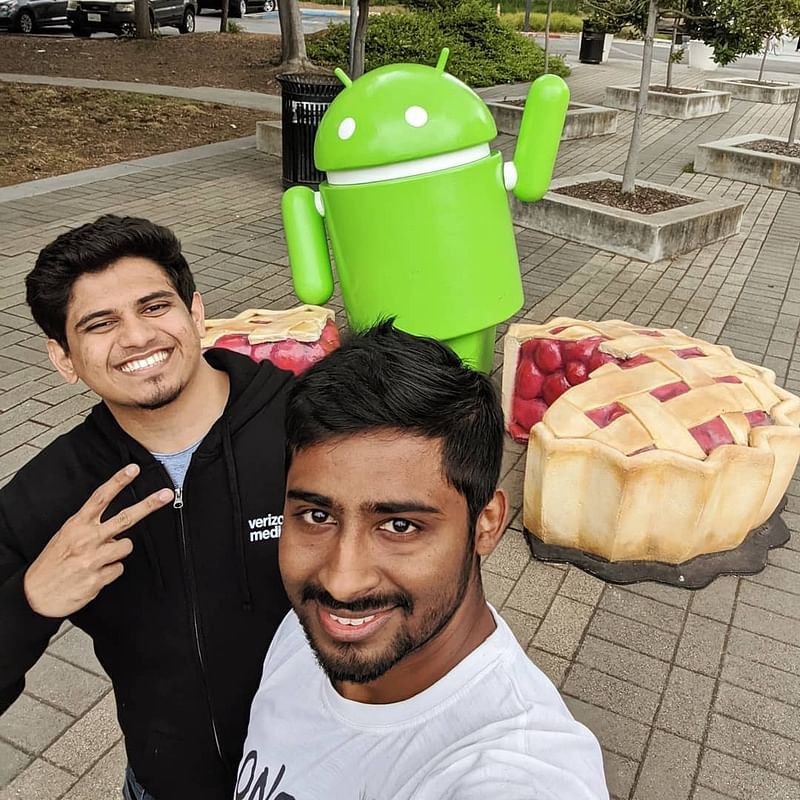
The Valley and Tesla
By the end of 2015, there was a lot of buzz about Silicon Valley and the innovation emerging from there. “I wanted to try my luck there. It was the early days of electric and autonomous vehicles, and I had an offer from Tesla. It timed well with me moving to California,” Saiman says.
At Tesla, he began working as a control engineer, and developed the software applications for process automation on Model S and X battery pack line using a Python and Java-based platform.
“I had worked on designing the associated hardware and operator GUI. I designed and implemented the advanced conveyance line and safety systems,” says Saiman, who was one of the early engineers at the US carmaker and went on to work on the powertrain systems.
Saiman led the advanced insights initiative at Tesla for more robust system state monitoring using tools on robots and automation equipment software in the powertrain engineering. He worked on the Tesla Model S and X P100D battery pack systems, building enhanced quality control methods to ensure product safety, and logging of parameters during the production process.
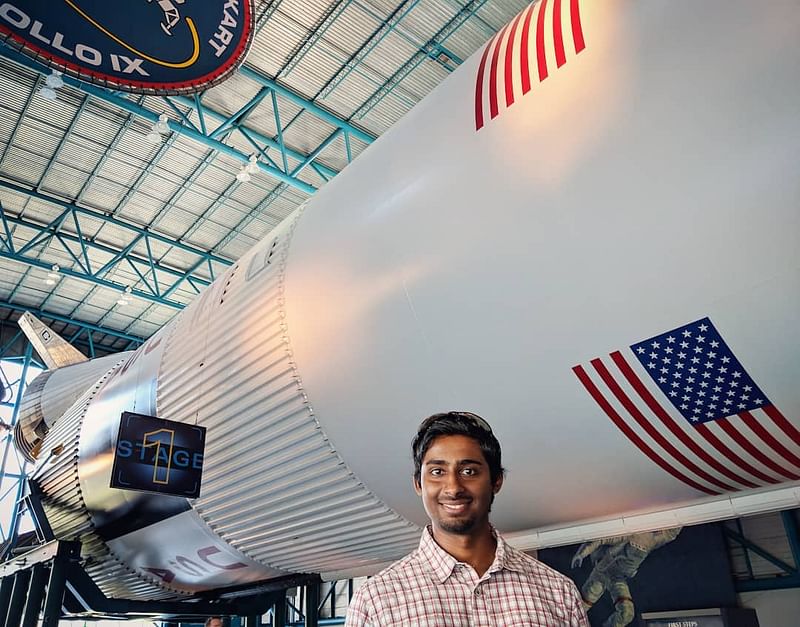
Saiman Shetty
Starting up
Alongside, Saiman began spending his evenings at varied entrepreneurial events. “I would meet super-passionate people who would discuss ideas, exchange skills, and discuss the next big project they were working on. I realised the need to be fast and grow quickly. It was while working at Tesla that I started working on my startup, Hygeia,” Saiman says
Hygeia was a software platform that worked on increasing the efficiency of waste management in campuses and cities. It used IoT-based devices to generate data from distributed waste containers. This helped sort and collect the garbage more efficiently The startup raised funding and was incubated at the Plug and Pay incubator, which is where companies like Dropbox and PayPal emerged from.
“We secured contracts from customers and Silicon Valley campuses like Space Systems Loral and Twitter. We even won recognition from leading representatives such as the Mayor of Los Angeles Eric Garcetti for significant contribution to the life of the people of Los Angeles and to the entrepreneurial ecosystem, and Congressman Ro Khanna of California’s 17th congressional district. But the problem was that our pricing wasn’t feasible,” Saiman says.
The business aspects of the project were yet to be fully finalised, and the team decided to focus on their full-time jobs. Soon, product-level shifts were made and the team decided to pivot to a healthcare application, which Saiman wasn’t keen on. He decided to focus on his work at Tesla and the many immigration issues that were cropping up at the time.
The Lyft journey
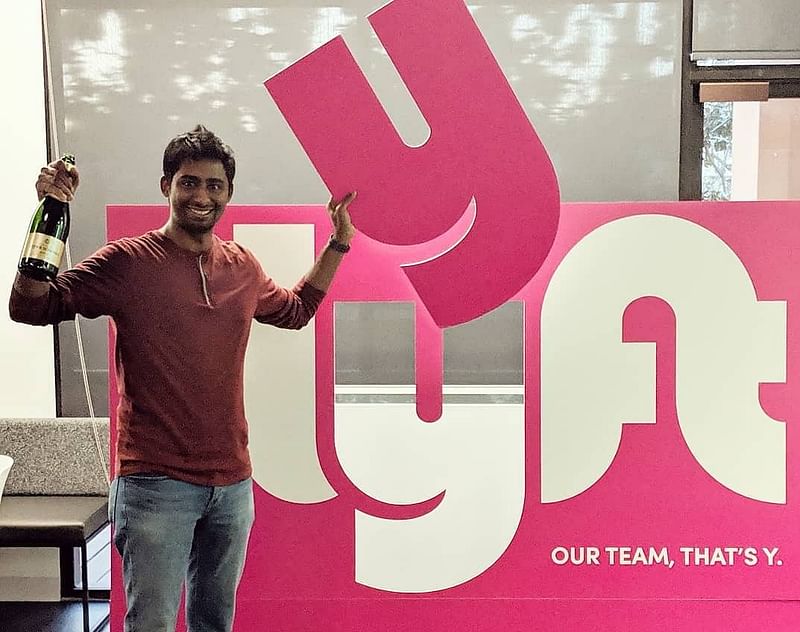
After two and half years at Tesla and understanding car manufacturing, Saiman became more interested in autonomous vehicles. In 2018, Saiman moved to Lyft, Uber’s competitor, started working on its autonomous vehicle division.
At Lyft, he led the new product introduction for associated software and camera, and also worked on the development, build, and execution of Lyft’s first functional autonomous vehicle platform.
“I executed the established fleet-grade product reliability over five months. This involved heavy cross-functional interfacing with external vendors various layers of the AV SW stack + test plan/report documentation, mechanical, thermal, and EE teams,” Saiman says. He adds they started off as a small group, and the team soon expanded to over a 100 people.
“I was given the responsibility of running and delivering the first functional autonomous vehicle,” says Saiman, recalling that he was at Lyft when the company took the IPO route.
Automated delivery and more
By now, Saiman was keen to go back to building something from scratch. In 2020, he moved to Nuro where he is working on building robots that are built to do driverless delivery.
“After the COVID-19 crisis, the need for self-driving vehicles and an automated delivery system has become even more important. We are working on building a fleet of self-driving vehicles that can deliver local goods of all kinds,” he says. The startup has raised over $1 billion and has partnered with the likes of Walmart, CVS, and Domino’s.
Saiman is also building Resume Puppy, a platform that makes simple resumes for tech jobs. It has an AI-powered optimisation tool that helps people find jobs across countries.
What does he look for while hiring engineers? “The skill more than the degree.”
“I look for what you have built. While educational qualification is a good indicator, actual projects and other work that you have done matters. What do you focus on building? What impact are you looking to create? That is also my advice. Build something. Create an actual impact. You will learn far more than what is taught in a classroom,” Saiman says.
Recent Comments