


It’s hard to imagine a world in which there are no freighter flights. They’ve come a long way since their inception, but what exactly is the difference between passenger and cargo aircraft? And, will more airlines increase their freighter services in the future?

Today, the idea of running cargo services alongside passenger routes is a tactic that many airlines have taken. It makes economic sense and meets growing international consumer demand. That said, the concept of cargo flights is barely 100 years old. Conceived for the transportation of hand-written mail near the turn of the 1900s, it’s fair to say that freighter flights and aircraft have evolved beyond all expectations.
The first cargo flight
The first flight that ever resembled what we now know as cargo service was back in 1911 when aircraft was used to transport mail. However, the first true cargo aircraft was developed in the 1920s. That was when the UK decided to create a plane to meet the pressure surrounding the transportation of soldiers and their goods. In 1921, the Vickers Vernon was delivered to the Royal Air Force (RAF). Two years later, the aircraft was deployed to transport 500 Sikh troops to battle.

The idea of using aircraft for the war effort gained traction. That was their primary use and, keen to optimize this new resource, developments were made to the initial design. In 1939, aircraft were developed with rear doors making loading and unloading cargo that much easier.
Cargo vs. passenger planes
The fundamental difference between cargo planes and passenger aircraft is, of course, what they transport. While passenger planes predominantly fly travelers with minimal luggage stored in the hold, cargo planes are completely kitted out for the transport of goods.
There are no seats in a cargo plane but instead an empty galley that can be manipulated to carry various types of cargo. Typically, the floor of the aircraft cabin will be complete with rollers and latches to hold down crates. What’s more, there will be no windows and, rather than emergency exits, a large loading door to fill the aircraft with goods. A variant of this design is where the plane nose can lift to accommodate goods storage. A notable example of this is the Boeing 747 freighter model.

It’s worth noting that aircraft freighter design varies. Some planes use multiple wheels to maximize the weight distribution through the aircraft, such as the 32-wheel juggernaut Antonov AN-225. Some cargo aircraft have wings situated at the top of the fuselage to load cargo from the bottom. Others do the opposite.
Passenger plane to cargo conversion
Yet, while cargo planes and passenger planes are different, there are some similarities. It’s the reason why a lot of ex-passenger planes can be turned into cargo variants. Airlines may choose to extend the life of their aircraft through freighter conversion. It’s a cost-effective alternative to purchasing a new cargo plane though it does require a lot of logistical planning.
For that to happen, the fuselage of the passenger plane must be adapted to fit the cargo specification. The windows of the aircraft will often be plugged to create a seamless metal body.
Then the interior cabin features will be stripped in preparation for a floor that facilitates the easy maneuver of goods. Before that can be done, the floor will be reinforced to bear the weight of its cargo. A door will be fitted to allow for the cargo loading, and final checks will be conducted to make sure everything is in working order. Successful transformations include conversions carried out on UPS’ Boeing 767.

So, that’s the physical difference, but what about how the aircraft fly? Is it that much different flying a freighter than a commercial passenger aircraft?
What’s the difference between a cargo and passenger pilot?
Though the internal load may be different, pilots of freighter and passenger planes harbor many similarities. Cargo and passenger pilots need the same training for their licenses. Regardless of the load, they will have an equal FAA rating and experience.
Again, while their journeys can be different, both have things in common. There are the same amount of pilots on cargo and passenger flights. Typically, with a flight time of fewer than eight hours, two pilots will be required on the aircraft. Over that, three or four pilots will be needed. Of course, the distinct difference on the passenger plane is that a crew of flight attendants also makes up the flight team. A passenger plane may seem more staff-heavy, but the cockpit is just the same.

Therefore, when it comes to choosing which type of aircraft to operate, pilot, or freighter, it comes down to the individual’s personal choice. There are benefits to both. For freighter pilots, the attraction comes around job security. It is common for freighter pilots to get paid higher and more competitive salaries.
At the same time, they are often exempt from the devastating effect of weak economic climates. People still need goods shipped, which means that freighter operations are always in demand. Alongside that, profit margins on these types of services tend to be higher than passenger services.
What is the future of cargo planes?
As a result, cargo services can be very profitable ventures. Boeing estimates that by 2040, the industry will be valued at over $300 billion. That number could grow even further. That’s because, in recent times, airlines have almost been forced to expand into their cargo arm. With the current climate, much of their generated revenue is coming from a single channel: cargo.
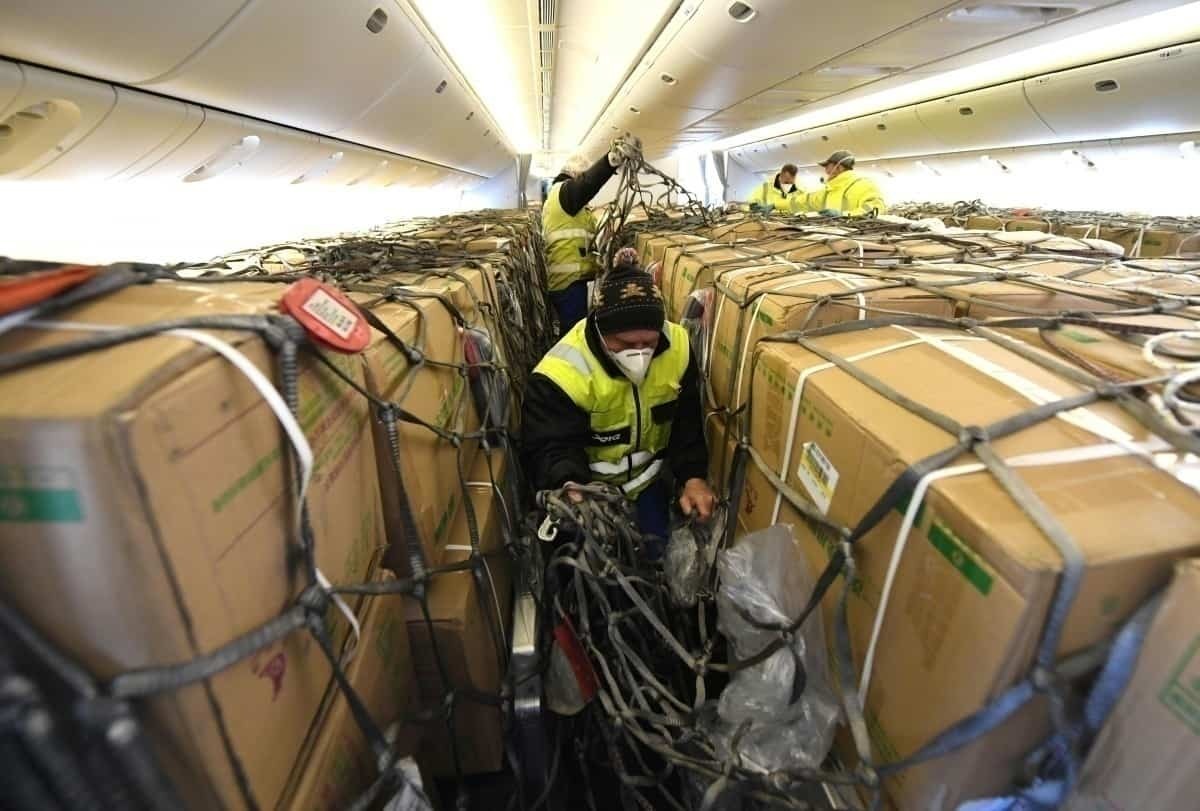
However, airlines that have recently ramped up their cargo arm have had the benefit of operating quasi-cargo services. They’ve used their existing fleet and made non-permanent adjustments to fly supplies. The process requires seats to be removed and cargo loaded and attached with a series of belts. The procedure can take a team of two people around two hours to fully kit the plane ready for loading once the seats have been removed, according to Airbus.
With many airlines seeing their cargo revenue soar thanks to the reliance on these operations, could more carriers turn to permanently increase their freighter schedules in the future?
Let us know your thoughts in the comments.
Recent Comments