


On April 4, Duluthians elected Joshua Culver their first mayor. The city’s Common Council first met on April 12, addressing two ordinances: “one for the licensing of saloons and the other for the suppression of dogs, of which there were said to be about 1,000 of all colors and breeds in and around Duluth.”
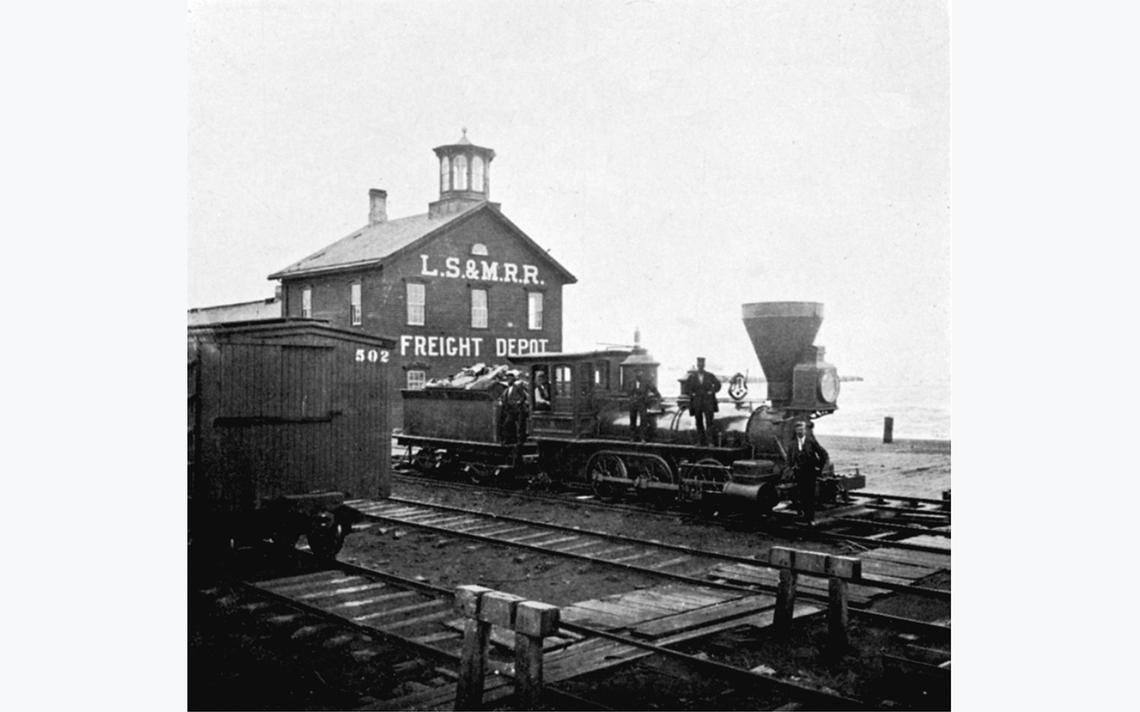
Employees of the Lake Superior & Mississippi Railroad pose with a locomotive outside the LS&M’s Freight Depot at the foot of Third Avenue East, ca. 1870. (Photo courtesy of the Minnesota Historical Society)
On April 21, Culver appointed Robert Bruce the city’s first police chief. Bruce, described as “a stranger … whose presence was an anomaly,” abruptly left town that July owing local merchants and contractors $3,000 and was never heard of again.
November 25 saw the organization of Duluth’s first volunteer fire department. Eleven months later its first fire house, and first fire engine, were destroyed by fire.

Two newspapers began publishing in 1870. May 3 brought the first edition of the Duluth Tribune, and the Duluth Morning Call issued its first on November 28 (it lasted until June, 1871).
On August 5, community leaders founded Duluth’s first Chamber of Commerce. They included William Branch of the Lake Superior & Mississippi Railroad (LS&M), who that summer built Branch’s Hall, the city’s first brick building, at 416 E. Fourth St. — it was demolished in 1986.
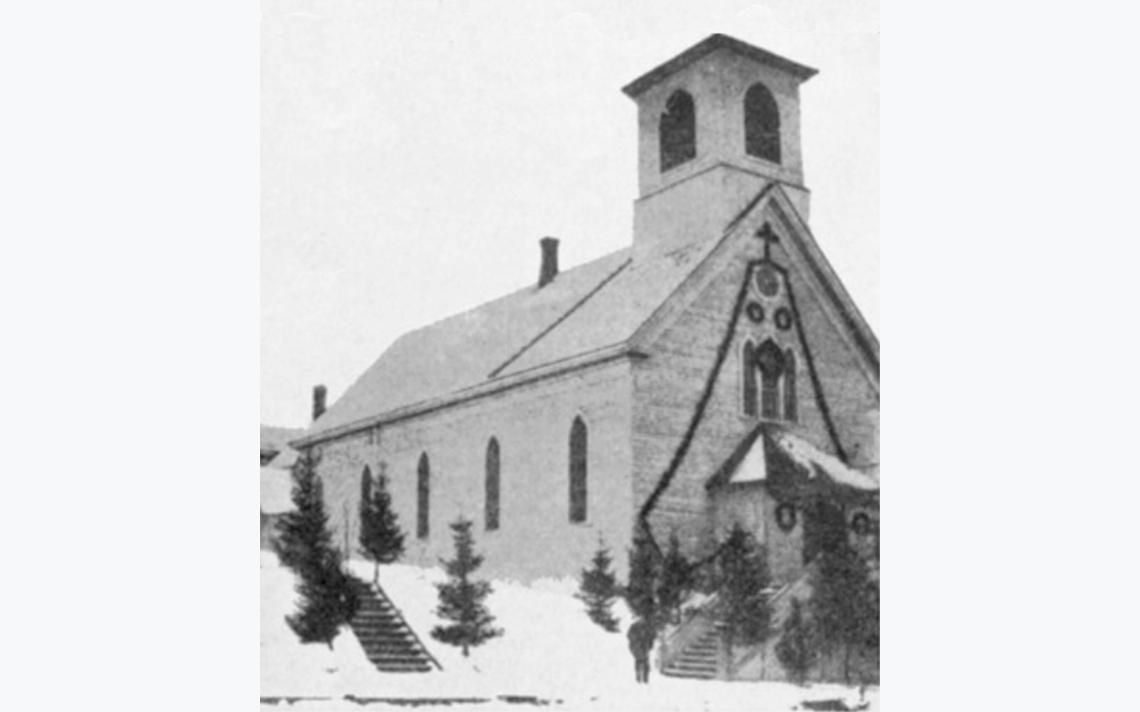
Duluth’s 1870 Sacred Heart Roman Catholic Church. It was destroyed by fire in 1892 and replaced by Sacred Heart Cathedral, now a music center. (Photo courtesy of the Duluth Public Library)
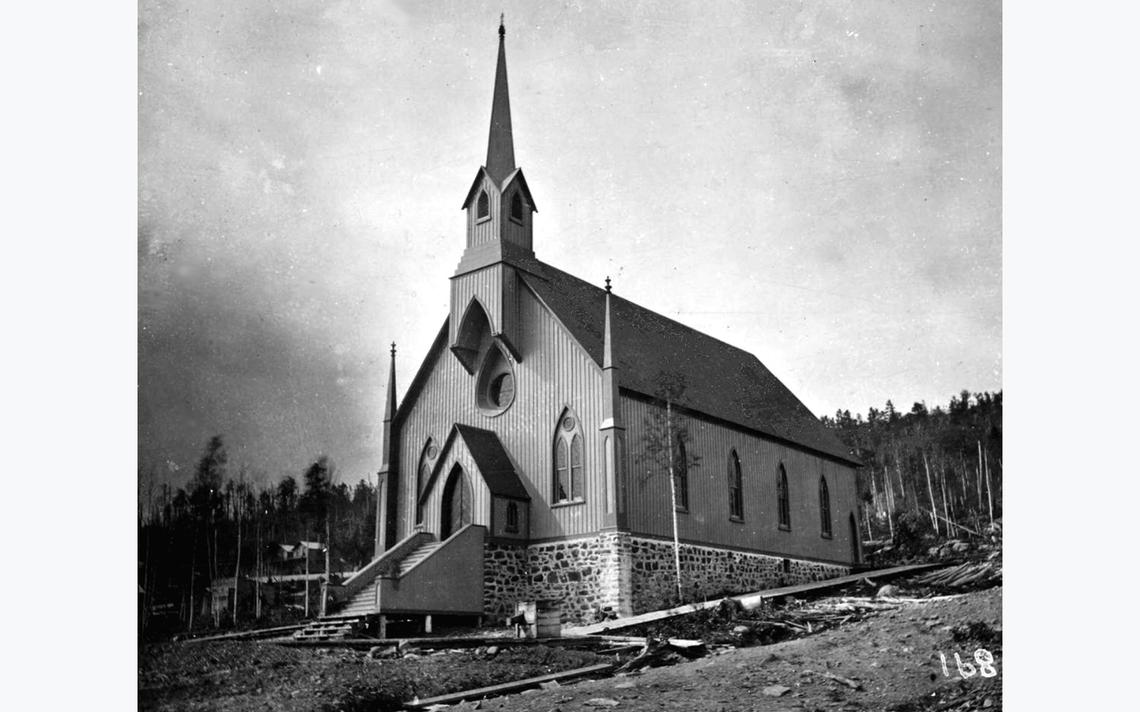
The hall was one of many construction firsts in 1870, including several churches. Catholics founded and built their first church, Sacred Heart, at 201 W. Fourth St. — it burned in 1892.
The first First Methodist Church went up 301 W. Second St. In 1893 the building was dismantled, moved and reassembled as Virginia, Minnesota’s first First Methodist Church.
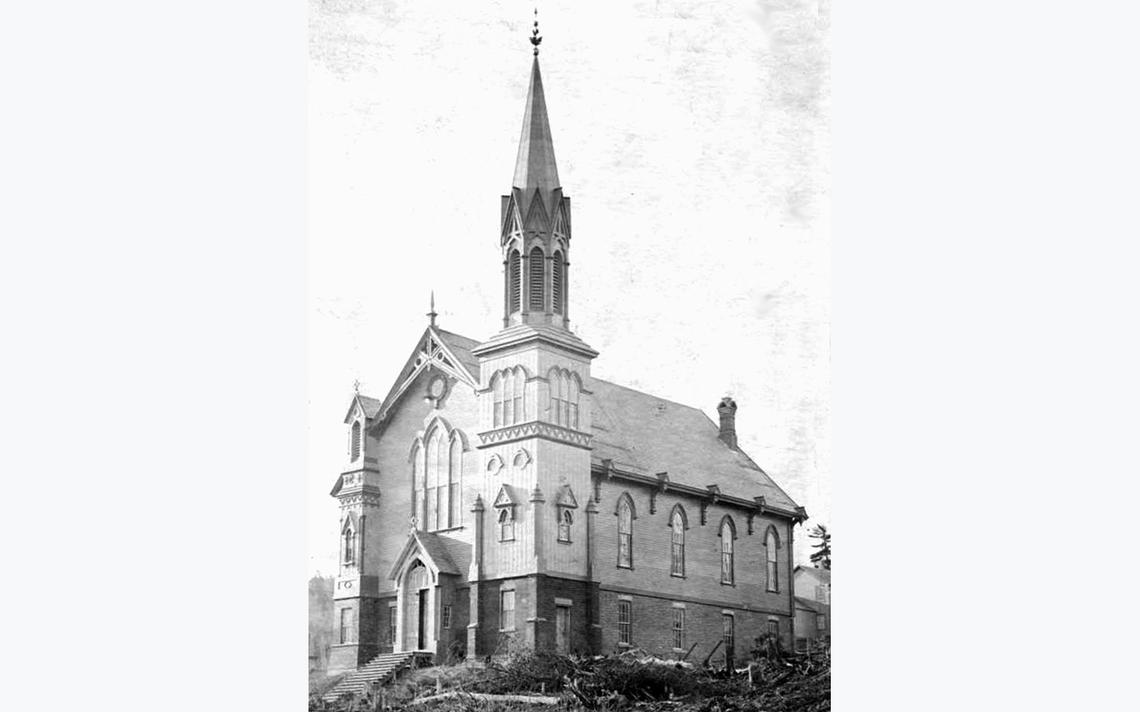
Duluth’s original First Presbyterian Church of Duluth, photographed in 1870. The building, demolished in 1971, also served as a Catholic and Lutheran church. (Photo courtesy of the UMD Martin Library)
Founders of Duluth’s First Presbyterian Church built their first church at 231 E. Second St. After a new church was built in 1891, the 1870 edifice served as a Catholic and later a Lutheran church until its 1971 demolition.
And although it did not build a church in 1870, Duluth’s First Baptist Church was organized on August 2.
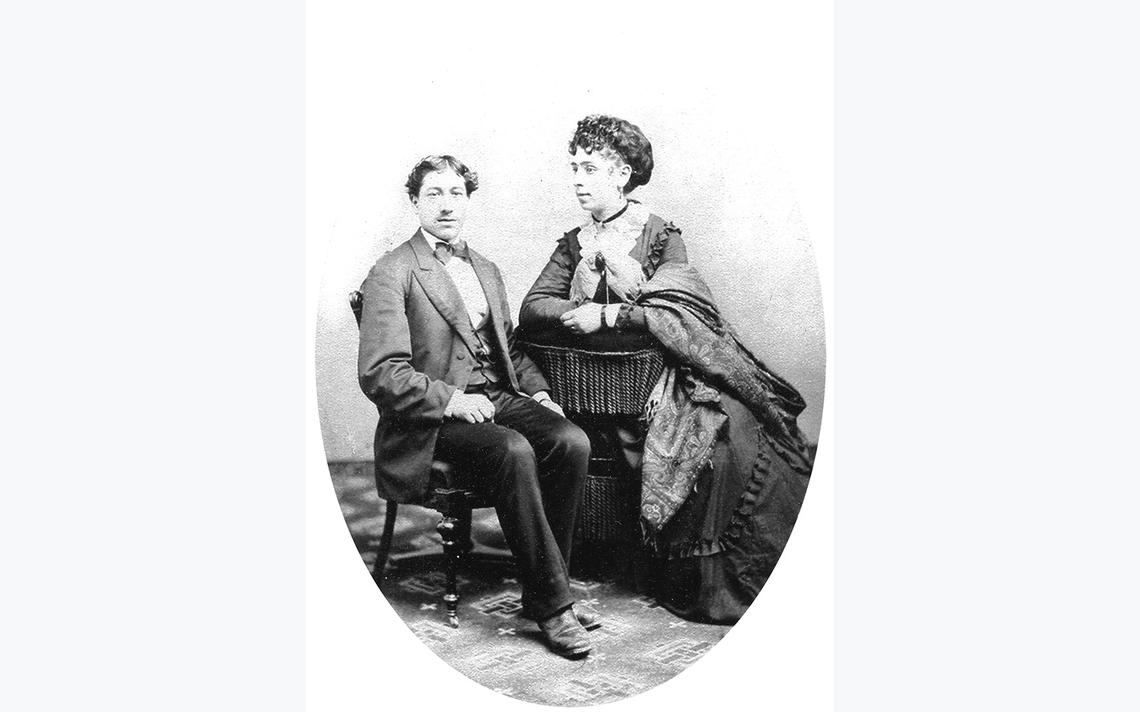
Bernard and Nettie Silberstein, photographed in 1870, the year they arrived in the Zenith City. Bernard became a civic and business leader, and the Silbersteins were among the founders of Temple Emmanuel, Duluth’s first synagogue. (Photo courtesy of Dennis Lamkin and John Niemi)
While Duluth’s first Jewish congregation, Temple Emanuel, did not build a temple until 1904, two of its 1891 founders, Bernard and Nettie Silberstein, arrived in 1870. Bernard, a successful merchant and civic leader, served as vice president of the city’s parks board for 20 years, often purchasing property and donating it to Duluth for park use.
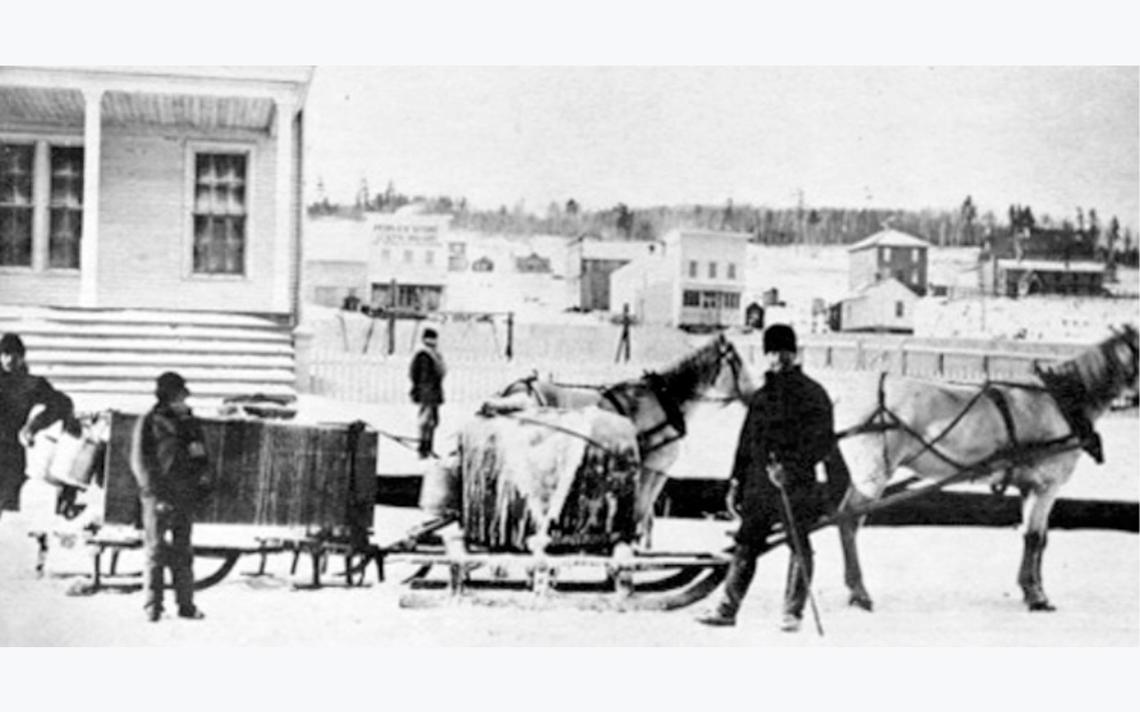
Camille Poirer, inventor of the Duluth pack, photographed in 1870 next to his sleigh, used to transport hogsheads of fresh water to local homes and businesses. (Photo courtesy of the Duluth Public Library)
Camille Poirer also arrived in 1870, earning his living hauling fresh water to homes and businesses. Twelve years later he received a patent for his “Pack-Strap,” which led to the creation of the Duluth Pack — still made in Duluth today.
There were many more firsts that year, but most of the community’s activity centered on the coming of Jay Cooke’s railroads. On February 15 local representatives of Duluth, Superior and Fond du Lac gathered near today’s Carlton for the groundbreaking of Cooke’s Northern Pacific Railroad.
On August 1, workers drove the last spike in Cooke’s LS&M. Regular daily passenger and freight service of the LS&M between Duluth and St. Paul began on August 22. Duluth’s original Union Depot was built that year and served until it was replaced by a new Union Depot in 1892.
The first load of grain shipped from Duluth left on August 27. The grain was loaded from LS&M docks at the foot of Third Avenue East, as Duluth’s first grain storage facility, Elevator A, was under construction immediately east of the docks in 1870.
Fire destroyed Elevator A, and essentially put an end to Duluth’s outer harbor, in 1886. But thanks to the Duluth Ship Canal, the outer harbor was no longer needed. The canal’s construction, financed by the LS&M, also began in 1870.
When complete, the canal allowed ships safe harbor behind Minnesota Point, whereas the outer harbor facilities exposed them to Lake Superior’s often turbulent waters. The dredging tug Ishpeming first began digging on September 5, 1870, stopped in November, and finished the following April.
The importance of Cooke’s railroads and the ship canal to Duluth’s ultimate success cannot be overestimated. Together they provided Duluth with the infrastructure it needed to become a major shipping center, which allowed it to survive after Cooke’s 1873 financial failure led to an economic depression that nearly destroyed the community.
Without the railroads and ship canal, Superior — not Duluth — would have become the Zenith City of the Unsalted Seas.
Happy 150th birthday, city of Duluth!
Editor’s note: This story is adapted from the forthcoming book “Duluth: An Urban Biography,” by Tony Dierckins (Minnesota Historical Society Press, April 2020); signed copies available for preorder at zenithcity.com.
Recent Comments