



Amongst the many dramatic challenges global businesses faced in 2020, one that had been simmering for years bubbled up and promised to stay at a high boil in 2021 is ESG: Environment, Social, Governance.
Signs that ESG expectations were becoming more ubiquitous included the establishment of global ESG standards published by the World Economic Forum’s International Business Council in September and BlackRock’s call for a globally recognized framework for investors to understand individual company risks.
Despite years of progress by leading corporations toward ESG, corporate social responsibility (CSR), environmental health and safety (EHS) and sustainability goals, the reality is that board members overseeing these companies are still trying to discern how all of this applies to them. In fact, in PwC’s annual Corporate Directors survey, which includes responses from more than 600 public board directors, only half (51 percent) say their board fully understands ESG issues impacting the company. That same study shows, however, that in 2020, 45 percent of directors say that ESG issues are a regular part of the board’s agenda, which demonstrates an increase from 34 percent in 2019.
Time for training
How can boards (public and private) improve their efficacy in ESG oversight for long-term value? As ESG experts, Presidians and members of the Athena Alliance (community of female corporate board directors and executives), we set out to help boards to become ESG-ready.
To start, we uncovered board members’ keenest ESG-education needs by surveying sitting board members at public (39 percent) and private (61 percent) companies, generating annual revenues of less than $50 million to $3 billion. They look to ESG to realize the following areas of corporate success:
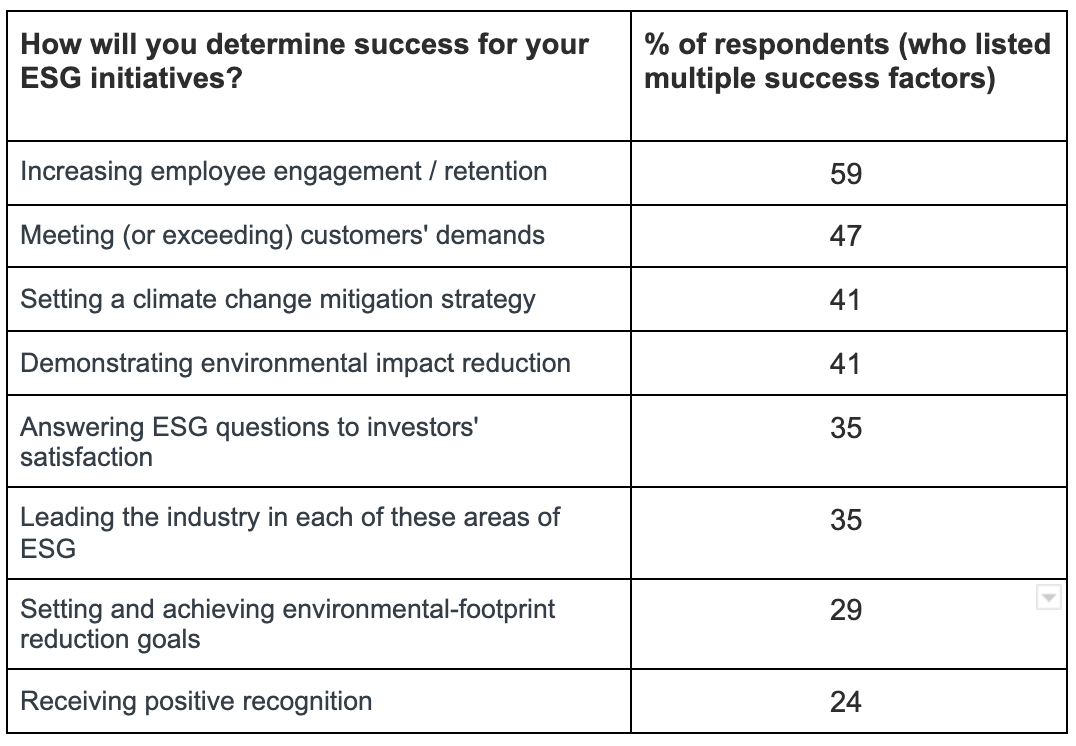

Then, we developed an ESG training for board members, along with the following five recommendations for board members to get ESG-ready for 2021.
1. Understand why boards need to be ESG-ready
In our survey, 47 percent of directors believe ESG is important for brand equity and reputation, 24 percent cited both customer and investor pressure, and 18 percent pointed to risk management and board pressure. One sitting board member said that ESG is “an inherent part of the business model.”
Board oversight includes advising the management team on the company strategy, and ensuring improved long term value for all stakeholders. Directors must understand how ESG issues can affect that strategy, and be in a position to assess and address both challenges and opportunities. To get started, align the board on why they should care, in light of demands from stakeholders such as customers, employees, investors, communities and suppliers. Invite an ESG expert to convey how ESG is material to your particular company.
2. Add ESG to your next board meeting agenda
When asked what level of importance their boards put on ESG, 76 percent of our survey respondents said “important” or “very important,” yet only 47 percent said their companies report on ESG, and 35 percent said their board provides ESG oversight. Compare that to the 45 percent stated by public companies in the PwC survey, and we are still looking at less than half of company boards addressing ESG even as investors and other business stakeholders demand it.
Add ESG to your next board agenda, even if only to start the conversation with the management team. You may be pleasantly surprised to learn that somewhere in the organization people have been working on ESG initiatives and have been waiting for the conversation to reach the board. Risk and reputation are two of the most fundamental aspects of “duty of care” for sitting board directors. Corporate leaders who take a broader view of their long-term strategy, including how they will meet ESG demands, will be better positioned to address new risks and opportunities.
3. Select an ESG oversight structure that aligns with your company
More than half (52 percent) of our survey respondents serve on the Nominating and Governance committees of their boards, with 20 percent stating they sit on a specialized ESG/EHS working group or committee. Some companies split the elements of ESG between committees, with “social” sitting with the compensation committee for example, as they typically manage diversity, equity and talent initiatives.
Because ESG strategy should align with business strategy and focus on material risks and business drivers, the full board will want to understand the ESG messaging and how those risks are being mitigated.
A recent article by the Harvard Law School Forum on Corporate Governance offers an excellent guide on how to address ESG and corporate governance within the board committees, noting most importantly, “Because ESG strategy should align with business strategy and focus on material risks and business drivers, the full board will want to understand the ESG messaging and how those risks are being mitigated.”
4. Arm yourself with expertise
In the PwC survey, respondents agreed that ESG issues are playing a larger role in their board discussions, and should be included in determining the company strategy. In fact, 67 percent of directors said the company should include climate change, human rights and income equality in the company strategy, a 13-point increase over 2019. Interestingly, female directors were more likely (60 percent) to see the link between ESG and company strategy than their male counterparts (46 percent), and agreed in higher percentages (79 percent vs. 64 percent) that climate change and human rights issues should be part of forming the company strategy.
As your board recruits new directors or replaces sitting directors, consider adding a director with ESG expertise, supplemented with an independent ESG consultant for a broader and future view.
5. Get educated
When asked from which aspects of ESG education their boards would most benefit from, respondents prioritized: 1) diversity, equity and inclusion, 2) ESG/CSR reporting, 3) products’ environmental footprint/impact, 4) company operations’ environmental footprint/impact and 5) climate and renewable energy. Most prefer a half-day training, with some wanting a customized training for their entire board and others wanting to join training comprising individual board members representing diverse companies.
Having interviewed board members over the years for materiality assessments, PGS Consults analysts note that board directors acknowledge their limited understanding of ESG and are genuinely open to learning more. The COVID-19 lockdown in March created a dramatic shift in board member interest in ESG — from polite inquiry to a more urgent need to know.
Recent Comments