


Amitabh Kant & Kowthamraj VS
(Amitabh Kant is CEO and Kowthamraj V.S. is a Young Professional at NITI Aayog. Views expressed are personal)
Coronavirus
Coronavirus has impacted millions and killed over thirty thousand people across the globe since its emergence in Wuhan, China, in December last year. It has forced people to quarantine, socially distance themselves and compelled nations to lock down their populations. It will cause the biggest destruction to global economy ever witnessed, leading to a major slump in global GDP. In India, we are witnessing the lockdown of 18% of the world’s population for a three-week period. This has huge implications on the flow of goods and commodities for daily existence of citizens as well as ensuring supplies of essentials to confront the pandemic itself.
In this atmosphere of uncertainty, the biggest risk faced by all nations is the potential breakdown of their healthcare system, resources and supply chain. Covid-19 affected countries have witnessed a dramatic demand for medical supplies, test kits, respirators, masks, tubes, robes, thermometers, hazmat suits and health workers precisely at a time when the traditional global supply chains are shutting down.
After the 2015 outbreak of MERS, which seriously impaired its economy, South Korea analysed what had gone wrong. There weren’t enough test kits, which resulted in people with MERS shuttling from one hospital to another just to get a confirmation of their diagnosis. Also, nearly 83% of the transmission was due to just five ‘super-spreaders’—44% or nearly 81 of the 186 MERS-affected people had been exposed in nosocomial transmission at 16 hospitals. What if an elaborate testing regime had tested, contact-mapped and isolated those five people to contain the spread in time?
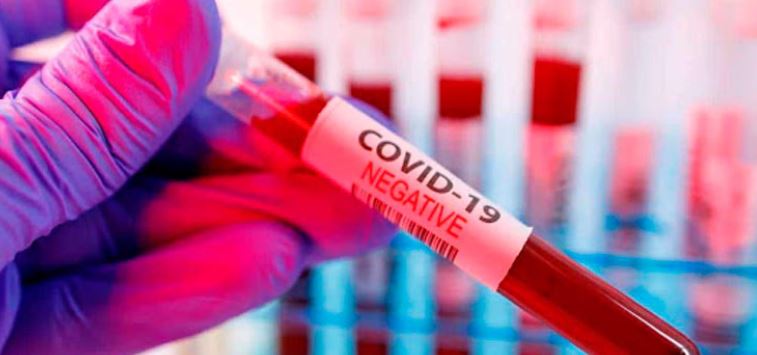
One of the reasons for lower testing frequency is the challenges in large-scale availability of test kits and allied medical supplies. Most virus-detecting kits are available only in big cities. The pandemic does not recognize geographical boundaries, race, ethnicity and economic status. Shoring up the healthcare system alone will not make any region resilient to future pandemics, some of which might even be more dangerous than Covid-19. The world has to think differently; it has to think better.
The fact of the matter is that an excellent healthcare system will still fall short during a pandemic. The number of intensive care units and associated survival tools required in a pandemic will be enormously higher than normal. This underscores a need for an enormous supply chain ramp-up at short notice.
The traditional healthcare supply chain, for the most part, comprises sets of highly specialized and relatively small factory units. Achieving scale is not a decision; it is a skill. Scaling needs high-volume planning, credit, global infrastructure, social capital and sophisticated deal-making. That is why even in China, the traditional healthcare supply chain was not enough to meet the demand of survival tools like masks. China’s BYD (EV and battery maker) appointed a task force comprising 3,000 engineers to build production lines at an existing plant in Shenzhenusing 90% of in-house components. They became the world’s largest mask-maker in a month. Most healthcare companies neither have those many engineers nor the production capacity and tooling in a single unit. Tata and Mahindra in India are now gearing up to produce crucial supplies like ventilators.
Health workers take on a disproportionate share of infection. Health workers’ safety is particularly important for India because it faces a severe shortage of doctors and nurses. In China and Italy, the fight against coronavirus has taken a huge toll on health workers. Protecting health workers who are in the forefront of the response is critical. The necessitates that we ensure personal protection kits—gloves, coverall, goggles, N-95 masks, shoe covers, face shield, triple-layer medical masks—and facilitate adequate food and resting facilities in hospitals. We greatly appreciate that the Government of India has provided Rs 50 lakh health insurance for all health personnel.
We have faced five pandemics in the last 20 years (one pandemic every five years). If countries have to become truly resilient to pandemics, it is imperative that they embrace the concept of ‘dormant consortium’. In essence, digital models of pandemics should be built and countries should put the best supply-chain experts of different industries in a room and request them to find out the synergies that even they didn’t know existed to tackle the scenarios. Governments should identify companies (auto, electronics, apparels, among others) that have the capacity to make certain categories of essential supplies at scale and club them together with specialized healthcare firms. A watertight, time-limited intellectual property agreement can be designed. An empowered representative from regulatory and standards’ agencies should be made part of the consortium. A big clothing company cannot be made to wait for a long time to get necessary approvals for hazmat suit production. These multiple dormant consortium will come to life when the government declares an imminent pandemic.
Electronics and semiconductor manufacturers who have millions of workers trained to handle thousands of sophisticated clean rooms (which mandate full-body clean suits) will have a huge role to play in pandemic-resilient supply chains. Since copper kills most microbes, pandemic-adaptive packaging can be sourced from copper foil suppliers to the battery industry. Distribution infrastructure of companies such as Amazon, Flipkart, Swiggy, Uber, Ola can be used to enable mass collection (by trained social workers) of swab samples to protect the healthcare workers. A reserve army of healthcare workers should be created to manage a pandemic.
In India, while government, private offices and commercial establishments have been closed down, exemptions have been provided for shops dealing with food, groceries, fruits and vegetables and delivery of all essential goods, including food, pharmaceuticals, medical equipment, through e-commerce. This has been done to ensure that the common citizen does not suffer and the supply chains are kept intact. (PIB)
Recent Comments