


Outbreaks of a new coronavirus have been dominating headlines and infecting people around the world for weeks, but human disease is only one example of how something introduced into a new environment can wreak havoc.
Invasive plant and animal species have been producing negative consequences in Missouri for years.
It’s difficult to quantify how much of a cost there’s been to Missouri’s economy and for various municipal and state departments’ efforts to combat invasive species, but what is clear is a non-native plant or animal’s accidental or intentional introduction into a local ecosystem can, unchecked, drastically change landscapes and the kinds of life that can inhabit them.
‘It’s almost becoming
the forest of the future’
Invasive species can take a variety of forms — as the Missouri Department of Conservation’s list of those threatening the state shows — including Chinese mystery snails, zebra mussels, gypsy moths, several species of carp fish, emerald ash borer beetles, feral hogs, bush honeysuckle shrubs, Bradford or Callery pear trees, garlic mustard flowers and sericea lespedeza bush clovers.
“Invasive species are one of the really big threats to nature that we face today,” said Ken McCarty, director of natural resources management for Missouri’s State Parks Division.
MDC Habitat Management Coordinator Nathan Muenks said invasive species are the second greatest threat to the environment, only behind “complete conversion of a system” — such as paving over a prairie and putting parking lots in its place — and complete conversions are happening at a slower pace than at the turn of the last century.
McCarty, who has been working with state parks for 35 years, said invasive or exotic species were a problem in 1985, but a minor issue that took up maybe 5-10 percent of the efforts to manage the state’s parks.
He estimated combating invasive species now takes up close to 50 percent of the total efforts, and “a good part of the other 50 percent is directed toward our prescribed burn program,” which is itself, in part, a measure to reduce invasive plant species.
Even a force as potent as fire has its limits in effectiveness to address invasive species, though.
McCarty said bush honeysuckle seedlings are very susceptible to fire, but the mature plants — which can be 15-20 feet tall — can so overtake an area and crowd out native plants’ source of sunlight that, in time, there’s not as much plant material on the forest floor left to burn, reducing fire’s effectiveness.
Bush honeysuckle “creates an environment where it protects itself from fire,” he said.
Roxie Campbell, park naturalist and head of efforts against invasive plants at Rock Bridge Memorial State Park near Columbia, said young oak tree saplings don’t develop without enough sunlight — the park is primarily oak and hickory woodlands.
“Over time, then you would not have acorns produced,” and likewise with hickory nuts, Campbell said.
A variety of wildlife depends on those nuts or the insects that are also supported by native plants.
Campbell noted bush honeysuckle and garlic mustard are also known to produce chemicals that inhibit the growth of other plants and kill fungi in the soil that benefit trees and let them absorb more water into their roots.
“It’s almost becoming the forest of the future,” McCarty said, recalling a time when, in contrast, he had not even seen honeysuckle growing in the wild.
“There are many areas where the problem is so advanced it has severely suppressed natural plant diversity, bird diversity — it’s changed the character (of an area) all together,” McCarty said, adding it’s difficult to muster the resources to completely eradicate an infestation under those circumstances.
Short of new technology becoming available, “right now, we don’t think we can get rid of those species completely,” Muenks said of bush honeysuckle, sericea lespedeza and invasive carp.
The problem of invasive species is not limited to state parks or public lands, though. Invasive species probably cost the United States hundreds of billions of dollars each year, in urban and rural areas, on public and private lands.
Cost and priorities
“The economic and social impacts of invasive species include both direct effects of a species on property values, agricultural productivity, public utility operations, native fisheries, tourism, and outdoor recreation, as well as costs associated with invasive species control efforts,” according to the U.S. Department of Agriculture.
The USDA cited a 2005 study referenced by the U.S. Fish & Wildlife Service, which estimated “the economic losses associated with invasive species in the United States reached approximately $120 billion/year.”
“In 2011 alone, the Department of the Interior will spend $100 million on invasive species prevention, early detection and rapid response, control and management, research, outreach, international cooperation and habitat restoration,” the Fish & Wildlife Service added in 2012.
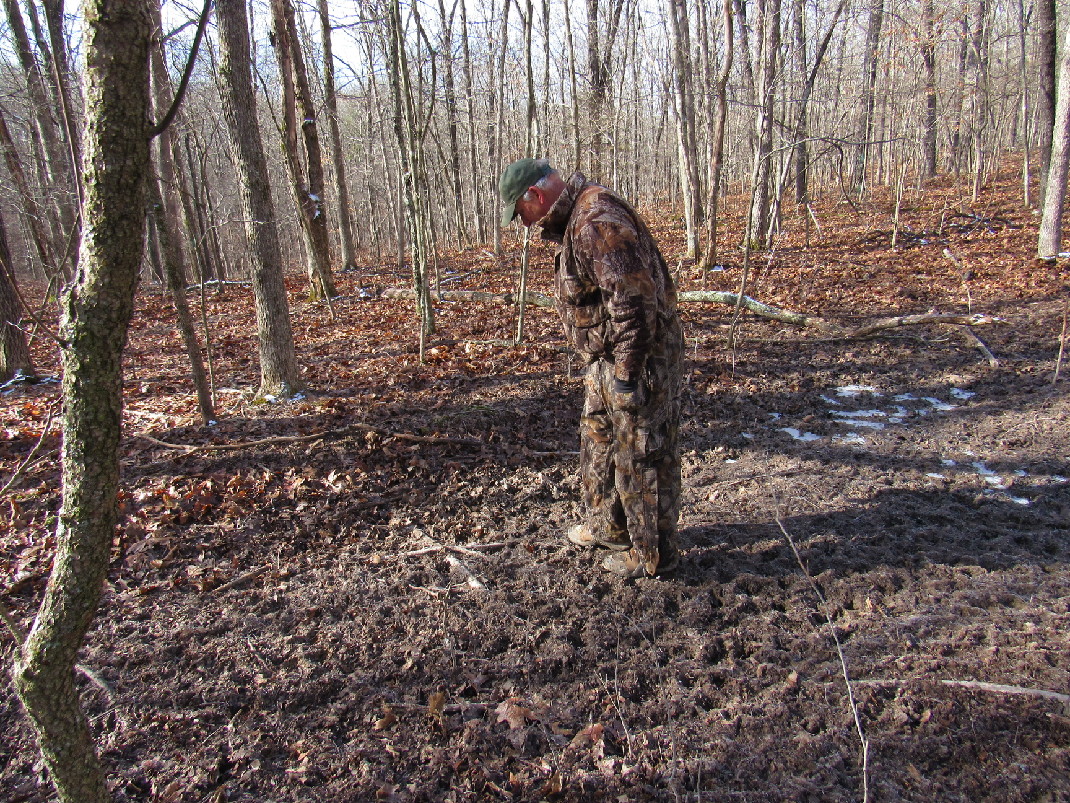
There are rodents introduced for their fur pelts that are destroying coastal states’ wetlands that communities are dependent upon more than ever for protection against hurricanes and rising seas, mussels that can clog the intake pipes of power plants and drinking water systems, and exotic fish that are literally devouring fishery species.
In Missouri, McCarty said, it’s difficult to calculate how much state parks spend on invasive species alone — no one in the Parks Division is hired specifically for control of exotic species, but it’s just part of the job.
Muenks is MDC’s point person for invasive species, but he only does that coordination work part time. He said the department is looking to restructure an old position into a dedicated invasive species coordinator, hopefully by summer or early fall, probably to be filled internally.
He said prioritizing which invasive species to fight depends on a consideration of the effects on human health, agriculture and native species and landscapes, as well as overall impact and how aggressive the rate of spread for a species is.
The top focus among animals is currently the feral hog, but the emerald ash borer and gypsy moth insects are also getting attention.
An invasive species coordination team ranks species to address based on their priority — with the highest priority being eradication, on down to species the state will probably have to live with forever or that have a low impact on the environment or human health, Muenks said.
Funding is generally a challenge, he added; anti-invasive species efforts have to compete with all the other work going on.
“In my opinion and of some of my peers, we are going to have to find a better way just as a society to work against these together,” he said.
Partnering up
State and local conservationists said public-private and agency-volunteer relationships are key to the current anti-invasive species efforts.
Muenks listed the Missouri Feral Hog Elimination Partnership, Missouri Invasive Plant Task Force, Missouri Invasive Forest Pest Council, Scenic Rivers Invasive Species Partnership and 100th Meridian.
He said there was the realization about 2014 or 2015 that a lot of independent efforts would be more effective working together, taking systematic approaches to getting rid of invasive species, or at least to contain the species’ impacts.
“The partnerships are going to be the key to the future, I think,” he said.
Campbell, a member of the Missouri Invasive Plant Task Force, said the hope is to have crews that are not limited to working on public lands to remove invasive plants; all of Rock Bridge’s efforts are within the park’s boundaries.
“Invasive plants don’t know about park boundaries,” she said, adding it’s certainly desired that private landowners work to control plants on their properties, especially if near a state park or other natural area.
Candice Davis, MDC media specialist for the state’s Southeast and Ozark regions, said in an email the feral hog partnership exists to offer private landowners “free trapping assistance, and to also continue and increase trapping efforts on public lands in the state. Public lands, including conservation areas and the Mark Twain National Forest, are now closed to feral hog hunting. The purpose of these closures is to decrease the disturbance to neighboring lands by feral hogs that are pursued by hunting dogs while also allowing wildlife technicians to conduct trapping without disturbance around the traps.”
Muenks added the biggest element of partnerships is the exchange of ideas and developing a collective vision, and sharing information with the public and private organizations.
It remains a challenge, for example, that some invasive plants are still being actively bought and sold, and that’s something Muenks said is important to educate consumers about and prevent.
“It catches the consumer’s eye very well,” he said of the Bradford pear tree. But when varieties of those trees bred to be infertile are planted close together, they can actually cross-pollinate, hybridize, create fertile fruit and multiply — birds eat the fruit and spread the seeds.
Muenks said, “Nature tends to find a way.”
Ray Wallace, city forester for Jefferson City’s Department of Parks, Recreation & Forestry, said there are lots of Bradford pear trees visible along West Edgewood Drive and Missouri 179 — noticeable in springtime by their white flowers.
One problem with the trees is their limbs easily break in the wind, Wallace said. Muenks added the wild varieties have thorns on them.
Wallace said Jefferson City’s Parks Department focuses mainly on bush honeysuckle, Bradford pear trees and black locust trees in terms of fighting invasive species because of how aggressively they can spread.
Department staff will cut down those plants and spray the stumps with herbicides. Because of the chemicals involved, only department staff are involved with that.
However, Wallace said, volunteers are welcome to cut honeysuckle — as often happens during the annual Serve Jeff City and Mission JC service events.
He said people can reach out to him to volunteer to cut, and volunteers can bring their own tools or be provided with them. Wallace can be reached at 573-634-6509 or [email protected]
Campbell said college students are employed in the summer months, and some part time in spring and fall, to work on invasive plant control. She added volunteers are also welcome at state parks and conservation areas, though — people just need some training to identify plants correctly and use preferred removal methods.
There will be a demonstration of treatment methods from 10 a.m.-3 p.m. March 14 at Rock Bridge, she said.
Volunteers can call their local parks about getting involved, and Rock Bridge specifically can be reached at 573-449-7402, she added.
McCarty said every state park has an exotic species control program — whether the problem is big or small at each park, every park has its concerns.
He said the focus of efforts is often on protecting the best natural areas — the “best glades, best wetlands, most impressive forests” — as well as on highly visible areas or areas that are most susceptible to the growth and spread of invasive species that could, in turn, become a source of invasive species that could spread to even more areas.
While he could point to an example of the worst of the worst — Clark’s Hill/Norton State Historic Site in Osage City, where a “tremendous infestation of bush honeysuckle” has completely consumed the forest understory — there is hope in some of the best of the best, such as Ha Ha Tonka State Park near Camdenton, which McCarty said still looks as it might have a couple hundred years ago, especially in the interior of the park.
“It comes down to the citizens taking interest in controlling or limiting species on properties they care about” — not just on properties people own, but streams or parks in their area, Muenks said.
Recent Comments