
Tech News, Magazine & Review WordPress Theme 2017
  • Home
  • Supply Chain Updates
  • Global News
  • Contact Us
  • Home
  • Supply Chain Updates
  • Global News
  • Contact Us
No Result
View All Result
No Result
View All Result
Home Supply Chain Updates

Airlines Use Empty Passenger Jets to Ease the Cargo Crunch

usscmc by usscmc
March 17, 2020
Airlines Use Empty Passenger Jets to Ease the Cargo Crunch
Share on FacebookShare on Twitter

As the novel coronavirus speeds around the world, airlines have responded to travel restrictions and plummeting demand by canceling flights, grounding fleets, and shuttering terminals.

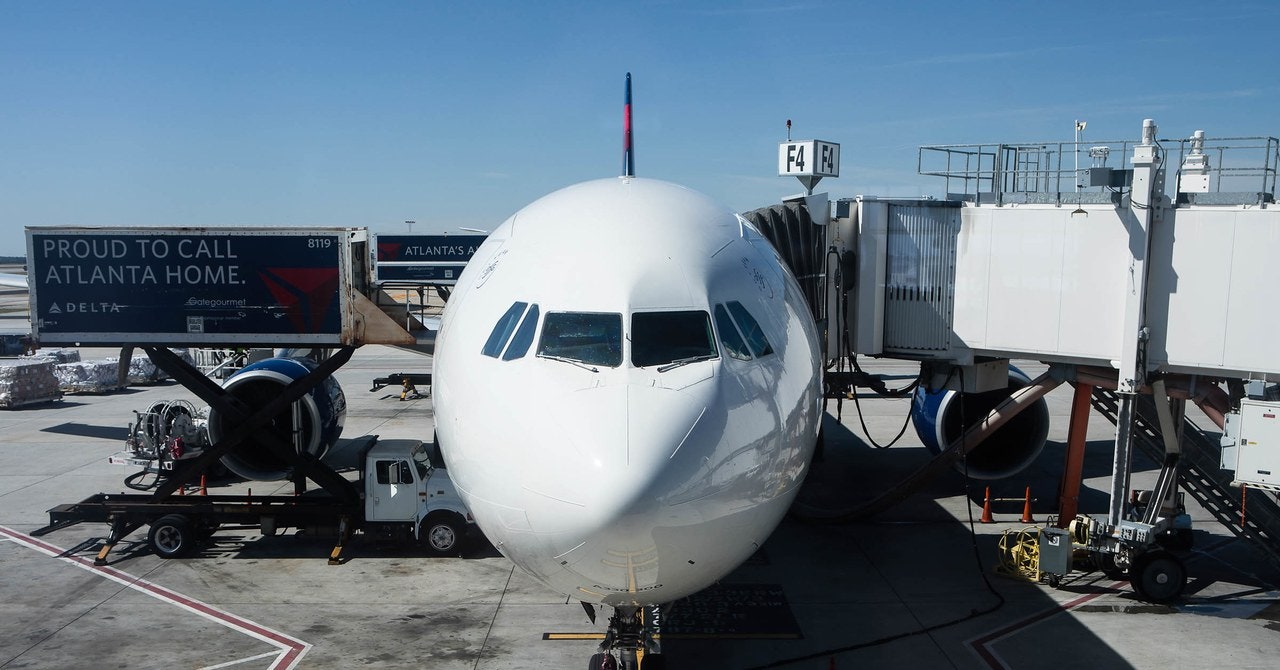
But Monday afternoon, Delta said it’s putting an unspecified number of passenger jets back in the air, flying out of 13 American airports and to 70 destinations overseas. Delta’s not selling any tickets for those planes, however. Rather, they’ll be operated by Delta’s cargo arm, running charter flights to cater to anyone who needs to move a package or pallet.

By using jets outfitted to carry people to carry stuff instead, Delta’s following the lead of Korean Air and Singapore’s budget carrier Scoot. Others are likely to follow. Reps for British Airways and Cathay Pacific have said they’re considering similar moves. That may conjure visions of ghost planes carving through the air, but it’s a natural outgrowth of the Covid-19 pandemic.

Read all of our coronavirus coverage here.

Passenger air travel has cratered in the past few weeks. Globally, airlines have canceled more than 185,000 flights since the end of January, according to the International Air Transport Association. The slashing continues. Lufthansa, Air France, and KLM are all reducing capacity by up to 90 percent. Delta announced it will cut total capacity by about 40 percent. American Airlines will fly 75 percent fewer international flights between mid March and May than it did in the same period last year. The outlook is so grim, the US airline industry has already asked for more than $50 billion in federal aid.

The thing is, those planes carry more than people, their stuff, and their germs. They usually carry some freight as well, an easy way for an airline to turn spare room into a source of revenue. In Asia, passenger planes account for about 45 percent of air freight capacity, says Neel Jones Shah, who runs air freight operations for Flexport, which helps businesses organize their shipping efforts. On transatlantic routes, they provide 80 percent. Now that passenger flights between the US and Europe (including the UK and Ireland, as of this weekend) are approximately donezo, that capacity has disappeared.

With only dedicated freighters to do the work, shipping costs have nearly doubled, compared with typical rates. This time of year, it typically costs $3 to $3.50 per kilogram to send your stuff from Shanghai to Chicago. “They’re now well above $6,” Shah says. Transit times have roughly doubled, too, as more shipments have to wait their turn. It usually takes three to five days to fly something from Hong Kong to Chicago, Shah says. Right now, it’s more like five to eight days.

Sharpening the bite of the capacity crunch is the fact that the US and Europe are going into lockdown just as China’s factories, which dropped to as low as 15 percent production capacity in January and February, are increasing their output. The initial drop left companies with dwindling inventories of all sorts. Now companies that usually get goods by ship are desperate to restock and can’t wait for the cheaper, slower ocean crossings. “We have a lot of customers that did their first air shipments over the past few weeks,” Shah says. “Production’s ramping up, capacity is well short of demand, rates are quite high, and transit times are longer.”

Illustrated woman, speech bubble, virus cell

What Is the Coronavirus?

Plus: How can I avoid catching it? Is Covid-19 more deadly than the flu? Our in-house Know-It-Alls answer your questions.

It takes the better part of a year to convert an aircraft from a people-mover to a pallet-porter, work that includes pulling out seats, galleys, and lavatories, refashioning the fuselage with larger cargo doors, strengthening the floor to accommodate extra weight, and more. Plus, Shah says, Amazon long ago booked most of the upcoming slots with the companies that do that work, as it expands its own fleet. But planes that flew passengers until a few days ago—and presumably will again at some point—have plenty of capacity. A Boeing 777-200 that can carry 332 people has about 44,000 pounds of cargo capacity, compared with 125,000 pounds for the freighter version.

usscmc

usscmc

No Result
View All Result

Recent Posts

  • How Hapag Lloyd captured a major market share in the Container Shipping Industry in USA
  • Why USA’s East Coast is the Favorite Destination for Manufacturing Companies
  • How Trade Relations Between the USA and UK Improved After Keir Starmer Became Prime Minister
  • Tips and Tricks for Procurement Managers to Handle Their Supplier Woes
  • The Crazy Supply Chain of Walmart Spanning Across the Globe

Recent Comments

  • Top 5 Supply Chain Certifications that are in high demand | Top 5 Certifications on Top 5 Globally Recognized Supply Chain Certifications
  • 3 Best Procurement Certifications that are most valuable | Procurement Newz on Top 5 Globally Recognized Supply Chain Certifications

Archives

  • July 2024
  • June 2024
  • May 2024
  • April 2024
  • March 2024
  • February 2024
  • January 2024
  • December 2023
  • November 2023
  • October 2023
  • September 2023
  • August 2023
  • July 2023
  • June 2023
  • May 2023
  • April 2023
  • March 2023
  • February 2023
  • January 2023
  • December 2022
  • November 2022
  • October 2022
  • September 2022
  • August 2022
  • July 2022
  • June 2022
  • May 2022
  • April 2022
  • March 2022
  • February 2022
  • January 2022
  • December 2021
  • November 2021
  • October 2021
  • September 2021
  • August 2021
  • July 2021
  • June 2021
  • May 2021
  • April 2021
  • March 2021
  • February 2021
  • January 2021
  • December 2020
  • November 2020
  • October 2020
  • September 2020
  • August 2020
  • July 2020
  • June 2020
  • May 2020
  • April 2020
  • March 2020
  • February 2020
  • January 2020
  • December 2019
  • November 2019
  • September 2019

Categories

  • Global News
  • Supply Chain Updates

Meta

  • Log in
  • Entries feed
  • Comments feed
  • WordPress.org
  • Antispam
  • Contact Us
  • Disclaimer
  • Home
  • Privacy Policy
  • Terms of Use

© 2025 www.usscmc.com

This website uses cookies to improve your experience. We'll assume you're ok with this, but you can opt-out if you wish. Cookie settingsACCEPT
Privacy & Cookies Policy

Privacy Overview

This website uses cookies to improve your experience while you navigate through the website. Out of these cookies, the cookies that are categorized as necessary are stored on your browser as they are essential for the working of basic functionalities of the website. We also use third-party cookies that help us analyze and understand how you use this website. These cookies will be stored in your browser only with your consent. You also have the option to opt-out of these cookies. But opting out of some of these cookies may have an effect on your browsing experience.
Necessary
Always Enabled
Necessary cookies are absolutely essential for the website to function properly. This category only includes cookies that ensures basic functionalities and security features of the website. These cookies do not store any personal information.
Non-necessary
Any cookies that may not be particularly necessary for the website to function and is used specifically to collect user personal data via analytics, ads, other embedded contents are termed as non-necessary cookies. It is mandatory to procure user consent prior to running these cookies on your website.
SAVE & ACCEPT
No Result
View All Result
  • Home
  • Supply Chain Updates
  • Global News
  • Contact Us

© 2025 www.usscmc.com