

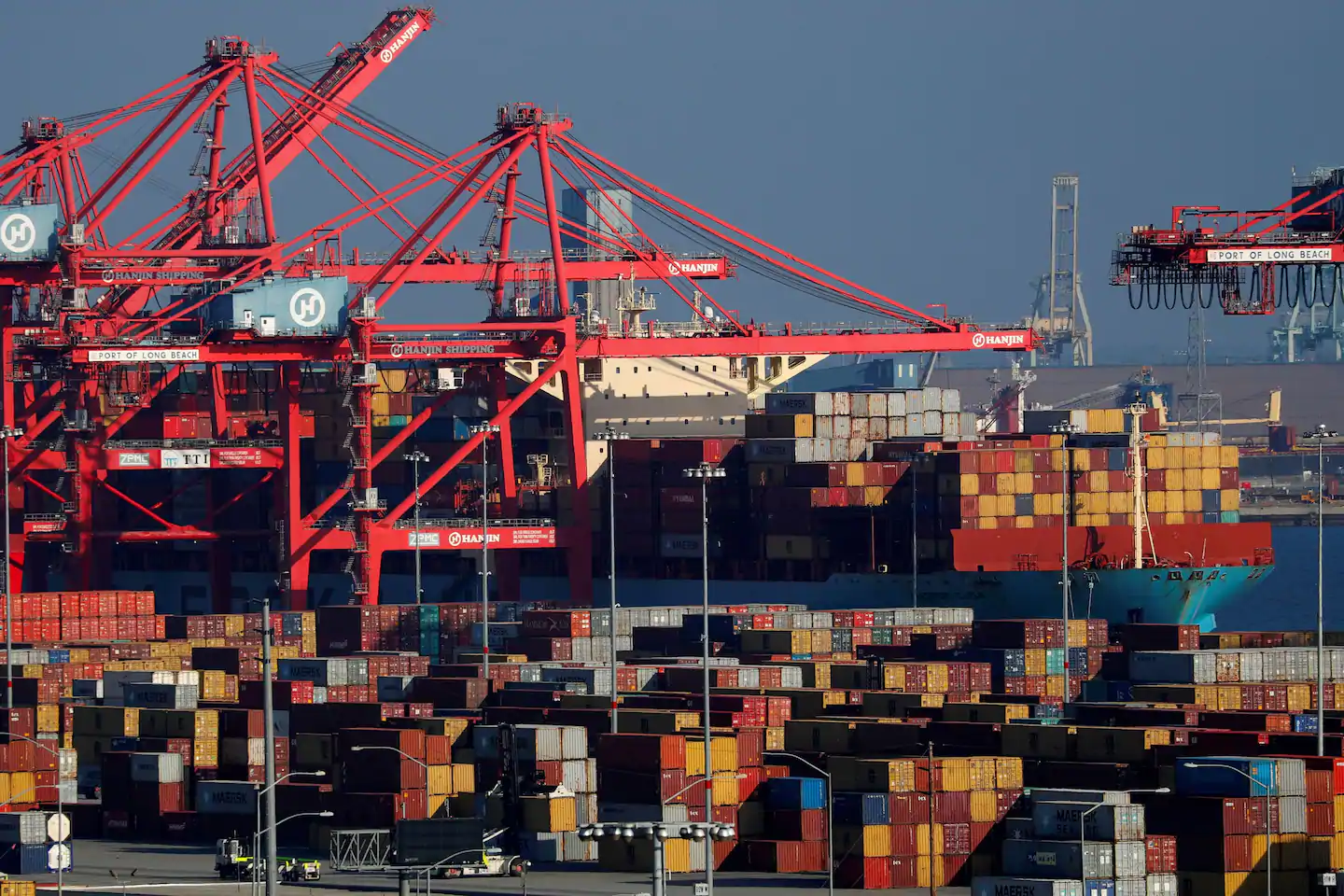

Biden’s executive order, which he is scheduled to sign this afternoon, also is aimed at avoiding a repeat of the shortages of personal protective gear such as masks and gloves experienced last year during the early months of the coronavirus pandemic.
“We’re going to get out of the business of reacting to supply chain crises as they arise,” said one administration official, who spoke on the condition of anonymity to brief reporters.
The president’s order, which had been anticipated, represents the partial fulfillment of a campaign pledge. But mandating a government study will be the easy part. Extensively modifying U.S. supply lines and reducing the country’s dependence upon foreign suppliers — after decades of globalization — could prove difficult and costly.
“A review is just a review — no immediate consequences. It depends on what comes out of it,” said William Reinsch, who was a Commerce Department official during the Clinton administration.
In a sign of the issue’s urgency, Biden is scheduled to meet Wednesday at the White House with a bipartisan group of lawmakers to discuss the global computer chip shortage, an increasingly dire problem for manufacturers.
Biden’s order also will set in motion detailed studies of the supply needs of the defense, public health, information technology, transportation, energy and food production sectors — major swaths of the $20 trillion U.S. economy.
The administration officials who briefed reporters said the president’s order was not aimed at China, though they acknowledged U.S. reliance upon “strategic competitor nations” will be among the risks evaluated.
China is a dominant supplier for the U.S. of drug ingredients, electronic components and exotic materials known as rare earth elements, which are used in high-tech products such as fighter jets, smartphones and wind turbines.
In recent weeks, as Chinese officials mulled a possible shift in their rare earth export plans, the price of one — dysprosium oxide — rose by 28 percent. (The material is used in lasers and nuclear-reactor control rods.)
The U.S. has moved to buttress its limited domestic production capacity and secure supplies from friendly nations. Earlier this month, the Pentagon awarded a $30 million contract to Australia’s Lynas Rare Earths for the construction of a processing facility in Texas.
Biden administration officials also took pains to distinguish the president’s supply chain ambitions from former president Donald Trump’s protectionist approach. Biden’s plan to shore up domestic supply chains would “revitalize and rebuild domestic manufacturing capacity and create good-paying jobs,” just as earlier government programs had boosted economic growth, one official said.
The officials also said the administration plans to work with U.S. allies.
“This work will not be about America going it alone,” one insisted. “ … It’s not about re-shoring all supply chains to America.”
Biden’s ambitions extend well beyond the supply chains for computer parts and medical gear. During the campaign, he said the U.S. “needs a stronger, more resilient domestic supply chain in a number of areas, including energy and grid resilience technologies,” electronics, telecommunications infrastructure and key raw materials.
While specific proposals await the review’s outcome, the officials said they planned to tailor policies to conditions in individual industries. Biden said last year that he would seek a blend of greater domestic production, strategic stockpiles of goods and materials, development of surge capacity, enforcement of trade rules and cooperation with allies.
“This is significant,” said Michael Wessel, a member of the U.S.-China Economic and Security Review Commission. “The last administration talked the talk, but did not walk the walk.”
Biden said last year that U.S. companies involved in the production of critical goods and materials would be required to develop contingency plans for addressing supply chain risks. The pharmaceutical industry could be among those most affected, as the president vowed to eliminate tax code provisions that encouraged drugmakers to go offshore.
Recent Comments