


WSU Photo Services
SEATTLE—Death is not environmentally friendly. Cemeteries take up about 500 square kilometers in the United States. Embalming the dead consumes millions of liters of chemicals each year. And cremation takes large amounts of natural gas, producing plentiful greenhouse emissions. So why not take a cue from consumers who recycle their food waste into soil, and do the same to our mortal remains?
In May 2019, Washington became the first state to legalize natural organic reduction, or body composting, as an environmentally friendly alternative to existing mortuary options. The law will take effect on 1 May, and by early 2021, Recompose, a Seattle-based company, aims to offer commercial body composting.
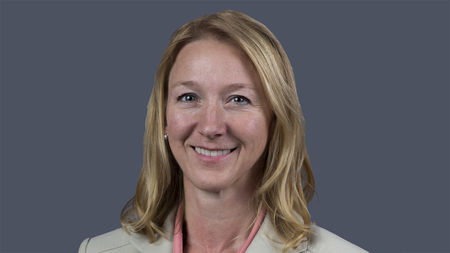
As a first step, Lynne Carpenter-Boggs, a soil scientist at Washington State University, Pullman, and scientific adviser to Recompose, has conducted a pilot study with six donated bodies to test the process.
Carpenter-Boggs presented preliminary results during a talk Sunday at the annual meeting of AAAS, which publishes Science. Science sat down with Carpenter-Boggs to talk about what she has learned and why body composting is a sustainable option for our postmortem plans.
Q: How exactly does body composting work?
A: You mix plant materials so that there’s a proper carbon to nitrogen ratio. You want to have a lot of that carbon to be available as simple sugars for microorganisms, but you also want some of that carbon to be very stable and just there to provide bulking and good airflow.
The body is a high-moisture, high-protein, and nitrogen input into the process. So, the other materials have to be somewhat higher in carbon. Overall, you aim for a carbon to nitrogen ratio of 25 or 30 to 1, but it will also work in a broader range than that. It’s really about creating a microbial habitat with lots of food and sufficient moisture and oxygen. The microorganisms actually all just come in on the materials; we didn’t inoculate with any additional microorganisms.
It takes 4 to 7 weeks. Whereas most farm operations will do open-air sort of pile composting with minimal management, this is an enclosed process. This vessel has the ability to rotate; we turned it several times each week, which aids in some of the physical disruption and aeration. And then we also monitored the moisture content, good oxygen, and aeration.
Q: How different is the end product from that of food or livestock composting?
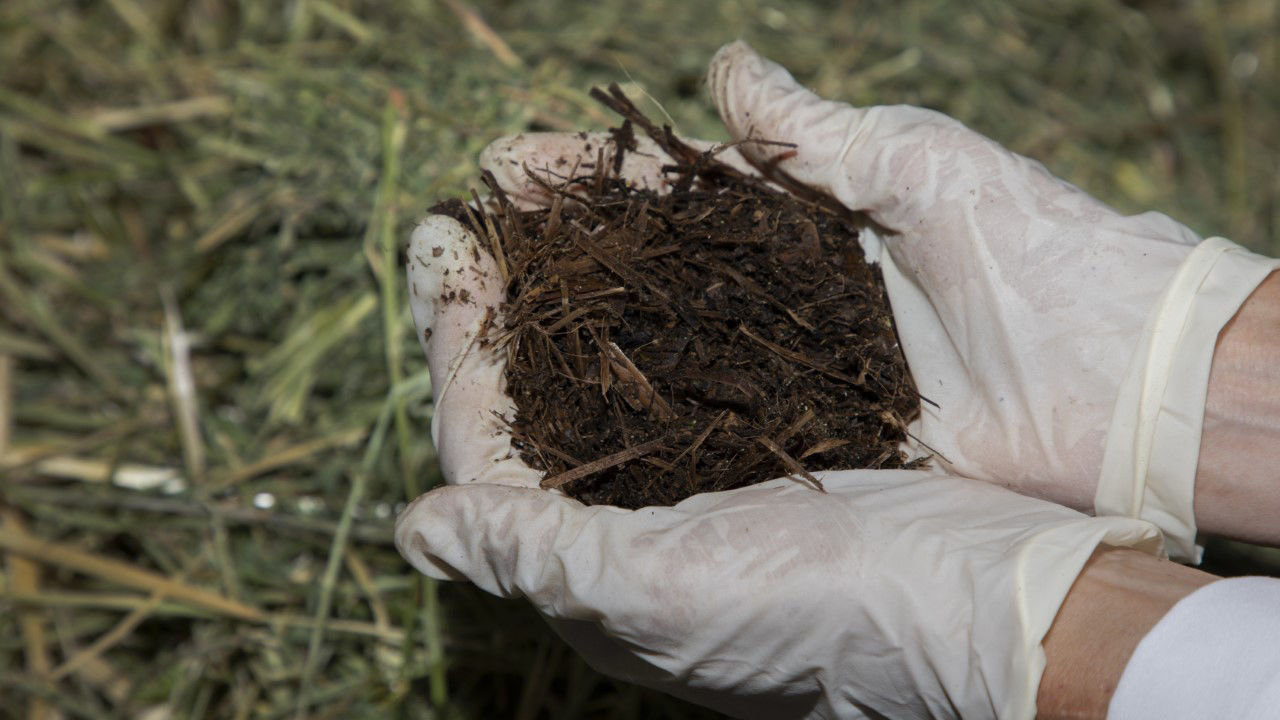
A: Physically, you would not know the difference between other types of compost. What you see is some remnants of the plant material, so some of the straw and wood chips and shavings that were in there. All of it has darkened somewhat because of the development of humic acids. But it smells pleasant, it looks just like compost.
For body composting, the temperature needs to reach 55°C for a minimum of 3 days, sometimes longer depending on the process. This is the legal minimum and that’s supported by a lot of research. … Having this high temperature guarantees that you’re not in an environment that supports pathogens, such as coliform bacteria.
Q: What is the carbon footprint of body composting?
A: In the study, we didn’t monitor carbon dioxide and other gases, but there have been studies looking at the various gases coming off of composting. It’s important to maintain good oxygen status. When you start going into anaerobic conditions is when lots of problems arise—you start producing more methane versus carbon dioxide, you start losing more ammonium and volatile organic compounds which can both be greenhouse gases and are more odorous. Some electricity is used in the process, but we are also developing a carbon-sequestering material.
Q: What were the ethical and cultural issues you considered before the study?
A: We went through every assurance process that the university had and then we made up some more. There was a wide range of biosecurity processes, legal review, … we did have an ethics review—we had people from our philosophy department and the medical school looking into what we intended to do. And that was a very helpful process for us.
The main issues that people may have are religious concerns. There are a lot of people for whom there’s only one type of acceptable practice after death. So, it’s primarily just a process of dialoguing and being humble, open, and transparent about the process.
Q: Are states other than Washington interested in body composting?
A: This is moving through the Colorado and California legislatures now. There are legislators now around the country who are interested in moving this forward. … So that is exciting; there’s a fulfillment in seeing that the options of what to do with our bodies after death are broadening.
Recent Comments