


You certainly don’t need us to tell you that 2020 wasn’t a year just like any other. But what impact did the pandemic actually have (or not have) with regard to mobility in and around the port? And what else was going on in the field of cargo transport? Mobility Manager Tom Verlinden from Port of Antwerp shares his highlights of 2020.
What about the accessibility of the port? Can we improve it even more? What barriers exist when it comes to bringing about a modal shift and how can we lower them? Together with his team, Tom Verlinden is working day in and day out to provide smart responses to those questions. And everything revolves around BRaiNS, in other words: Barge, Rail, Night logistics and Shortsea.
By 2030, the port of Antwerp is aiming to bring about a modal shift from road transport during the day to modes of transport that put less strain on the roads. What did you do in 2020 to put the first steps in place?
“At Port of Antwerp, everything we do revolves around the idea of BRaiNS. That is something we devoted a lot of energy to this past year. BRaiNS stands for Barge, Rail, Night logistics and Shortsea, in other words, for all of the alternatives that we offer to keep freight traffic on the roads to a minimum, especially during the day. In that regard, we’re focusing mainly on container traffic, which is the largest and fastest growing part of our transshipment operations, as that is an area in which more than half of the transportation to the hinterland is carried out by means of trucks. For the port as a whole, inland navigation accounts for a larger share than road transport.”
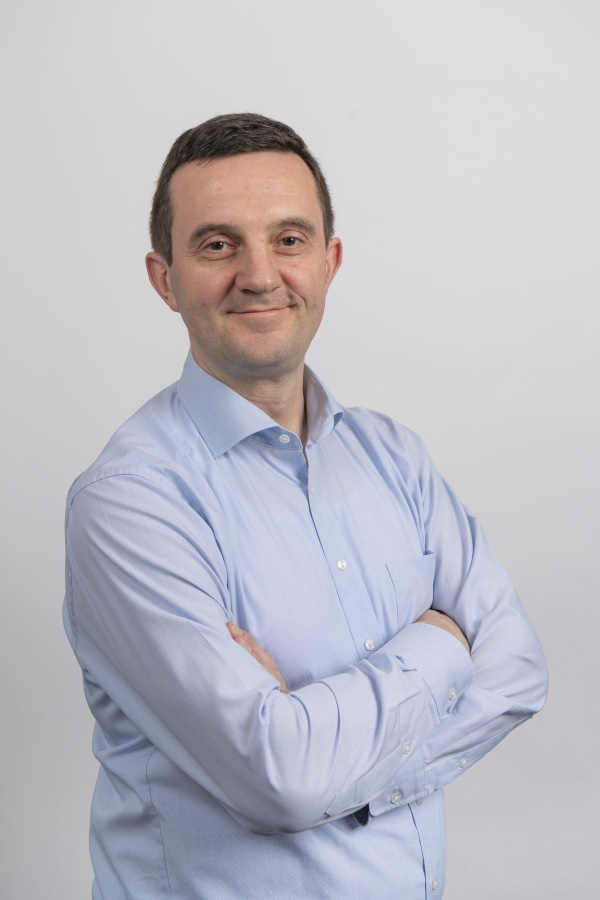
Source: Port of Antwerp, Mobility Manager Tom Verlinden
What was the catalyst that prompted that turnaround?
“Actually, it’s not a turnaround. It’s something we’ve been working on for a long time, though the works on the Oosterweel connection at the Antwerp ringroad are playing a major role, of course. We’re actually doing a lot to prepare ourselves for this in order to avoid further traffic jams. But as we now know, 2020 was a very atypical year – because of the lockdown, passenger transport decreased and we saw hardly any traffic jams. What was striking, however, was the fact that freight transport on the motorways did not really decrease.
This just goes to show once more how important it is to focus on alternatives. The logistical location of Port of Antwerp is our greatest asset – at the centre of Europe, at the junction of three major rail corridors and with inland waterway connections to the Scheldt, the Rhine and the Meuse. We must make sure that we play that trump card to the fullest. What is more, we are also connected to many regions in Europe by sea (shortsea). All of these alternatives are a lot more ecologically friendly. After all, one short-sea ship can remove thousands of trucks from the road. Sustainability is becoming increasingly important not only for the port, but also for industry and for end consumers who order their goods online.”
Are logistics managers afraid of that modal shift, when it comes to swapping trucks for inland navigation for example?
“They’re not afraid of it, but there is a certain reticence. And that’s only to be expected. After all, you’re changing something that had become something of a habit. Still, it’s important at least to examine the alternatives – according to your own needs. Four factors are actually important in that regard. You have to look at the cost, the frequency, the turnaround time and the reliability of the means of transport. Is the distance to be covered less than 100 kilometres? Trucks may seem the most attractive means of transport, but then you can still consider night logistics as a means of avoiding traffic jams. On top of that, you may be surprised by the great solutions that barge transport can offer on short distances. Is the distance longer than 100 kilometres? Your options are numerous ánd often more reliable and cost efficient.”
What have you done in 2020 to make these alternatives even more attractive and better known?
“The most obvious things that we did involved a number of major achievements, such as additional rail and short sea connections and the opening of the largest terminals at night (see box). For the second time, we also organised our Intermodal Marketplace, a type of trade fair – which took place virtually this year – where we match logistics players with transport companies as a means of discovering the latest connections and transport opportunities. This was attended by around 500 interested parties. And then we also held two webinars, in which our mobility advisers answered a whole host of questions. So there’s a lot going on.
How are the players who already made the switch responding?
“Nothing but positively. Because of the lockdown and the quieter conditions on the roads, there was less of a need to get rid of trucks, so we didn’t witness any major shift. But the figures remain stable: those who already made the switch seem satisfied with their choice and we will continue to strengthen what we offer and to give advice so that they also won’t regret it in the future. To keep the theme in the spotlight, we also put together a playful quiz. By completing the quiz, you can find out what type of supply chain manager you are and receive tips about to take your supply chain to the next level.
The highlights according to Mobility Manager Tom Verlinden
These are the things that changed in 2020 for inland navigation, night logistics, rail and short sea.
RAIL: new connections and infrastructure
“There have been a number of important achievements as far as rail traffic is concerned: many new connections have been created within Europe, especially to Germany, Austria and Poland, and the frequency of existing freight trains is also increasing. Together with Infrabel, we are also working towards electrifying the final mile from Antwerp North to the terminal. This will allow international trains to run directly to the major terminals, which means a considerable gain in terms of efficiency and sustainability.”
NIGHT LOGISTICS: deep-sea terminals open 24/5
“Since 2020, all major maritime container terminals have been open 24/5. This is a massive benefit, as actually speaking, a supply chain that focuses on peak hours is now a thing of the past. If you choose to drop off or pick up your container at night, the task will be completed easily twice as fast. What is more, two collection points will open from 2021 onwards to bundle containers and bring them to the maritime terminals at night, which is the type of initiative that we would encourage, of course.”
INLAND NAVIGATION: more efficient and reliable
“As far as inland navigation is concerned, we got together with the entire sector with one common goal: to optimise the processes that exist within the port. Amongst other things, we have introduced a time slot procedure for barges and we set the minimum call size at the terminals to 20 container moves. This required a great deal of effort from all companies that had to bundle their volumes in order to turn that into reality. But the result – 40% fewer ships at the terminals – was a tangible one that made container handling a whole lot more efficient and reliable and was therefore a win-win for everyone.”
SHORTSEA: expanding the range
“Shortsea has gained in importance since Brexit and is the preferred means of transport to the United Kingdom by far. The reason for this is because in one fell swoop, you can avoid thousands of drivers who would otherwise have to pass through checks and traffic jams at the border. For the same reason – namely, thousands fewer trucks – it is also more environmentally friendly. On top of that, it is also very reliable. In 2020, there was also a massive expansion in the range of services to and from Antwerp, especially to the United Kingdom and to Spain, Portugal and Russia. As far as connections to Turkey and Israel are concerned, the port of Antwerp was already the market leader.”
Source: Port of Antwerp
Recent Comments