

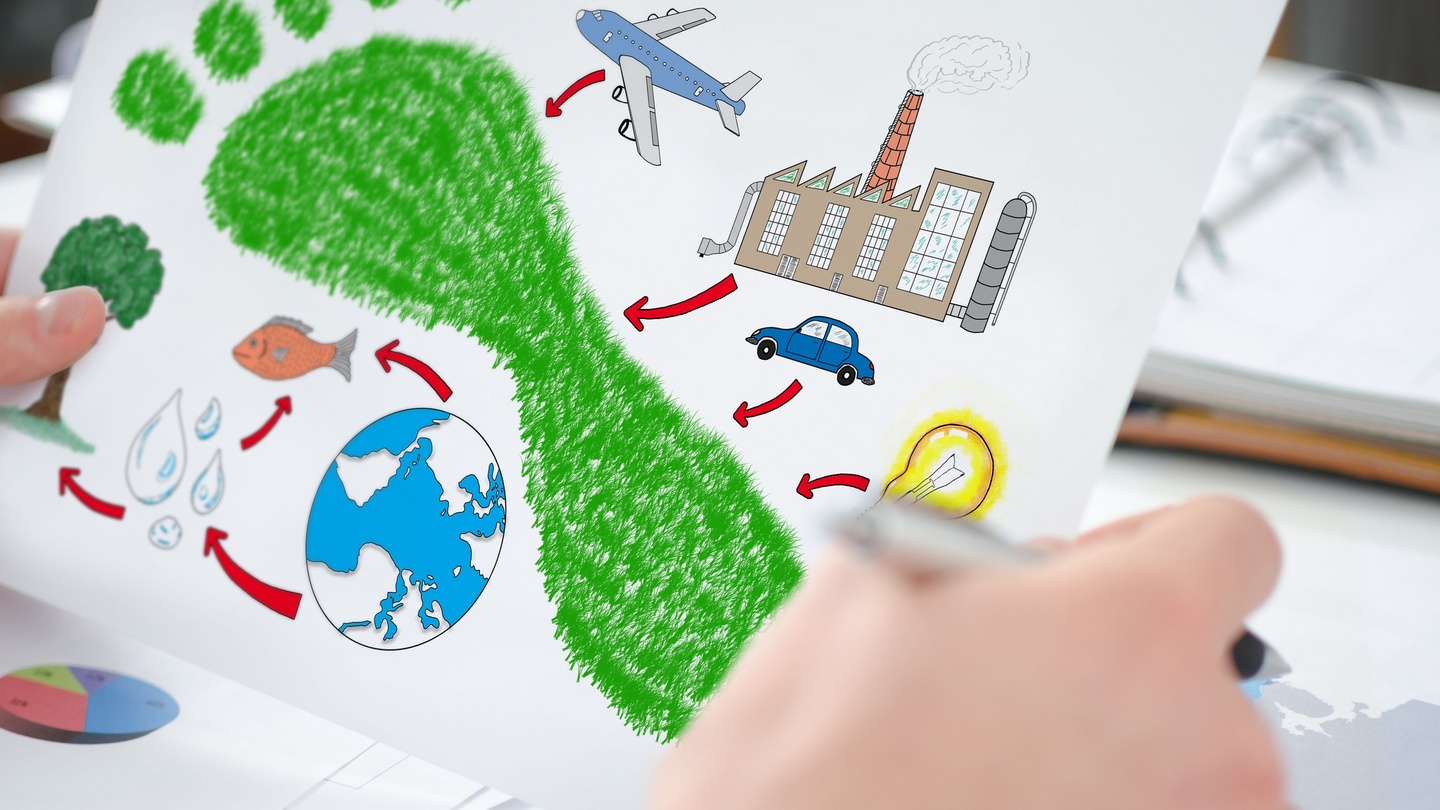

Given the times we live in, the environmental and social impact of the supply chain is becoming as critical as its effective management. Unsurprisingly, many Irish firms are taking steps to reduce carbon emissions in their supply and logistic chains, with the added benefit of it impacting the bottom line.
Prof Mark Pagell, chair in global leadership and professor of sustainable supply chain management at the University College Dublin School of Business, says many companies are currently facing an “existential crisis”.
According to Pagell, there is a lot of low-hanging fruit that companies can address when it comes to ensuring sustainability permeates the entire supply chain.
“It’s relatively easy to say we will reduce the amount of fuel we use in our logistics, because that’s going to reduce costs and reduce our carbon footprint. Companies are installing the LED lighting, they are optimising their transport.”
According to Pagell, a good all-round example of sustainability is at SuperValu, and what it has done in terms of local sourcing. He says this is not only an example of sustainability at work, but a means by which SuperValu can differentiate itself from its competitors.
“There is probably a cheaper way to source a lot of these products but it wouldn’t help them to differentiate locally,” he explains.
‘Local farmers and suppliers’
“Customers choose SuperValu partially because you know there is a wide selection of products, only available from them, that come from local farmers and suppliers. This gives a sense of community and even if something is not produced in a sustainable fashion, at least it didn’t travel as far. So, it does something for them from a competitive standpoint but it also allows these small independent and, in most cases, more sustainable food purveyors to grow and perhaps then provide to others as well. You can see the business rationale for a lot of these things.”
According to Pagell, businesses must seek out sustainable solutions for their supply chains that aren’t solely based on competitive advantage – “there are things that would be important for society and these need to be addressed”. He says the vast majority of Irish firms are falling into “the sustainable trap”.
“This is where they conflate reducing carbon footprints in an inherently unsustainable industry with somehow being sustainable or on the right path long term.”
Reducing carbon emissions as part of a wider drive towards sustainability has been a distinct priority for Smurfit Kappa, says general manager Conor Timmons.
“We are starting from a good place in that we make boxes from recycled material, so that’s pretty helpful. Ultimately, our basic premise is quite sustainable and our model is very positive,” he explains.
Reducing carbon emissions
As one of the largest global paper-based packaging companies, Smurfit Kappa is well aware of its role in achieving sustainability at every step of its supply and logistics operations, Timmons says. Reducing carbon emissions is a major part of that.
For example, an ongoing intensive energy and CO2 reduction programme at its paper mills in The Netherlands and elsewhere has resulted in a specific CO2 emission reduction of 29 per cent by the end of 2018, already far exceeding its original target of 20 per cent by 2020.
“In the Irish plants, all of our paper and our raw materials come from our own mills throughout Europe, and these are sustainably managed, with a big focus on energy consumption and water consumption,” says Timmons.
Within its individual manufacturing sites across Ireland, Smurfit Kappa has focused on reducing energy consumption. “It can be as simple as how warm you keep your factory – it’s the exact same things you see at home in terms of saving energy, but multiplied up. We look at how efficient our boilers are, our compressors are, and what our energy loss is, and we have very specific targets on what we want.”
In recent times, the battle against waste has created significant opportunity, and this in turn can have a major impact on carbon emissions. It’s about finding the right balance, says Timmons.
“Our issue is waste, and it’s not necessarily about paper versus plastics. It’s quite a nuanced discussion because you could say, we should use paper instead of plastic, what if that paper is coming from Colombia but the plastic is coming from Clondalkin? By and large, paper, because of its properties of decomposition, is best, but plastic isn’t always the worst choice,” Timmons explains.
Cost savings
Echoing Pagell, Timmons admits that a business’s approach to sustainability is often driven by the cost savings it can achieve, but in Smurfit Kappa’s case it has been leading conversations with its customers about fundamentally changing the product solution.
“We look at whether our customers have plastic inserts on some of their gift packaging and whether we can change that to corrugated card. We have to say to them in many cases that this is dearer, because plastic is very cheap to produce, but we might be able to give it to them more cheaply if they agree to a little bit more work in their supply chain. It’s about looking at a product and asking if that’s the smartest design of it,” he explains.
Timmons adds that customers are much more receptive to these conversations than they historically would have been. “We have a seen a lot of traction with that. Customers are much more open than before, certainly it wasn’t always an open door in the past.”
In this age of environmental awareness, Timmons is cognisant of the need for businesses such as Smurfit Kappa to focus on the bigger picture when it comes to sustainability in the supply chain.
“There is a greater focus in terms of waste, and the way we perceive waste. At the end of the day we want to use less. Less paper, less plastic, less packaging, full stop.”
Recent Comments