


The amount of plastic produced worldwide each year could fill every skyscraper in New York. Of the 380 million tons of plastic produced annually, only 1% is biodegradable or made from renewable natural sources rather than fossil fuels. This represents a small, but growing portion of the market.
While alternatives to petroleum-based plastic are still in their infancy in Japan, a number of forward-looking manufacturers are investing in these materials, notwithstanding the initial challenges of such innovations. They hope to make a dent in the ever-growing Japanese market, where plastic production has increased steadily from 7,518 tons in 1980 to 10.67 million tons in 2018.
Such burgeoning numbers contrast with the stigma surrounding plastic, a term commonly used to describe a vast array of polymers — long molecules made up of shorter ones — used to mass-produce consumer goods.
A global campaign against plastic pollution in the oceans has gained considerable momentum, galvanizing public outrage against a class of materials whose fundamental flaw — it’s not biodegradable — is putting the health of entire ecosystems at risk.
Evidence of plastic pollution is increasing not only in rivers, lakes and marine environments, with the weight of plastic in the ocean projected to exceed that of fish by 2050, but also on land and in organisms, including humans.
For all its merits, including its malleability, strength and durability, fossil-based plastic is inefficient. For example, 95% of plastic packaging’s aggregate value is lost after a single use. We extract oil and gas from the Earth to produce synthetic polymers, transform them into products often designed to be used only once — a third of plastic produced in 2017 was single-use — and then throw them away.
“An object that becomes waste has a quality problem. Tackling it is an opportunity for innovation,” says chemist Michael Braungart, pioneer of the “cradle to cradle” model in which products are designed to turn into nutrients rather than waste.

Polymers can also be made from natural materials such as cellulose from plants and using natural processes such as microorganism fermentation. They can be biodegradable or compostable (overlapping but distinct properties) and designed to be reused and recycled — or even eaten.
The possibility of manufacturing materials that mirror the properties of conventional plastic but whose life cycle has a lower — sometimes positive — environmental impact has opened what could become a revolutionary frontier.
What goes into sustainable plastics?
Four years ago, when Material ConneXion Tokyo organized its first Sustainable Materials exhibition, CEO Kumiko Yoshikawa recalls how the company, which connects product and material manufacturers, struggled to find suitable examples created by Japanese manufacturers.
Since then, the exhibition has grown at pace with interest in this field. Prominent among the projects on display in the 2020 edition, held in the Tokyo library where Material ConneXion stores more than 3,000 materials, were alternatives to oil-derived plastic. These included a yarn made from wood pulp, a compostable plastic and a plant-based polymer developed by Japan’s largest chemical corporation, Mitsubishi Chemical.
Plastic processing producer Sekisui Chemical and manufacturer Sumitomo Chemical provide another example of such progress. They have partnered to use ethanol made by gasifying combustible waste (a technology developed by Sekisui and U.S. startup LanzaTech) to produce polyolefin, a type of polymer used in products ranging from toys to clear films. The pilot project kicks off in 2022 and the market launch is expected for 2025.
Repurposing waste is one of the basic tenets of the “circular economy.” This model seeks to replace a linear system, in which raw materials are made into objects that then become garbage, into one better represented by a loop, whereby materials are recycled or reused over and over again.
This is the prevailing approach of alternatives to fossil-based plastic. However, such a universal philosophy has yet to catch on in Japan, Yoshikawa says.
“In Japan the circular economy isn’t being adopted on a wide scale and there isn’t even much awareness of the term,” she says.
Still, a number of home-grown companies are beginning to embrace its principles.

Keita Yanase works for Marubeni, one of Japan’s largest trading companies. He came up with the idea for Edish, a line of disposable, compostable tableware made from food waste and paper pulp, and won a company prize for it.
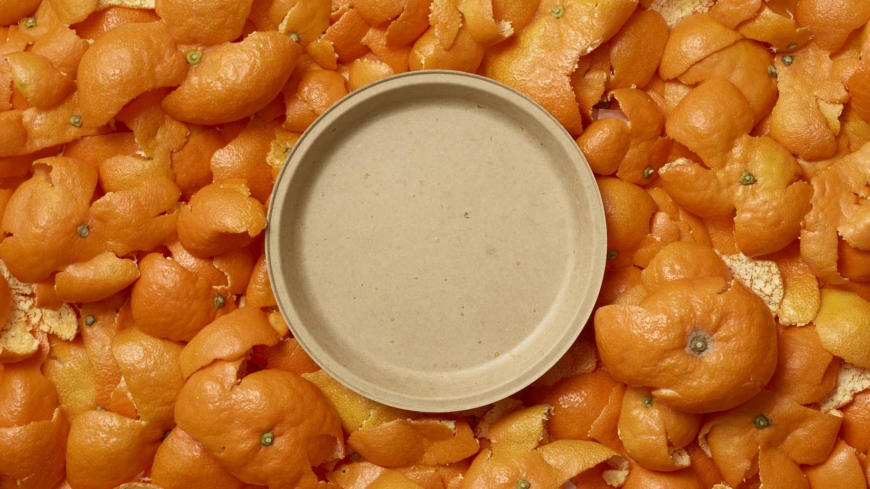
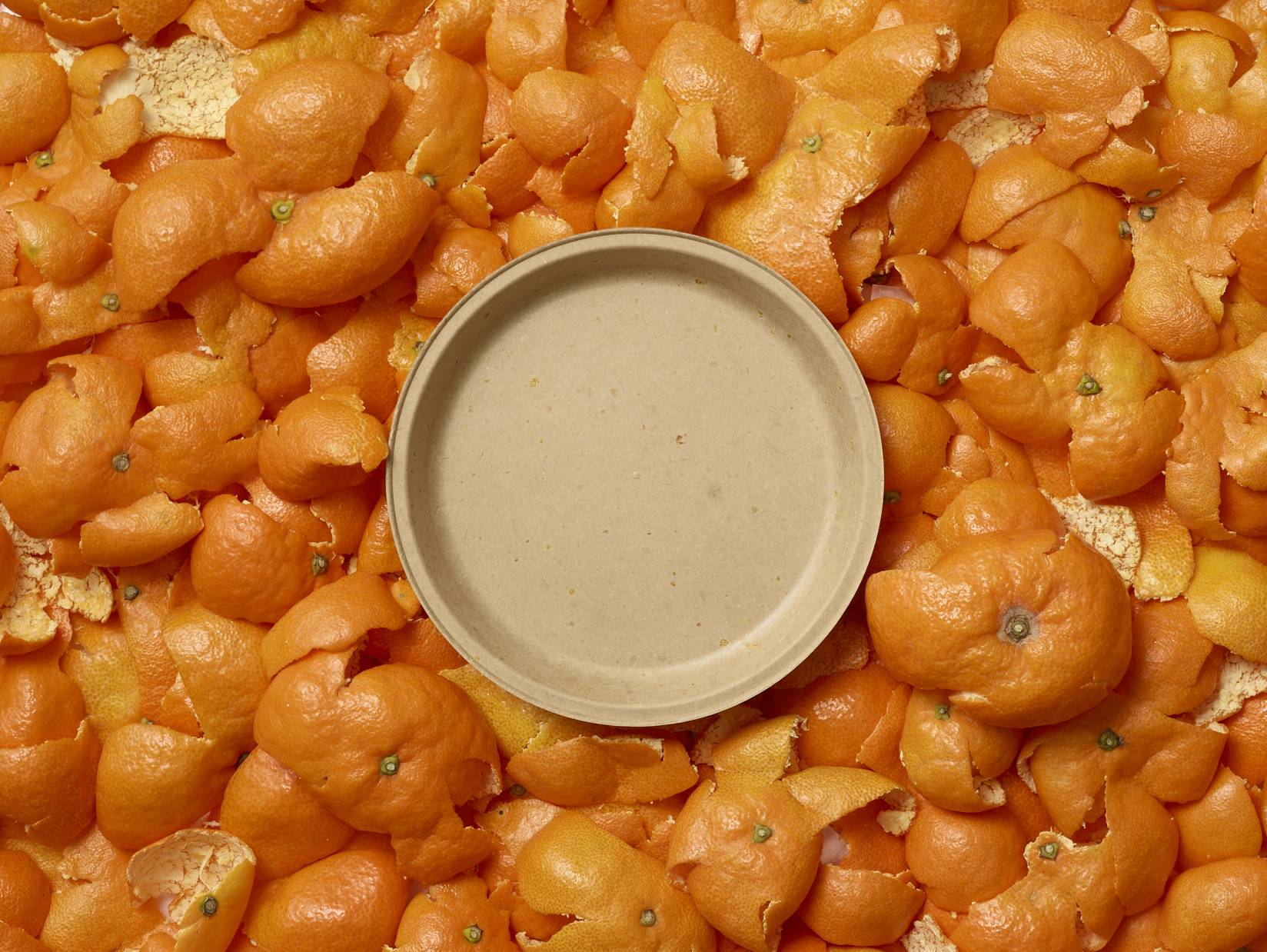
“Many of Marubeni’s customers are in the food sector, so it’s easy to source waste,” Yanase points out, specifying that Edish cups, plates and containers are made from discarded bran, coffee, bamboo, tea, apples or mandarin oranges using paper pulp molding machines, a widely available technology.
The brand was launched in 2020, initially targeting events. However, the halt on mass gatherings due to the COVID-19 pandemic shifted its focus to the food takeout and delivery market.
Agricultural products are a good example of the kind of raw materials suitable for alternatives to petroleum-derived polymers, though attention must be paid to how they’re sourced. The environmental devastation wrought by industrial agriculture, for instance, has been compared to that of fossil fuel extraction.
“To be truly sustainable, materials must have an inexhaustible supply of carbon and the energy for production and processing should come from renewable sources,” says James Elliott, a professor of macromolecular materials science at the University of Cambridge and co-leader of S2UPPlant, a research project which aims to supplant fossil-based plastics with materials made from plants whose genetics have been modified or which are blended with agricultural waste. “Fossil fuels aren’t sustainable because the carbon source is finite and isn’t readily accessible in the biosphere. If you extract and release it, whatever you do — unless you bury it deep in the ground again — you’ve net emitted carbon.”
Plastic production and incineration generate around 400 million tons of carbon dioxide globally every year (more than six times Tokyo’s greenhouse gas emissions in 2017). In Japan, 30 million tons of fossil resources are used annually to make plastic.
Some of the world’s largest plastic manufacturers are oil and gas companies.
“They’re making big investments in plastic because they’re projected to lose oil demand as pushes to decarbonize the economy continue,” says Hiroaki Odachi, who leads Greenpeace Japan’s plastic campaign.
While synthetic polymer production currently accounts for a tenth of global fossil fuel consumption, this proportion could double by 2050 as plastic production is also expected to double in the next 20 years.
Cutting dependence on plastic and fossil fuels are two sides of the same coin.
“Fossil-based plastics are currently cheaper than bio-based alternatives, but that’s because the hidden costs aren’t factored in,” Elliott says. “I’m not an economist but I see no reason in principle why sustainable plastics couldn’t be as cheap as synthetic ones once produced on the same scale.”
An alternative to throwaway culture
Japan’s citizens each consumed an average of 35 kilograms of plastic packaging — which accounts for nearly half of plastic waste globally — in 2014, second only to the United States.
“The culture of omotenashi (Japanese hospitality) may be contributing to this, as wrapping is considered a part of service,” Odachi says. “(But) we can’t prove how much cultural aspects are behind plastic use.”
The rampant consumption of disposable goods, which is fueling plastic pollution, isn’t a problem confined to Japan, Odachi says. Instead, it is the symptom of an industrialized, fossil-based economic system.
Camino, a Japanese product and service provider focused on sustainability, launched Paplus in 2019. The material is made with recycled paper pulp and polylactic acid, a biodegradable bioplastic derived from fermented plant starch from crops such as corn and of which Japanese companies are some of the biggest global producers. Paplus pellets can be molded into reusable objects such as drink tumblers, trays and cosmetics containers.
The focus on reusable products is important.
“If we just replace plastic with more environmentally responsible materials but rubbish actually increases, is this really an alternative?” asks Camino CEO Koichiro Fukasawa. “I believe we need to rethink our lifestyles, which are hugely and unnecessarily dependent on disposable plastic.”
Alternatives to conventional plastic can’t simply be new materials that substitute old ones, Fukasawa says. Rather, a range of strategies must be adopted in the way products are made, designed, used and, ultimately, thrown out.

Solutions in waste
The Osaka Blue Ocean Vision adopted at the Group of 20 Summit in Osaka in 2019 aims to eliminate additional marine plastic pollution by 2050. The Japanese government will soon launch a domestic version of this program to realize this goal with the cooperation of local governments, the private sector and nongovernment organizations.
Under the program, cleanup initiatives and alternative materials will be promoted, together with recycling of marine plastic litter.
Recycling is considered one of Japan’s fortes in managing plastic waste, of which it generated almost 9 million tons in 2018. Eighty-four percent of this was recycled.
However, plastic recycling often involves a process of downcycling, whereby some of the original value and properties of the material are lost. In Japan, 56% of plastic recycled in 2018 was destined for “energy recovery” — that is, when incinerated to become energy, such materials leave a void to be filled by virgin raw materials to make new products.
In addition, 23% was recycled mechanically (as opposed to chemically), which involves remelting waste to make new things. Two-fifths of this plastic was exported to developing countries, fueling a problematic system in which higher income countries send low-quality and dirty plastic to be recycled outside of their borders: given the difficulty in repurposing such materials, these often end up in landfills or being burnt, therefore contributing to pollution.
The government has agreed to comply with a tightening of the Basel Convention’s rules, which regulate transnational movements of waste, to avoid non-recyclable plastics from being exported in the first place. It is also considering expanding municipal collection to all types of plastic waste, not just PET bottles, containers and packages.
Yet the pandemic has likely caused the waste pile to grow. An Environment Ministry survey reveals that a charge on plastic bags adopted in July has reduced demand for such items, but these account for only 2% of plastic waste.
“(In contrast), from April to September 2020, containers and packages increased by around 6%, reversing the trend seen in recent years,” says Yoshihide Hirao, director of the Environment Ministry’s Office for Recycling Promotion.
Japanese materials have thus focused on alternative approaches to the way products are disposed of.

Ina Food Industry makes more than 100 types of agar, which is used in confectionery, food, beverages and cosmetics. Choosing innovation over short-term profit a decade ago, it began selling edible films made from seaweed.
“We have a policy called ‘tree ring management’, which means the company grows slowly every year like a tree,” CEO Hidehiro Tsukakoshi says. “When we started developing the film, we weren’t even sure how to use it. Now, it is found in Japan’s largest convenience stores.”
The agar-based film conserves the freshness of products such as tarts and pies. It also melts in hot water, making it ideal for packaging edible items such as powdered soup.
“This is convenient and sustainable because consumers don’t need to waste plastic film,” Tsukakoshi says.
Marubeni’s Edish is also edible, not by humans but by animals.
“While polluted plastic can’t be recycled but only burnt or sent to landfill, our disposable tableware can become compost and animal feed,” Yanase says.
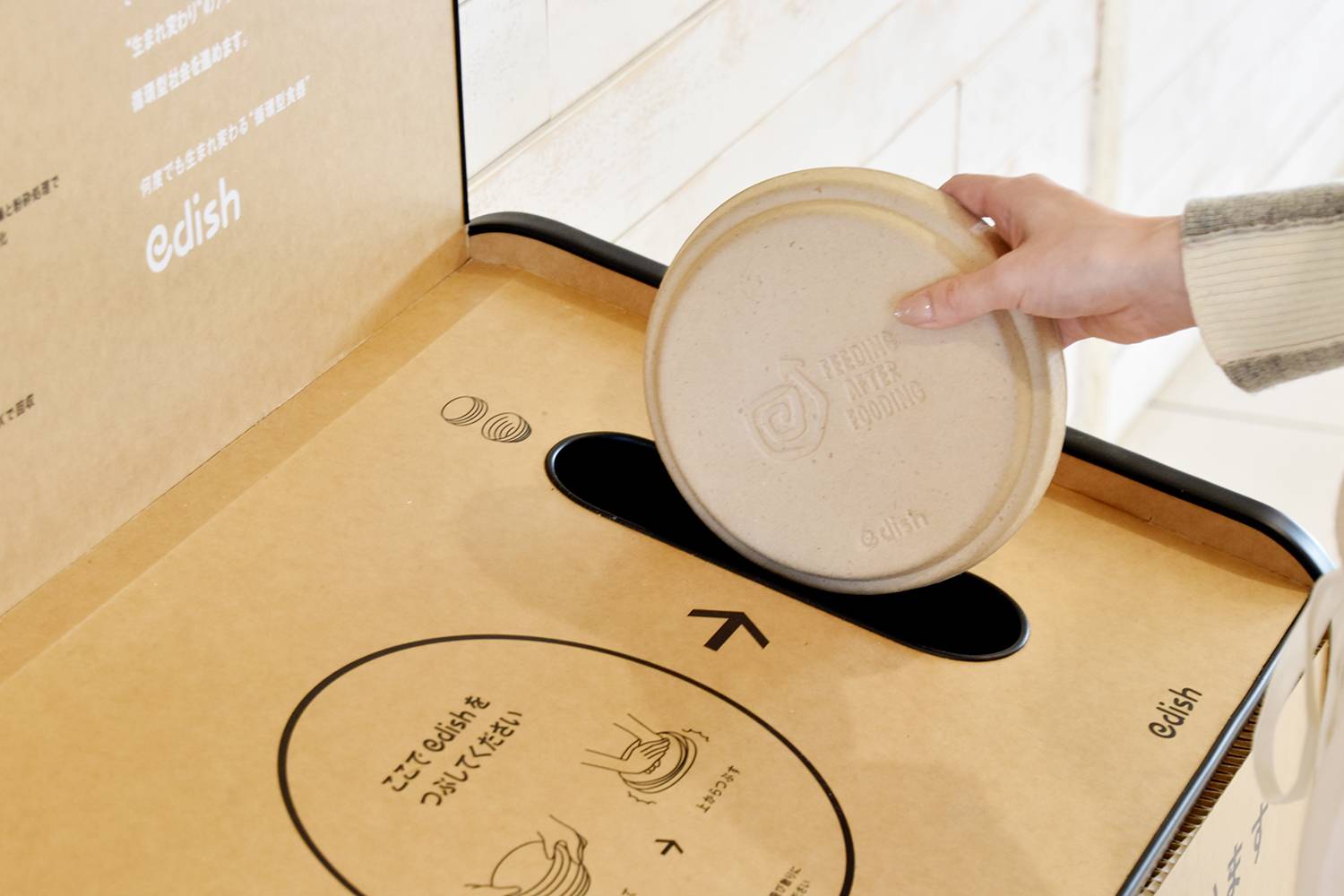
Once collected in designated boxes in venues where it is used, the material is re-employed directly in agriculture or transformed in industrial composting machines, for example in Tokyo’s Kasai Rinkai Park.
“This step isn’t straightforward because Japan has strict waste management laws,” Yanase says. “Therefore, we cooperate closely with local governments, for example in Shizuoka City, which is also interested in using Edish.”
More than just alternative materials
“Many Japanese companies aren’t sure yet whether the circular economy will be profitable in the future,” says Yoshikawa from Material ConneXion Tokyo. “That’s something the government has to show them.”
Japanese alternatives to fossil-based plastic are gaining ground, but a cohesive vision concerning their role in manufacturing and within a holistic approach to plastic is missing. Not just in Japan, but globally.
While there is no centralized international authority setting guidelines to tackle what is fundamentally a transnational issue, substituting fossil-based plastics requires deep changes not only to make alternative materials competitive but also to reduce plastic consumption, design products circularly and improve recycling.
These are actions that governments, businesses or consumers are unable to undertake alone.
Efforts to stem plastic pollution offer a unique chance to confront its underlying causes. A vision for reducing the amount of plastic we use must tackle the very sustainability of how we live, Odachi says.
Chemist Braungart goes a step further.
“It’s about rethinking, reinventing, redesigning, not reducing, reusing, recycling,” he says. “Otherwise you’re just optimizing the wrong things.”
In a time of both misinformation and too much information, quality journalism is more crucial than ever.
By subscribing, you can help us get the story right.
Recent Comments