


The views expressed here are solely those of the author and do not necessarily represent the views of FreightWaves or its affiliates.
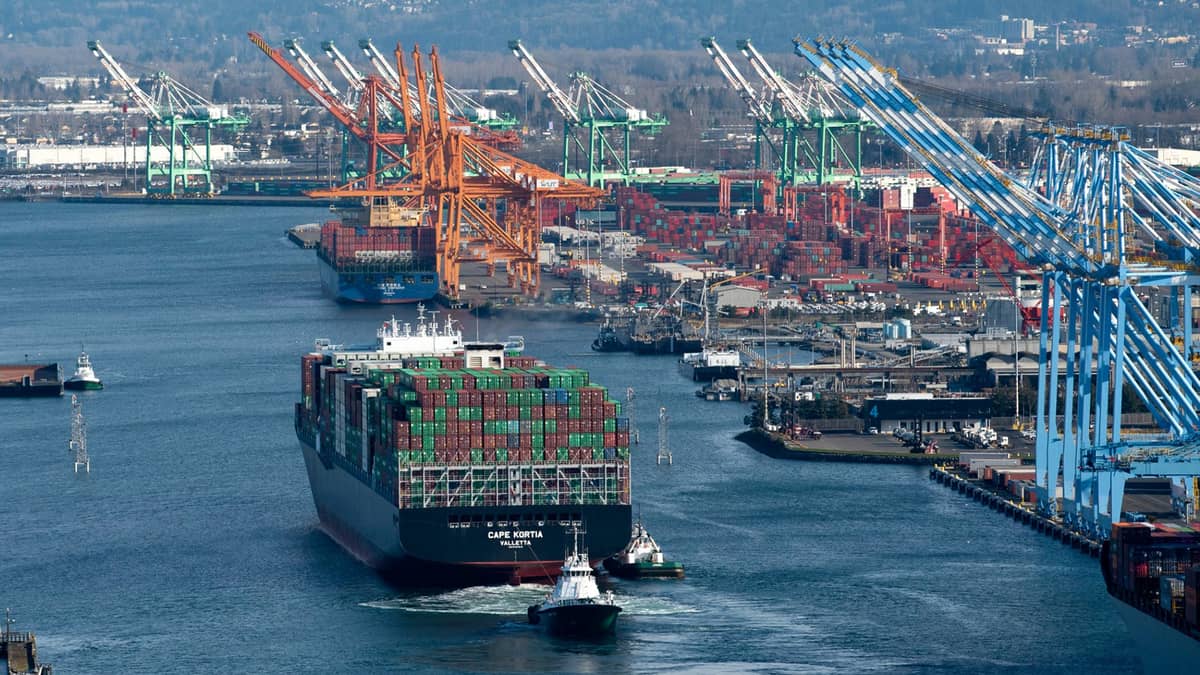
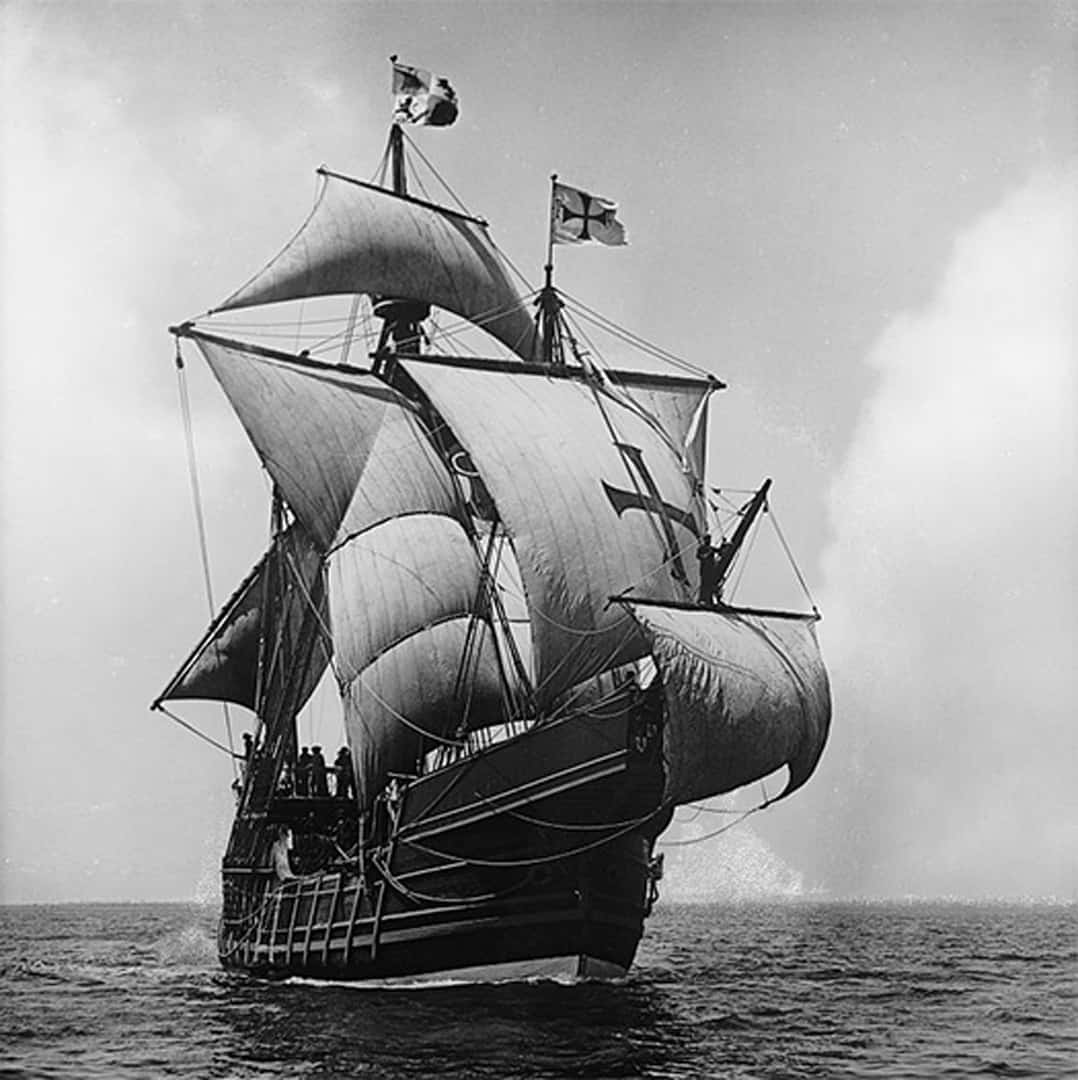
Go west to go east. This is what Columbus did in 1492 when he sought to take advantage of what all educated people knew even back then – the earth is round. Of course, instead of reaching Asia as intended he bumped into the New World. Now it is Asia’s turn. Increasingly more ocean vessel traffic is steaming west to go east. In this case it is heading to U.S. East Coast ports instead of those on the West Coast. This trend has been going on for many years and there is no sign of it stopping any time soon. While Columbus failed in his mission because the New World was an unforeseen obstacle, today’s shifting trade pattern is being spurred on by a “new normal.”
The U.S.-China trade war reached something like an armistice with the “Phase I” trade agreement signed January 15, 2020. The U.S. cancelled further trade tariffs on imports from China. To reciprocate, China agreed to purchase more U.S. exports and be more respectful of other countries’ intellectual property rights. Yet simultaneously the coronavirus (covid-19) struck in Wuhan in December 2019 with the first death announced on January 11, 2020. So, tariff uncertainty was replaced by medical uncertainty. Unlike tariffs, the uncertainty caused by the coronavirus cannot be removed by an executive order from the president. China’s supply chain interconnectivity across the globe is incredibly complex; and the same can be said even for a single city like Wuhan. It is an important center for steel production and it has a strategic location along the Yangtze River.
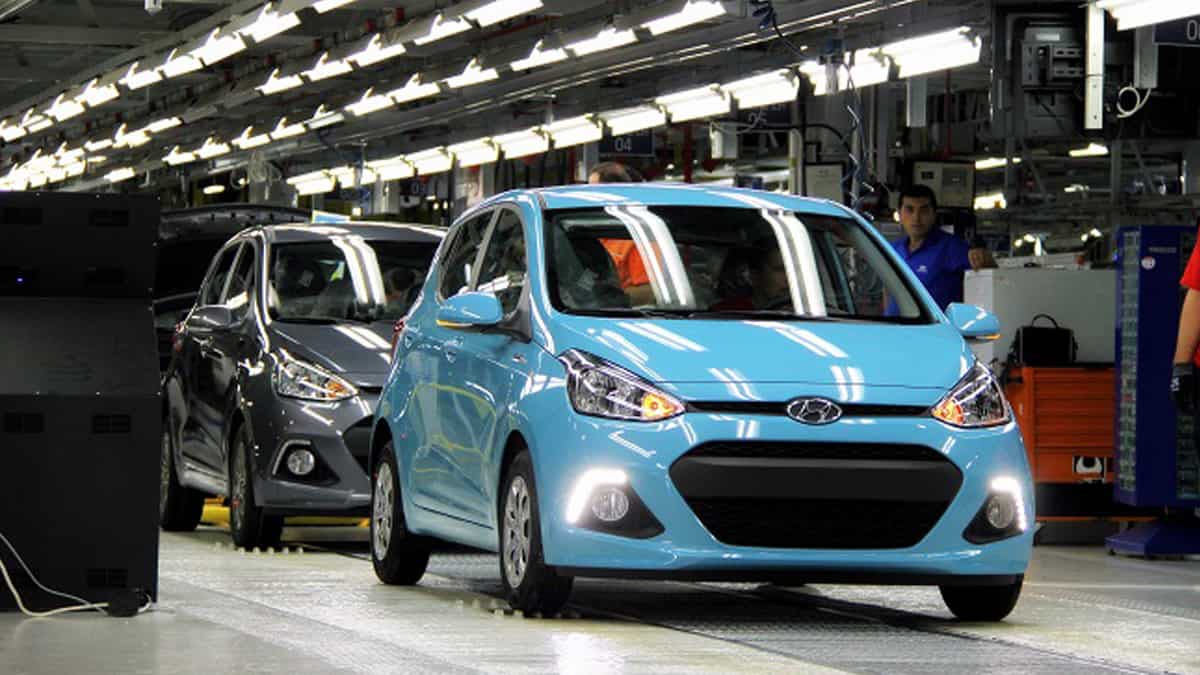
Automobile production was affected most dramatically by the coronavirus when Hyundai halted production in South Korea in early February because of its dependence on parts from China. Even Apple’s iPhone, though manufactured outside Hubei Province of which Wuhan is the capital, saw a drastic slowdown before a tentative restart by its vendor, Foxconn. It should be noted that less than 1% of the value-add of an iPhone occurs in China. But since China is the last step in the manufacturing process before the smartphones are shipped to global consumer markets, its role is critical for Apple.
Regarding U.S.-China trade, the pre-Phase I tariffs are still in place. To date the coronavirus is by no means under control. In the face of all these challenges China’s position in the global supply chain is being reevaluated by several multinational companies. Any move outside of China to production facilities in Vietnam or westward toward India makes shipping to the U.S. East Coast via the Suez Canal appear more cost-effective.
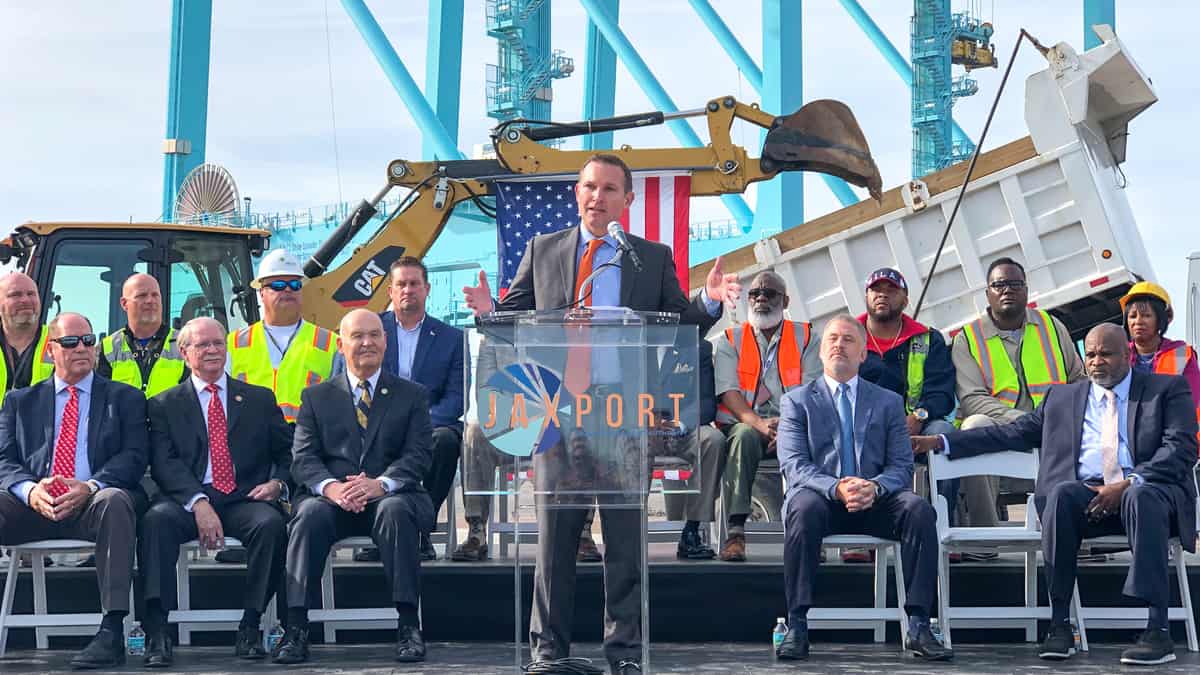
(Photo credit: Port of Jacksonville)
Most of the U.S. population lives on its eastern half. About 15% of the population lives in West Coast states while 36% (i.e., more than double) live in East Coast states. With most of the consumer market residing eastward, any cargo arriving at a West Coast port must be moved inland via motor carrier or rail to reach those locales. Logistically, it costs less per ton and per twenty-foot equivalent unit (TEU) to move cargo by ocean vessel because of its economies of scale. This explains some of the reasons behind the tilting of ocean carrier trade from West Coast to East Coast.
Other causes are related to the specifics of West Coast port operations. One involves labor. There was an 11-day lockout in 2002 at West Coast ports represented by the International Longshore and Warehouse Union (ILWU) and a one-day work stoppage in 2008. As an aside, the Port of Alaska – a critical entry point for most of Alaska’s consumer goods – was not affected by these labor disputes. This was because the local union is an offshoot of the Teamsters. Even the ILWU at the Port of Tacoma was aware that a severe slowdown of Alaska-bound containers could effectively “starve a state.” Other competitive disadvantages at West Coast ports include intermodal congestion costs, higher terminal lease costs and strict environmental regulations (particularly in California). Thus, those importers who were once heavily reliant on the Ports of Los Angeles and Long Beach began to look for alternative ports of entry.
(Photo credit: Jim Allen/FreightWaves)
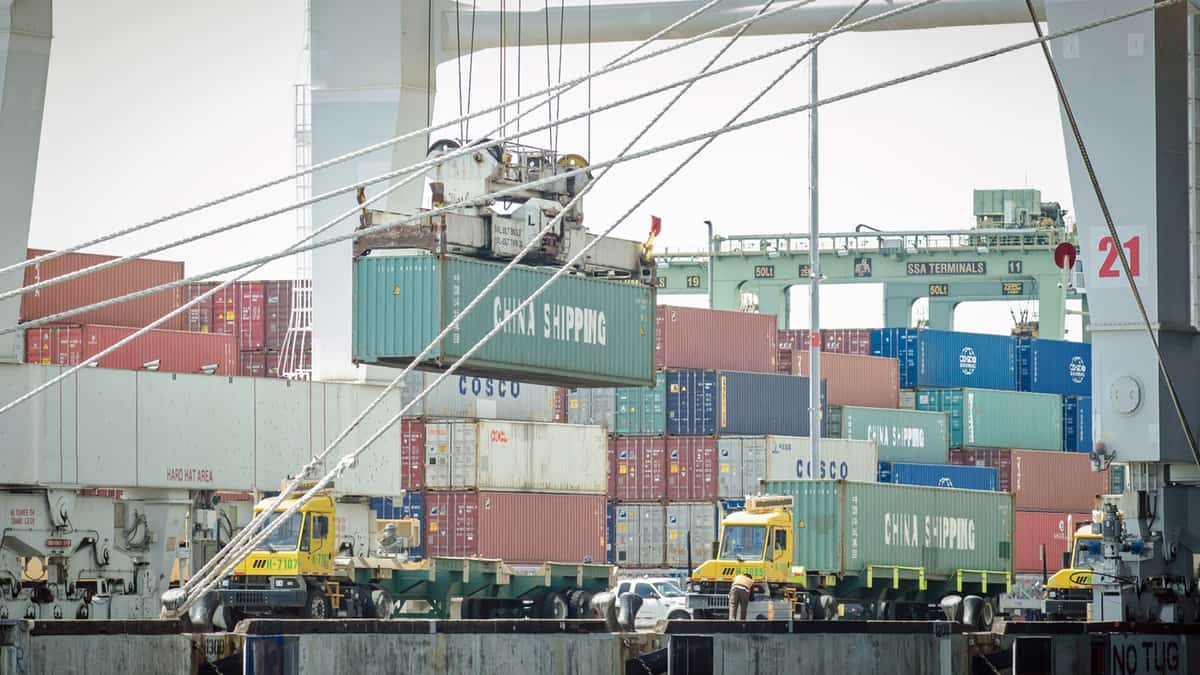
Still, about 60% of U.S. imports from Asia via ocean vessel head to West Coast ports and about two-thirds of what enters moves inland to the Midwest and East Coast. The proportions are roughly the same when the imports are specifically from China. But data from IHS Markit tell a deeper story for 2019. On a TEU basis, West Coast imports from Asia fell by 3% while they were up 5% on the East Coast. Imports from China alone saw a drop of 9% on the West Coast while only a 4% drop on the East Coast. These numbers indicate the decline in U.S. imports from China across the board. However, the data for Asia excluding China showed a 10% TEU increase on the West Coast and a 24% increase on the East Coast. While it is true that the 24% is on a lower base number, since West Coast trade is still larger, the TEU changes are roughly the same numerical size. This provides evidence of shifting supply chains out of China and to an increase in deliveries directly to the East Coast.
The congestion challenge on the West Coast is in scheduling off-loaded containers onto drayage vehicles and then onto trucks or rail for the inland move. Many players need to coordinate here because a faster move from point A to B can exacerbate congestion at B if the subsequent move from B to C is not well-coordinated. In other words, logistical planning must be systemwide for it to be effective. To curb the trend of falling Asia imports, West Coast ports need to consider technology-based solutions to enhance coordination if there is no stomach at the state and municipal levels to expand port capacity. It is a classic problem in supply chain management – a willingness to share information on an inter-company basis and work to secure buy-in among all of these partners to effectively use common information and analytical platforms. Welcome to the wonderful world of data analytics!
Recent Comments