

Tech News, Magazine & Review WordPress Theme 2017
  • Home
  • Supply Chain Updates
  • Global News
  • Contact Us
  • Home
  • Supply Chain Updates
  • Global News
  • Contact Us
No Result
View All Result
No Result
View All Result
Home Supply Chain Updates

Companies need to rethink existing supply chain route, Auto News, ET Auto

usscmc by usscmc
February 21, 2020
Companies need to rethink existing supply chain route, Auto News, ET Auto
Share on FacebookShare on Twitter

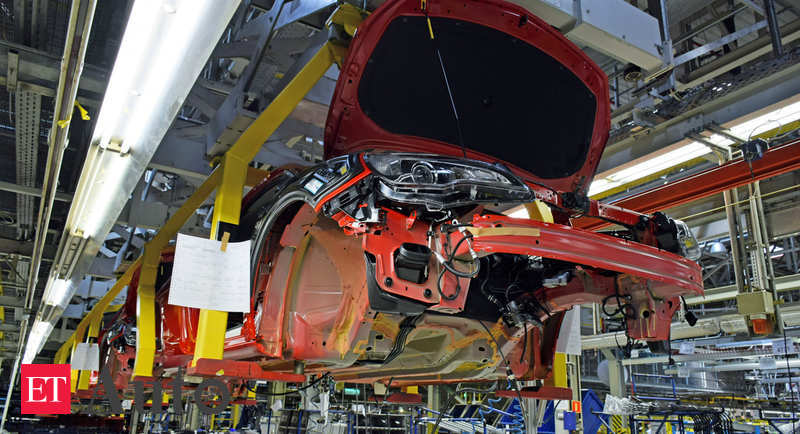
The virus' impact differs by industry and Chinese province. Hubei, for example, contains an automotive industry cluster.
The virus’ impact differs by industry and Chinese province. Hubei, for example, contains an automotive industry cluster.

New Delhi: The coronavirus outbreak and its massive impact on the economy has ringed the bell to immediately rethink existing supply chain scenario as established strategies only work when they are not disrupted, a new report emphasised on Thursday.

The cost of poor planning for supply chain disruption is measured in hundreds of millions of dollars and it is time for conventional supply chain thinking to be revisited, said global management consulting firm Kearney in its report titled “Coronavirus and the impact on global supply chains”.

The effects of the coronavirus are being felt in three areas of commercial activity: manufacturing, distribution of goods and transportation.

The virus’ impact differs by industry and Chinese province. Hubei, for example, contains an automotive industry cluster. Henan has a high concentration of food and agricultural activities. Zhejiang is home to a cluster of apparel producers. Guangdong is home to a number of machinery producers.

“And Zhejiang, Guangdong, and Hubei all have concentrated productions of electronics goods,” said the report.

As a rule, more labour-intensive industries face greater impacts from a quarantine policy, due to the lower level of work resumption. As a consequence, declining output has hit the globally-sourced automotive components, electronics, and apparel industries especially hard.

The automotive industry is still at less than 50 per cent of its pre-virus production rates.

“While some Chinese parts suppliers have partially resumed operations, all major automotive suppliers, especially in Wuhan, have postponed resumption. These delays have created a ripple effect on domestic and overseas OEMs, which are postponing or interrupting production,”

The epidemic is dealing a heavy blow to an already falling market, causing an additional 2-5 percent volume decline this year. Abrupt Q1 sales declines of up to 20 percent are expected.

“Multiple labour-intensive segments in the apparel supply chain have been critically hurt, especially in Zhejiang. The slowdown there will have a domino effect throughout the supply chain, creating pressure on stock and logistics systems and ultimately affecting retailers’ stocks,” said the report.

Currently, global retailers purchase about 20 per cent of their goods value from China, a percentage that rises substantially in seasonal categories.

Electronics companies are operating at 40-60 per cent of pre-outbreak levels.

This impact varies significantly from category to category: wafer fabrication and PCB and LCD panels are less impacted, due to continuous production; assembly-related processes are affected the most.

Apple has already warned that Coronavirus outbreak will affect its business in the January-March quarter as worldwide iPhone supply will be temporarily constrained.

The report said that to tackle such a situation in the future, first step is to develop visibility to your entire supply chain – primary, secondary, and even tertiary players and steps.

“Next, recognize that events like the coronavirus outbreak are going to happen again and again – and determine what plans work best to mitigate the damage”.

Discussions of just-in-time inventory, on-demand production, and eliminating warehousing are so popular they have become part of the conventional wisdom that we warned about earlier.

As many companies have found out the hard way, those models don’t sufficiently indemnify you against a major supply chain disruption.

“Maintaining higher inventory levels may cost 0.3-0.7 percent more, but in a crisis, the higher inventory levels pay dividends in terms of customer satisfaction and competitive positioning. It’s better to have enough buffer stock and not need it than to need it and not have it,” the report stressed.

usscmc

usscmc

No Result
View All Result

Recent Posts

  • How Hapag Lloyd captured a major market share in the Container Shipping Industry in USA
  • Why USA’s East Coast is the Favorite Destination for Manufacturing Companies
  • How Trade Relations Between the USA and UK Improved After Keir Starmer Became Prime Minister
  • Tips and Tricks for Procurement Managers to Handle Their Supplier Woes
  • The Crazy Supply Chain of Walmart Spanning Across the Globe

Recent Comments

  • Top 5 Supply Chain Certifications that are in high demand | Top 5 Certifications on Top 5 Globally Recognized Supply Chain Certifications
  • 3 Best Procurement Certifications that are most valuable | Procurement Newz on Top 5 Globally Recognized Supply Chain Certifications

Archives

  • July 2024
  • June 2024
  • May 2024
  • April 2024
  • March 2024
  • February 2024
  • January 2024
  • December 2023
  • November 2023
  • October 2023
  • September 2023
  • August 2023
  • July 2023
  • June 2023
  • May 2023
  • April 2023
  • March 2023
  • February 2023
  • January 2023
  • December 2022
  • November 2022
  • October 2022
  • September 2022
  • August 2022
  • July 2022
  • June 2022
  • May 2022
  • April 2022
  • March 2022
  • February 2022
  • January 2022
  • December 2021
  • November 2021
  • October 2021
  • September 2021
  • August 2021
  • July 2021
  • June 2021
  • May 2021
  • April 2021
  • March 2021
  • February 2021
  • January 2021
  • December 2020
  • November 2020
  • October 2020
  • September 2020
  • August 2020
  • July 2020
  • June 2020
  • May 2020
  • April 2020
  • March 2020
  • February 2020
  • January 2020
  • December 2019
  • November 2019
  • September 2019

Categories

  • Global News
  • Supply Chain Updates

Meta

  • Log in
  • Entries feed
  • Comments feed
  • WordPress.org
  • Antispam
  • Contact Us
  • Disclaimer
  • Home
  • Privacy Policy
  • Terms of Use

© 2025 www.usscmc.com

This website uses cookies to improve your experience. We'll assume you're ok with this, but you can opt-out if you wish. Cookie settingsACCEPT
Privacy & Cookies Policy

Privacy Overview

This website uses cookies to improve your experience while you navigate through the website. Out of these cookies, the cookies that are categorized as necessary are stored on your browser as they are essential for the working of basic functionalities of the website. We also use third-party cookies that help us analyze and understand how you use this website. These cookies will be stored in your browser only with your consent. You also have the option to opt-out of these cookies. But opting out of some of these cookies may have an effect on your browsing experience.
Necessary
Always Enabled
Necessary cookies are absolutely essential for the website to function properly. This category only includes cookies that ensures basic functionalities and security features of the website. These cookies do not store any personal information.
Non-necessary
Any cookies that may not be particularly necessary for the website to function and is used specifically to collect user personal data via analytics, ads, other embedded contents are termed as non-necessary cookies. It is mandatory to procure user consent prior to running these cookies on your website.
SAVE & ACCEPT
No Result
View All Result
  • Home
  • Supply Chain Updates
  • Global News
  • Contact Us

© 2025 www.usscmc.com