
Tech News, Magazine & Review WordPress Theme 2017
  • Home
  • Supply Chain Updates
  • Global News
  • Contact Us
  • Home
  • Supply Chain Updates
  • Global News
  • Contact Us
No Result
View All Result
No Result
View All Result
Home Supply Chain Updates

Coronavirus and the age of supply chain resilience

usscmc by usscmc
April 4, 2020
Coronavirus and the age of supply chain resilience
Share on FacebookShare on Twitter

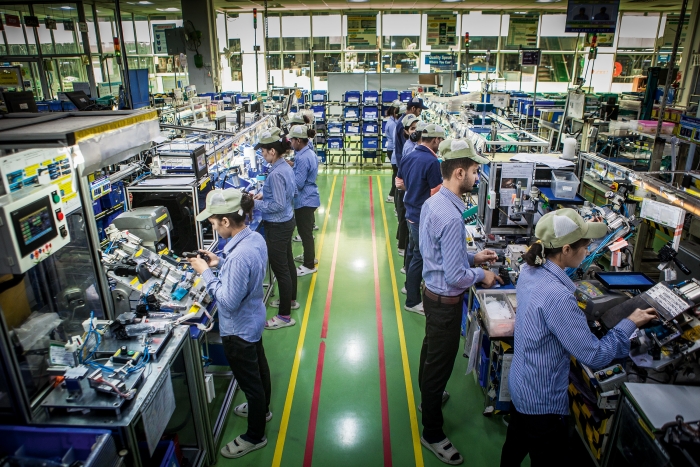
The question of supply chain resilience can be addressed in different ways. One way to ensure greater supply chain resilience is to move more manufacturing and assembly close to the headquarters. This, of course, is reversing the nature of the globalisation that we have seen in the past decades, but for some companies this is worth serious consideration.

If this starts to happen in any serious way, then the notion of location will once again become important. Where an object is made—a concept which has lost of lot of meaning barring, say, Swiss watches or French wine which have held on to the logic of terroir—will be priced into the notional value of the object.

But it is important to understand that this is not an easy transition. Businesses have to worry about multiple things before they make this decision—is the labour required available at home, and at the right price, would it increase the price of the object, would customers be willing to pay this premium, and are competitors making such a move, too? It is important to understand that businesses would be reluctant to make geographical transitions unless they competitors are making such moves too. If some do and others don’t, the ones that move back home may not remain very competitive.

In the eventuality that many do change geographies, in some industries at least there might be a corresponding rise in prices. With a corresponding rise in environmental consciousness, we might be transition away from the ‘fast fashion, fast food’ age into a time where each item bought is used for a long time and the concept of repair and use comes back into our daily lexicon in a manner not unfamiliar to our parents. Only this time, it would be driven by sustainability and not necessarily want.

Supply chain resilience would have also a political economy resonance. The question businesses would be asking from the China experience with Covid-19 is this—is the nature of the state where their supply chains are based a risk that they have not adequately factored in?

This is a question of information flow. China’s authoritarian system of government meant that details of the coronavirus took a long time to come out, and even now there are grave doubts about the nature of the data that is coming out of China on how badly it has been affected by the disease.

In comparison, data from the U.S., Spain, Italy and India are a far better reflection of the impact of the disease in those countries. Democracies have a better, stronger, and more reliable flow of information.

This risk could, and indeed was, ignored for a long time because authoritarian governments were assumed to be able to contain their political problems within their borders and insulate global supply chains from those issues. This was the assumption for countries like Saudi Arabia and certainly it has been the case for China.

But in a world where the risks come from places that cannot be controlled by any border, trustworthy information flows become even more urgent to maintain supply chain resilience.

In this, more than ever India must focus on its ‘democracy premium’. It has both the ability to deliver manufacturing at scale, and by consistently strengthening its democratic institutions, it can assure investors that its information flows are far more legitimate and worthy of trust.

Supply chain resilience is going to the biggest question before businesses in the coming years, and many issues of both sustainability and trust are going to be critical to understand this age of supply chain resilience and benefit from it.

Views are personal.

The author is a historian and a multiple award-winning author.

usscmc

usscmc

No Result
View All Result

Recent Posts

  • How Hapag Lloyd captured a major market share in the Container Shipping Industry in USA
  • Why USA’s East Coast is the Favorite Destination for Manufacturing Companies
  • How Trade Relations Between the USA and UK Improved After Keir Starmer Became Prime Minister
  • Tips and Tricks for Procurement Managers to Handle Their Supplier Woes
  • The Crazy Supply Chain of Walmart Spanning Across the Globe

Recent Comments

  • Top 5 Supply Chain Certifications that are in high demand | Top 5 Certifications on Top 5 Globally Recognized Supply Chain Certifications
  • 3 Best Procurement Certifications that are most valuable | Procurement Newz on Top 5 Globally Recognized Supply Chain Certifications

Archives

  • July 2024
  • June 2024
  • May 2024
  • April 2024
  • March 2024
  • February 2024
  • January 2024
  • December 2023
  • November 2023
  • October 2023
  • September 2023
  • August 2023
  • July 2023
  • June 2023
  • May 2023
  • April 2023
  • March 2023
  • February 2023
  • January 2023
  • December 2022
  • November 2022
  • October 2022
  • September 2022
  • August 2022
  • July 2022
  • June 2022
  • May 2022
  • April 2022
  • March 2022
  • February 2022
  • January 2022
  • December 2021
  • November 2021
  • October 2021
  • September 2021
  • August 2021
  • July 2021
  • June 2021
  • May 2021
  • April 2021
  • March 2021
  • February 2021
  • January 2021
  • December 2020
  • November 2020
  • October 2020
  • September 2020
  • August 2020
  • July 2020
  • June 2020
  • May 2020
  • April 2020
  • March 2020
  • February 2020
  • January 2020
  • December 2019
  • November 2019
  • September 2019

Categories

  • Global News
  • Supply Chain Updates

Meta

  • Log in
  • Entries feed
  • Comments feed
  • WordPress.org
  • Antispam
  • Contact Us
  • Disclaimer
  • Home
  • Privacy Policy
  • Terms of Use

© 2025 www.usscmc.com

This website uses cookies to improve your experience. We'll assume you're ok with this, but you can opt-out if you wish. Cookie settingsACCEPT
Privacy & Cookies Policy

Privacy Overview

This website uses cookies to improve your experience while you navigate through the website. Out of these cookies, the cookies that are categorized as necessary are stored on your browser as they are essential for the working of basic functionalities of the website. We also use third-party cookies that help us analyze and understand how you use this website. These cookies will be stored in your browser only with your consent. You also have the option to opt-out of these cookies. But opting out of some of these cookies may have an effect on your browsing experience.
Necessary
Always Enabled
Necessary cookies are absolutely essential for the website to function properly. This category only includes cookies that ensures basic functionalities and security features of the website. These cookies do not store any personal information.
Non-necessary
Any cookies that may not be particularly necessary for the website to function and is used specifically to collect user personal data via analytics, ads, other embedded contents are termed as non-necessary cookies. It is mandatory to procure user consent prior to running these cookies on your website.
SAVE & ACCEPT
No Result
View All Result
  • Home
  • Supply Chain Updates
  • Global News
  • Contact Us

© 2025 www.usscmc.com