

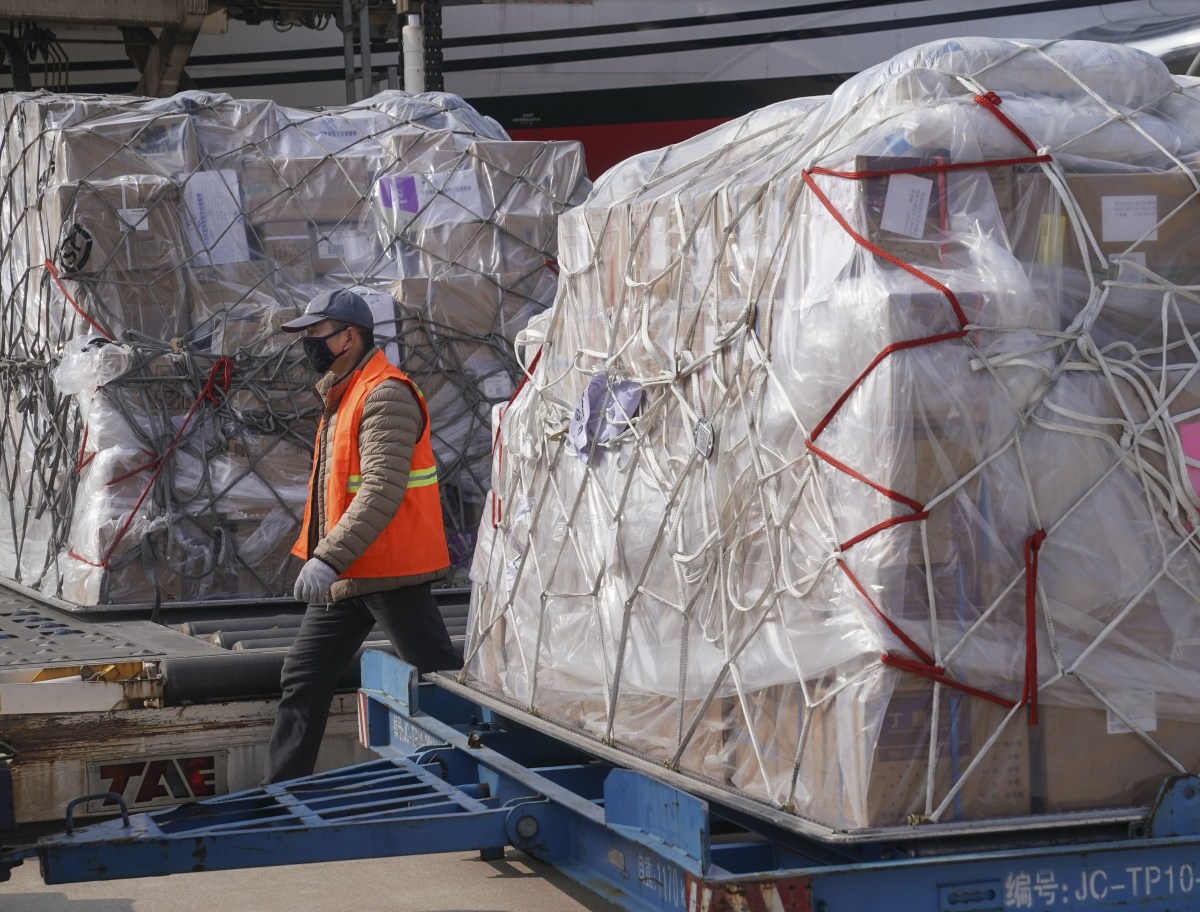

The coronavirus outbreak has emerged from an epicenter of manufacturing in China, and the crippling effect of the quickly spreading virus has a death grip on the supply chain’s inputs and raw materials.
Wuhan, in China’s Hubei province where the infection was first reported, is a major industrial and transport hub in the center of the country, where there are at least 11 apparel factories, as well as thread and textile factories, printing and dyeing facilities, and footwear manufacturers. Auto parts are Wuhan’s leading output, followed by electronics parts.
According to a new Resilience360 report, the region “has triggered full or partial lockdowns in 13 Chinese cities that have severely restricted key land, air and maritime transport routes from across the country.” The lockdowns have prevented non-emergency vehicles from entering or leaving Wuhan, and pick-up and delivery services (for goods other than medical supplies) in other cities in and around Hubei province have been significantly curbed—if not cut off altogether. Flight cancellations to and from China continue to pile up by the day.
As such, raw material movement is in jeopardy.
On Tuesday, Hyundai said it will suspend production lines at its car factories in South Korea due to disruptions in the supply of components coming from China—and that’s a saga that could prove similar for apparel manufacturers, too. So far, Hyundai is the first major manufacturer to halt operations outside of China (it had already paused production in facilities in the country, and Toyota, Tesla and Ford have done similarly).
“Severe disruptions to inbound and outbound air cargo shipments, trucking and rail cargo services, as well as heavy port congestion for vessels along the Yangtze River near Wuhan will likely persist as the coronavirus crisis unfolds,” the supply chain risk analysis firm said in its special report. “The regional lockdown has already severely impeded logistics operations that rely on access to highways to carry goods into and out of the region…”
What’s more, the lockdowns reportedly remain in effect, even after what was supposed to be the adjusted end to the Chinese New Year break, which would have been on Sunday.
“Companies and factories in several major cities and provinces—including Beijing, Zhejiang, Jiangsu, Guangdong and Shanghai—have been ordered to halt their operations until at least February 9,” Resilience360 noted.
Cargo that had already arrived in Wuhan, or that’s stuck in transit points like Hong Kong and Shanghai, could be held in place until the situation surrounding the outbreak improves, which may not be soon at all.
On Tuesday morning, World Health Organization (WHO) director-general Tedros Adhanom Ghebreyesus said there have been 20,471 confirmed cases of coronavirus infection in China and 425 deaths. Just the day before, there had been 17,238 confirmed cases and 361 deaths. Outside of China, there are now 176 cases in 24 countries “and one death, in the Philippines,” Ghebreyesus wrote in a Twitter post Tuesday. Following that tweet, however, Hong Kong confirmed its first death attributed to the virus, and citizens in the territory are now fighting for a full-fledged shutdown of all borders with mainland China.
“Of course, the risk of it becoming more widespread globally remains high. Now is the moment for all countries to be preparing themselves,” Ghebreyesus said.
For companies in those countries, though, preparing for what’s ahead may prove to be challenging.
With enough of the estimated 400 million residents who travel back home from their work bases for Chinese New Year likely to have returned to Wuhan and surrounding cities ahead of the coronavirus epidemic, the dropoff in returning factory workers could be outsized compared to previous Lunar New Year holidays. More important, companies will have to consider whether workers returning from key contaminated areas should return at all, and mull options for quarantining returned workers to curtail the infection’s spread.
“As a result, facilities may operate with lower productivity due to labor shortage for an extended period of time or remain shut altogether should employees become infected,” Resilience360 said. “As more infections are recorded outside of China, this may also start to affect operations in Europe, North America and elsewhere.”
Delays will hit the supply chain, however, before factories even get to factor in the drop in productivity.
Under normal circumstances, if workers had returned to factories at the start of February, it would have taken up to three weeks for operations to fully resume, according to Resilience360 estimates. As of now, Feb. 10 is just days away and there’s no telling yet whether workers will even return to their posts as currently scheduled. Even in the best case scenario, that means production operations likely wouldn’t return to normal until at least March.
“Should China’s authorities struggle to contain the spread of the coronavirus beyond the Lunar New Year period, this could have a major impact on industrial production and the availability of supply coming out of China,” Resilience360 said.
Recent Comments