

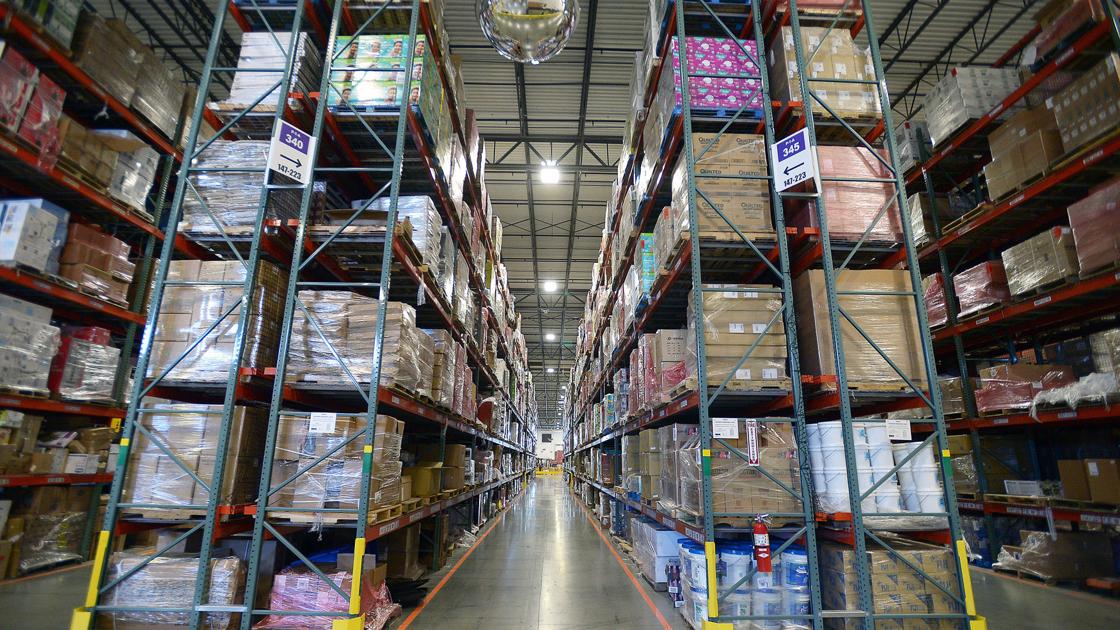
The explosive growth of the warehousing and distribution sector over the past decade has created a mixed economic bag for Cumberland County, one that has generally entrenched the same issues that are being seen nationwide.
Roughly half of all the jobs that have been created in the county since the recession a decade ago have been in the warehousing sector, according to data from the federal Bureau of Labor Statistics.
But those new jobs have corresponded to falling wages, both for the warehousing sector and for the county’s labor pool overall, creating low unemployment but still-stagnant pay for most county workers.
The phenomenon certainly isn’t localized. National authorities have been trying to figure out how to spur wage growth with unemployment already lower than many economists thought it could ever go.
“We can sustain much lower levels of unemployment than had been thought,” Federal Reserve Chairman Jerome Powell said at a December news conference, in which he declined to characterize the national labor market as hot.
“To call it hot, you’d want to see heat. You’d want to see higher wages,” Powell said.
Nowhere is this more apparent than the Midstate. Cumberland County’s unemployment rate hit a high of 7.7% in early 2010, but has since dropped to a low of 2.4% this past spring, according to BLS data.
Over that time span, warehousing employment has doubled: The sector employed an annual average of 4,914 workers in 2011, according to the BLS. By 2018, the employee headcount had grown to 10,171, accounting for just under half of all the new jobs in the county during that period.
But wages moved in the opposite direction. The average employee in the warehousing sector made $42,697 in 2018, roughly $5,000 less than they did in 2009, not accounting for inflation.
Pegged to the consumer price index, this is a pay cut of about 23% over a decade. Inflation-adjusted average annual wages for all county workers rose about 4% over the same period.
Looking beyond averages, the drag created by low wages becomes more apparent.

We can’t do it without you. Support local journalism with our BEST DEAL EVER!
Thanks for being a subscriber.
Sorry, your subscription does not include this content.
Please call (866) 589-4469 to upgrade your subscription.
Keep reading for FREE!
Enjoy more articles by signing up or logging in. No credit card required.
Census data indicates that median household income in Cumberland County dropped about 1.3% from 2008 to 2018 once inflation is factored in, indicating that the modest wage growth seen was concentrated at the top of the income scale.
BLS data tracking incomes by percentile extends down to the metropolitan region level, with the Harrisburg-Carlisle region covering Cumberland, Dauphin and Perry counties combined.
Workers on the lower end of the wage spectrum in the region fared worse, according to BLS data. Workers in the 10th percentile of earnings saw their wages decrease 3.8% between 2008 and 2018, adjusting for inflation, while those in the 90th percentile saw wages increase 2.5%.
Warehousing isn’t solely to blame. The number of in-home care jobs has also boomed since the recession, and pay for these workers also remains stubbornly low, an issue partially to do with state- and federally enacted pay rates for Medicare and Medicaid, as detailed in a recent Cumberland Valley Business Journal feature.


The ripple effects of the county’s economic conundrum have been well-documented by The Sentinel’s coverage in recent years; the portion of Carlisle students needing free or reduced-price lunches has surged; the market for affordable child care options continues to be overwhelmed; and concerns about homelessness are on the rise.
Much of this has to do with the county’s housing shortage, which has combined with wage stagnation to squeeze county residents even further.
Between 2010 and 2017, the county lost about 42% of its rental units under $700 per month, the level considered affordable for a family with a single median-income earner, according to the latest draft of the county’s Analysis to Impediments to Fair Housing.
The county’s comprehensive plan in 2017 found that 46% of county renters are unable to afford the average market rent for a two-bedroom unit of $845; at that time, according the census, 34.7% of county renters were paying more than 35% of their income in rent, up from 29.1% in 2010.
The housing pinch is unlikely to abate any time soon. County building permit data indicates that fewer housing units were proposed in 2018 versus the year prior, particularly multifamily projects.
Recent Comments