
Tech News, Magazine & Review WordPress Theme 2017
  • Home
  • Supply Chain Updates
  • Global News
  • Contact Us
  • Home
  • Supply Chain Updates
  • Global News
  • Contact Us
No Result
View All Result
No Result
View All Result
Home Supply Chain Updates

Delaware River deepening nears long-awaited completion

usscmc by usscmc
February 2, 2020
Delaware River deepening nears long-awaited completion
Share on FacebookShare on Twitter

A 12-year, $392 million project to deepen the Delaware River, allowing bigger and heavier ships to call at Philadelphia ports, is slated for completion in March.

The final hurdle: using what amounts to a gigantic jackhammer to carefully break up rock lodged close to an underwater petroleum pipeline and blasting through and digging out huge pieces of rock resting on the riverbed.

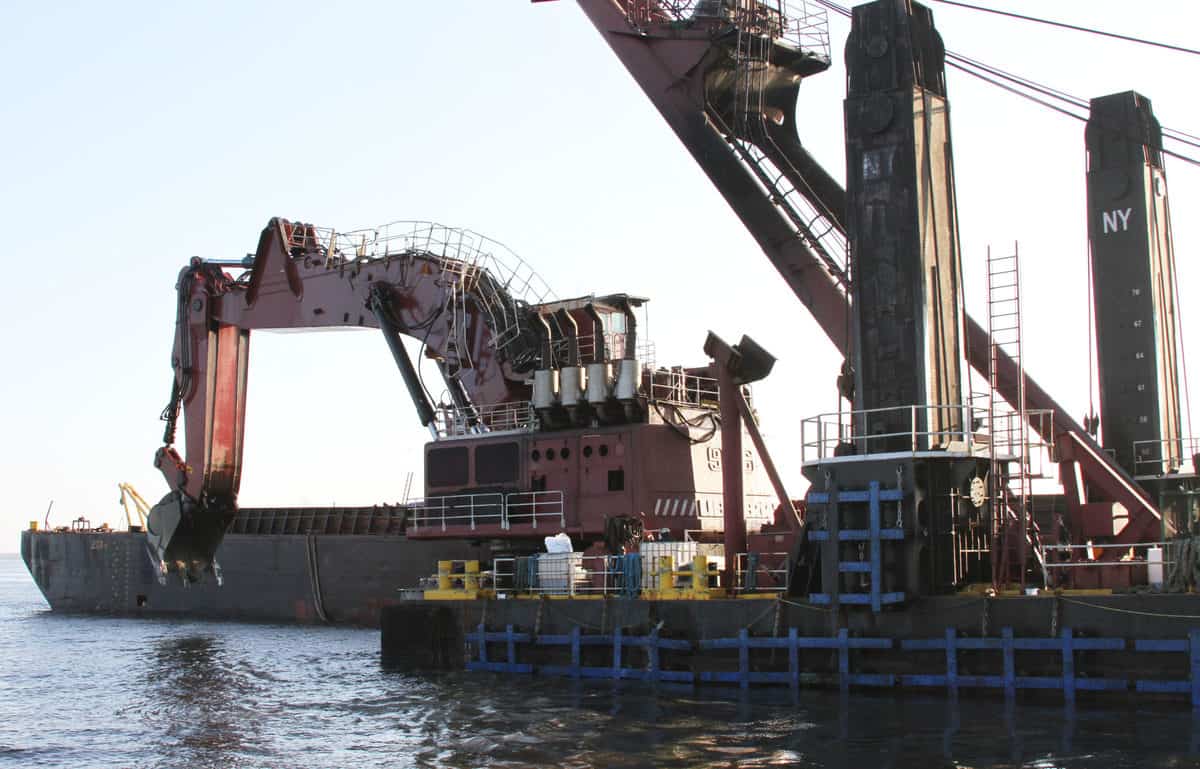
Dredging ship operator Great Lakes Dredge & Dock [NASDAQ: GLDD], which won the contract for the work, has been using its drillboat Apache to break up this “speedbump” that is key to the overall project’s success, and its hydraulic dredge New York to remove the material.
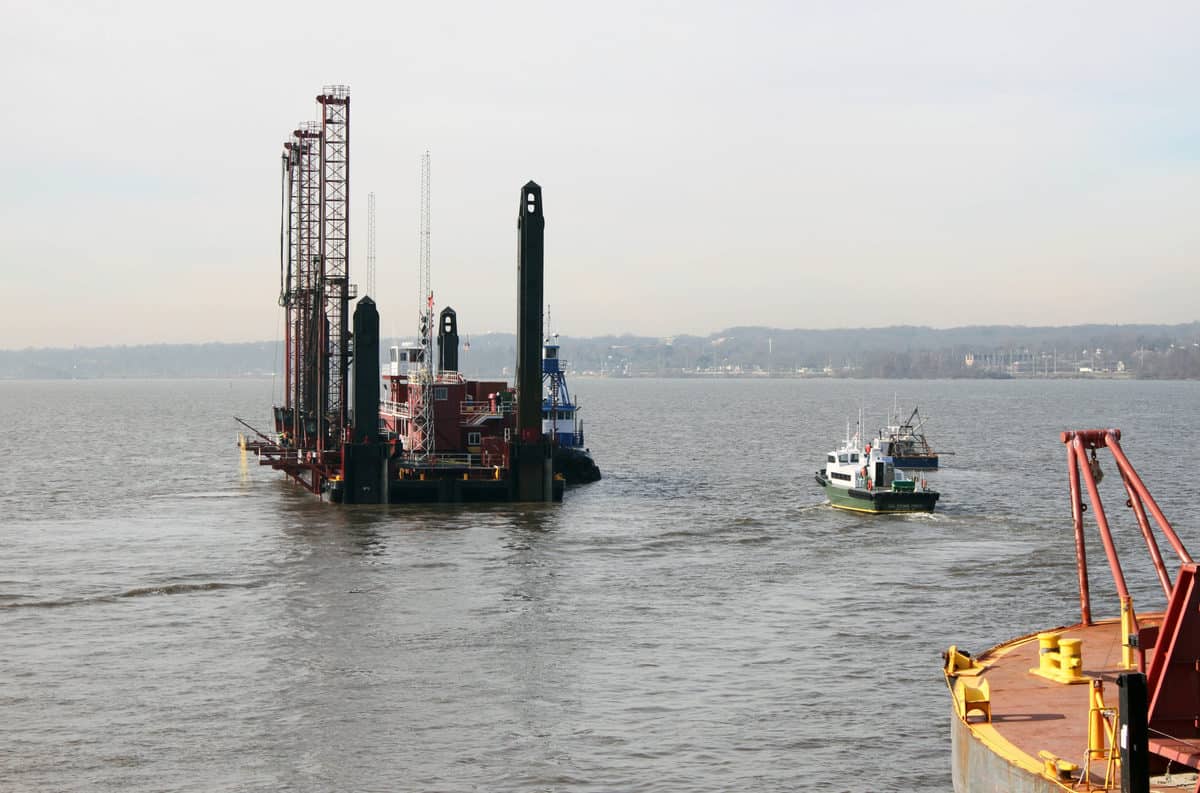
Great Lakes Dredge & Dock’s Apache prepares for blasting in Delaware River Jan. 24. Credit: Tim Boyle/USACE

“We’re hoping to get the blasting portion completed over the next week,” a New York crew member told FreightWaves during a tour of the site on Jan. 24. Dredging was temporarily suspended that day while the vessel’s massive clamshell bucket was under repair. “If we find more rock than we’re expecting, it may take longer. But the best-case scenario for completing the blasting and then getting it all removed is within the next several weeks.”

The project, which began in 2008, has increased the depth of the 103-mile main shipping channel between Philadelphia and the Atlantic Ocean from 40 to 45 feet. The cost is shared 35% by the Philadelphia Regional Port Authority, known now as PhilaPort, and 65% by the federal government through the U.S. Army Corps of Engineers (USACE), which oversees the project.

According to USACE and PhilaPort, the extra 5 feet of channel means containers, bulk commodities and automobile shipments will have more efficient access to and from Delaware River ports, which include Philadelphia and the Port of Wilmington, Delaware.
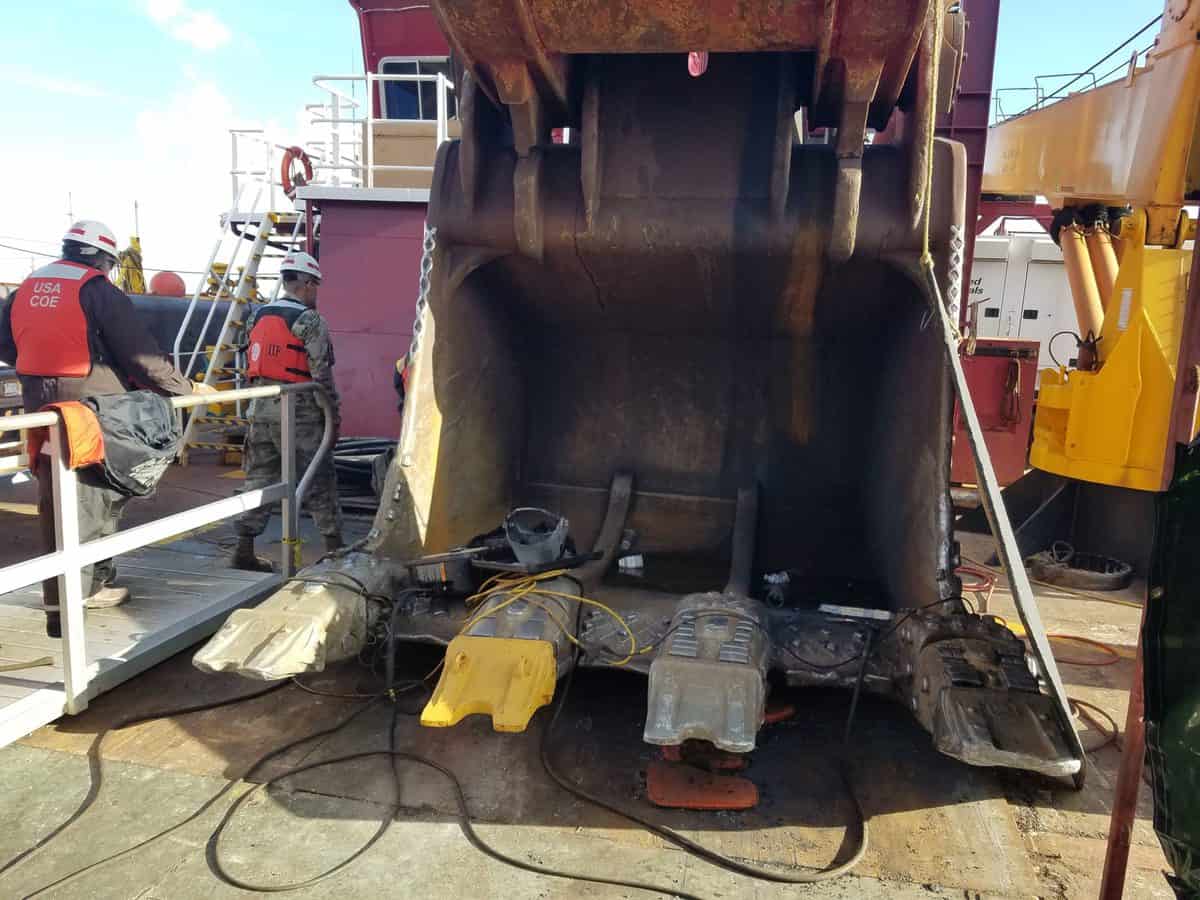
New York‘s clamshell bucket under repair on Jan. 24.
Credit: John Gallagher/FreightWaves

Last year the PhilaPort received a second set of super post-Panamax container cranes that were installed at its Packer Avenue Marine Terminal. In December the terminal opened a containerized auto shipping center with storage for 1,200 vehicles.

“Just knowing we’re in the final stretch, a lot of people are very excited,” Ayanna Williams, PhilaPort’s director of government and public affairs, told FreightWaves. Williams stressed that the deepening is important not only for Philadelphia and Pennsylvania, but for Delaware and New Jersey as well. There are over 400 truck- and/or rail-served distribution centers within a 150-mile radius of the port that are expected to benefit from the project. “Allowing for bigger ships and more cargo will also mean more jobs for the region,” she added.

“Bigger ships, but probably more importantly, the same ships at a deeper depth,” Ken Goldberg, deputy district engineer for USACE’s Philadelphia District, told FreightWaves. “Oil ships don’t have to lighter [offload cargo before arriving at the port] as much, and container ships can come in heavier at a deeper draft. It’s obviously very important for Philadelphia to stay competitive — our neighbors [Baltimore and New York] are already at 50 feet. So it’s keeping Philly in business.”

USACE’s Ken Goldberg explains the importance of removing the river’s “speed bump.”

The blasting portion of the project has a significant environmental component as well: protecting endangered species of sturgeon. “There’s a whole process [USACE] has to go through, and they have to consult with the National Marine Fishery Service, which is the expert agency that manages endangered sturgeon,” Harold Brundage, president of Environmental Research and Consulting, told FreightWaves.

USACE contracted with Brundage to develop a conservation program for two species of endangered sturgeon — Atlantic and Shortnose — that could potentially be harmed. The program includes relocating them upriver, dispersing them using sound deterrence, and monitoring tagged fish before and after blasting.
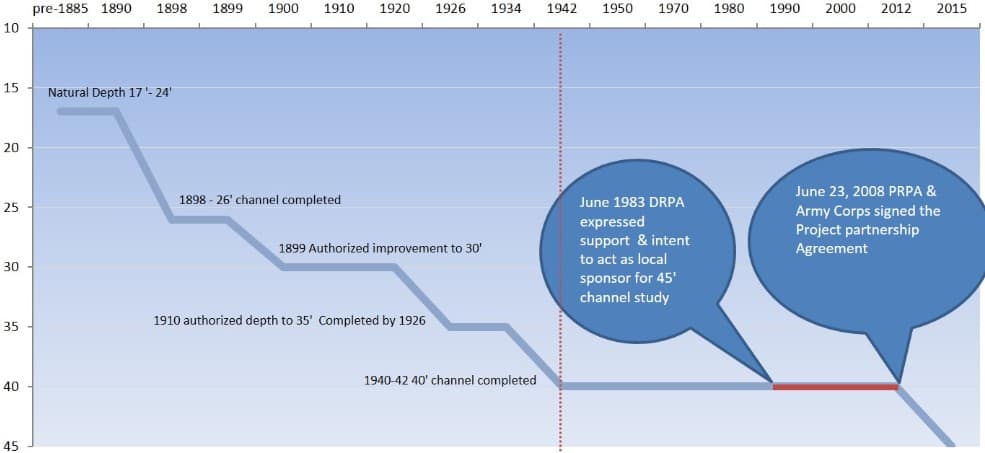
Delaware River’s timeline to a 45′ channel, including recent efforts by Delaware River Port Authority (DRPA) and Philadelphia Regional Port Authority (PRPA). Credit: PhilaPort

usscmc

usscmc

No Result
View All Result

Recent Posts

  • How Hapag Lloyd captured a major market share in the Container Shipping Industry in USA
  • Why USA’s East Coast is the Favorite Destination for Manufacturing Companies
  • How Trade Relations Between the USA and UK Improved After Keir Starmer Became Prime Minister
  • Tips and Tricks for Procurement Managers to Handle Their Supplier Woes
  • The Crazy Supply Chain of Walmart Spanning Across the Globe

Recent Comments

  • Top 5 Supply Chain Certifications that are in high demand | Top 5 Certifications on Top 5 Globally Recognized Supply Chain Certifications
  • 3 Best Procurement Certifications that are most valuable | Procurement Newz on Top 5 Globally Recognized Supply Chain Certifications

Archives

  • July 2024
  • June 2024
  • May 2024
  • April 2024
  • March 2024
  • February 2024
  • January 2024
  • December 2023
  • November 2023
  • October 2023
  • September 2023
  • August 2023
  • July 2023
  • June 2023
  • May 2023
  • April 2023
  • March 2023
  • February 2023
  • January 2023
  • December 2022
  • November 2022
  • October 2022
  • September 2022
  • August 2022
  • July 2022
  • June 2022
  • May 2022
  • April 2022
  • March 2022
  • February 2022
  • January 2022
  • December 2021
  • November 2021
  • October 2021
  • September 2021
  • August 2021
  • July 2021
  • June 2021
  • May 2021
  • April 2021
  • March 2021
  • February 2021
  • January 2021
  • December 2020
  • November 2020
  • October 2020
  • September 2020
  • August 2020
  • July 2020
  • June 2020
  • May 2020
  • April 2020
  • March 2020
  • February 2020
  • January 2020
  • December 2019
  • November 2019
  • September 2019

Categories

  • Global News
  • Supply Chain Updates

Meta

  • Log in
  • Entries feed
  • Comments feed
  • WordPress.org
  • Antispam
  • Contact Us
  • Disclaimer
  • Home
  • Privacy Policy
  • Terms of Use

© 2025 www.usscmc.com

This website uses cookies to improve your experience. We'll assume you're ok with this, but you can opt-out if you wish. Cookie settingsACCEPT
Privacy & Cookies Policy

Privacy Overview

This website uses cookies to improve your experience while you navigate through the website. Out of these cookies, the cookies that are categorized as necessary are stored on your browser as they are essential for the working of basic functionalities of the website. We also use third-party cookies that help us analyze and understand how you use this website. These cookies will be stored in your browser only with your consent. You also have the option to opt-out of these cookies. But opting out of some of these cookies may have an effect on your browsing experience.
Necessary
Always Enabled
Necessary cookies are absolutely essential for the website to function properly. This category only includes cookies that ensures basic functionalities and security features of the website. These cookies do not store any personal information.
Non-necessary
Any cookies that may not be particularly necessary for the website to function and is used specifically to collect user personal data via analytics, ads, other embedded contents are termed as non-necessary cookies. It is mandatory to procure user consent prior to running these cookies on your website.
SAVE & ACCEPT
No Result
View All Result
  • Home
  • Supply Chain Updates
  • Global News
  • Contact Us

© 2025 www.usscmc.com