



The national consciousness over plastic waste in the environment has grown substantially in recent years. Whether it’s a media outlet showcasing images of sea life wrapped in plastic six-pack rings, consumers trading in plastic straws for more sustainable alternatives or lawmakers initiating single-use plastic bans across the country, the push for more conscientious practices is easy to see.
In turn, businesses have received the message. At the beginning of 2019, a new organization emerged in an attempt to offer solutions to this ever-growing problem.
Major companies along the plastics supply chain formed the Alliance to End Plastic Waste (AEPW) in January. The group is currently composed of more than 40 major global and regional manufacturers, users, sellers, processors and collectors that are aiming to work together to develop and bring to scale solutions to minimize and manage plastic waste in the environment.
“Plastic waste leaking into the environment is a serious global environmental challenge. Research from around the world shows that the vast majority of ocean plastic comes from regions without adequate waste management and recycling,” says Jim Meszaros, a spokesperson for AEPW. “These companies recognized a need for a globally coordinated and transformative effort focused on minimizing waste and recovering, reusing and recycling plastics after they are used, especially in areas of the world where the challenge is greatest.”
Global goals
AEPW says more than half of land-based plastic waste leakage comes from just five countries: China, Indonesia, Philippines, Thailand and Vietnam. What’s more, just 10 rivers in the entire world carry more than 90 percent of ocean-bound plastics, eight of which are in Asia and two in Africa. Scientists at Germany’s Helmholtz Centre for Environmental Research, who carried out the study, found the rivers all have two common traits: they are surrounded by a densely populated area, and the area has a lack of adequate waste management systems and infrastructure.
With that research in mind, the group says it is targeting those areas over the next five years with a goal to invest $1.5 billion to create scalable solutions. AEPW says much of that funding will be aimed at forming partnerships with existing organizations in those areas that have similar missions of expunging plastic waste.
“We recognize that $1.5 billion is not nearly enough of an investment to eliminate plastic waste leaking into the environment,” says Meszaros. “For this reason, our investments will be designed to leverage additional investment and resources from governments, multinational institutions, development banks and other sources. We’re also focused on projects that can be scaled up in other regions and markets.”
A master plan
In addition to funding like-minded initiatives, AEPW plans to contribute to partnerships by providing the expertise of its members. To focus its efforts, AEPW has devised a master plan to follow over the next several years, which consists of several tenets:
- Develop infrastructure to collect and manage waste and increase recycling, especially in developing countries.
- Advance and scale new technologies that minimize waste, make recycling and recovering plastics easier and create value from post-use plastics.
- Educate and engage all levels of governments, businesses and communities to mobilize action.
- Clean up concentrated areas of plastic waste in the environment, particularly major rivers that carry vast amount of land-based plastic waste into oceans.
“By bringing together the entire plastics value chain, the alliance will apply the technical and engineering expertise of each sector, the collective resources and reach of companies from around the world, and insights from those that operate in the regions where the challenge is greatest,” Meszaros says. “However, we don’t have all the answers. That is why listening to others and collaborating with governments, especially those in the affected regions, and with innovators, investors, local communities and environmental and conservation groups already working on this challenge, will be a critical part of the alliance’s approach.”
As part of the plan, participating companies have goals of their own to move the needle toward these final objectives.
“Veolia wants to deliver solutions on a global scale, supporting both manufacturers and local communities. On [the Veolia] Group level, our ambition is to create an industrial plastic recycling and recovery sector. Our goal is to increase our plastic recycling revenue fivefold by 2025, from approximately $220 million to $110 billion,” says Bob Cappadona, president and COO of Veolia North America’s environmental solutions and services business. The business’s parent company, Veolia Environnement of Paris, was a founding member of AEWP. “By 2025, Veolia will recycle twice as much plastic as it does today (roughly 551,000 tons versus 275,000 tons), combining organic growth with targeted acquisitions.”
“Suez will support the alliance’s mission through direct investment,” says Jean-Marc Boursier, the COO and senior executive vice president of the group in charge of Northern Europe and industrial waste specialties in Europe for Paris-based Suez. “As an example, Suez is currently building in Thailand a recycling plant that turns plastic waste into circular polymers. In the Bang Phli district, near Bangkok, this plant will contribute to Thailand’s ambitious 2030 target to achieve 100 percent plastic recycling by converting 30,000 tons per year of locally collected polyethylene film waste into high-quality post-consumer recycled plastic. By mid-2020, it will thus produce quality secondary materials for the plastic industry.”
AEPW says it has three fundamental principles at the heart of its strategy: that plastic waste is a valuable economic resource and shouldn’t be discarded, but rather, put to better use; that ending plastic waste in the environment can enable economic opportunity; and that collaboration is essential to success.
Keeping plastic alive
Though some more extreme members of the public are calling for an outright halt to plastic production, keeping plastic in the supply chain is a hallmark of AEPW’s goals. This is, of course, due in part to the fact that many of its members either manufacture plastic or rely on it for various reasons.
But members of AEPW also say plastic is a valuable resource that shouldn’t be blasphemed. The group defends plastic’s many benefits, including sanitation, safety, health preservation and convenience.
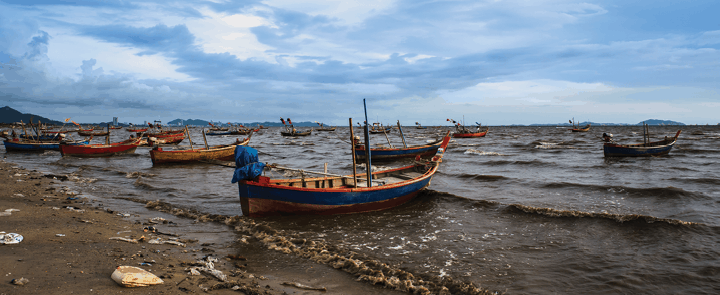
Photos provided by Alliance to End Plastic Waste, © ookawaphoto
“These companies recognize that there is a widespread misperception that post-use plastic has little or no value, when in fact, plastic waste is a valuable resource,” Meszaros says. “It is critical that we improve the way we manage plastic in order to preserve the benefits it brings and protect the environment around us.”
According to AEPW’s website, replacing plastics in packaging and consumer products with alternative materials could raise environmental costs nearly fourfold. Indeed, studies have shown in the case of plastic shopping bags that alternatives such as paper bags and cotton totes may be worse for the environment overall depending on how many times they’re used.
“Plastics often enable packaging and products to do their job more efficiently than alternatives such as glass, metal or paper, helping to reduce our environmental footprint in virtually every aspect of modern life,” Meszaros says. “In fact, a 2016 study by the firm Trucost found the environmental cost of using plastics in consumer goods and packaging is nearly four times less than if plastics were replaced with alternative materials.”
While the more widespread consequences of using plastic are still largely unknown—including health effects when they’re broken down and ingested—AEPW’s efforts, if successful, could curb some major plastic concerns, including microplastics in the environment. A recent Evidence Review Report published by Science Advice for Policy by European Academies (SAPEA) found microplastics in air, soil and sediment, freshwaters, seas and oceans, plants and animals across the world. Though the study did not find any conclusive effects of microplastic ingestion, “if microplastic emissions to the environment will remain the same, the ecological risks of microplastics may be widespread within a century,” the report says.
Taking action
Instead of aiming to eliminate plastic waste by means of halting production, the alliance is aiming to do so by bolstering plastic’s value, as seen with its first major initiative—a partnership with Renew Oceans, a nonprofit organization based in India. Together, the two groups are working to clean up the Ganges River in India, the world’s second-most polluted river.
“Once you give plastic value, then you won’t see it in the environment,” says Priyanka Bakaya, Renew Oceans founder and director, in a video on the alliance’s website.
In addition to physically cleaning up the existing waste, Bakaya says the initiative is searching for low-cost scalable solutions relative to Renew Oceans’ focal “three C’s”—collection, conversion and community. AEPW is contributing by providing funding, materials, logistics capabilities and technical expertise.
“The alliance has provided financial support, logistical capabilities and technical expertise to Renew Oceans to help divert 100,000 pounds of plastic waste in 2019, with a goal of 1 million pounds in 2020. This project relies on community engagement, manual clean-up efforts and technological solutions that turn plastic waste into valuable, marketable materials,” Meszaros says.
New initiatives are on the horizon for the alliance heading into 2020. One recently formed partnership will support the launch of a waste management recycling system in Bali, while another will create a pipeline of recycling projects and opportunities in South and Southeast Asia.
In one of its most recent partnerships, AEPW is collaborating with Plug and Play, an early stage investor and accelerator headquartered in Sunnyvale, California, to identify startups with innovations to address plastic waste in the environment. “Ultimately, we want to end plastic waste in the environment,” Meszaros says. “That is our overarching goal, and the programs we support will be measured against this goal.”
This article originally appeared in the November/December issue of Waste Today. The author is the assistant editor for Waste Today magazine and can be reached at [email protected].
Recent Comments