


Duties, drawback, and rising and falling tariffs — the chaotic world of international trade can be dizzying for U.S. importers.
Flexport aims to stop the spin and in the process save its clients money — and headaches. San Francisco-based Flexport, which touts itself as “the modern freight forwarder,” on Wednesday officially launched Trade Advisory, a service designed to help its U.S. clients “identify cost-saving opportunities, explore tariff mitigation strategies, minimize operational risk and implement best practices for trade compliance amid unprecedented global trade complexity,” according to the announcement.
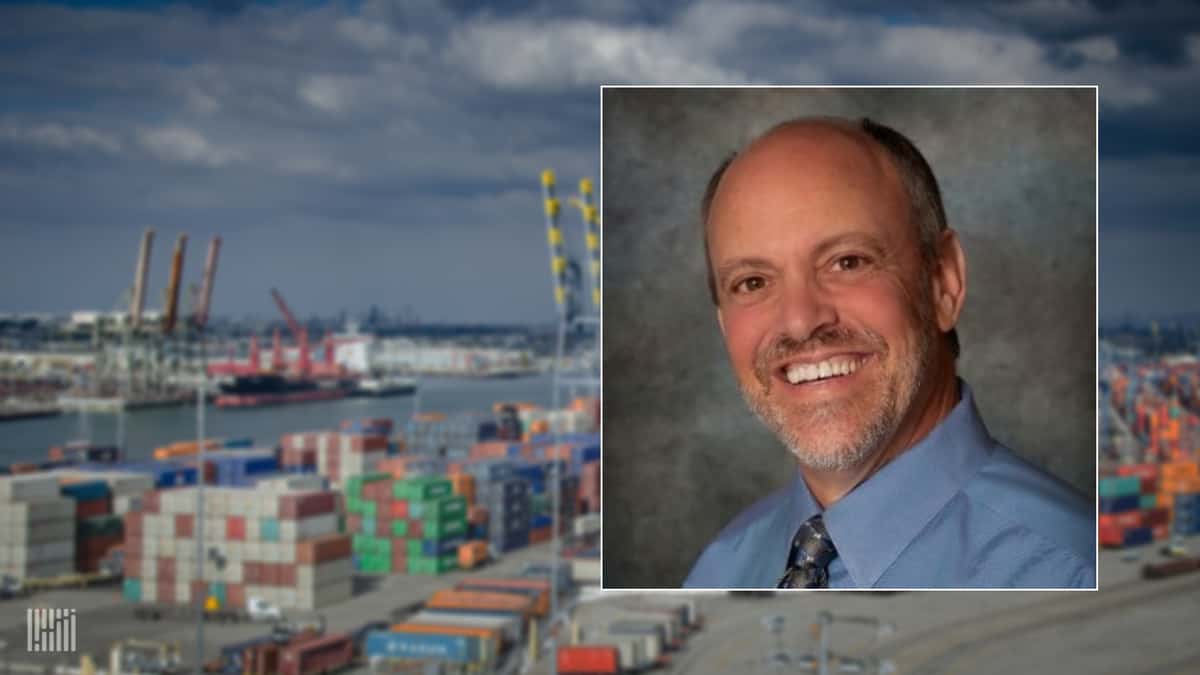
Tom Gould joined Flexport in August as vice president of customs and trade advisory to launch the service. Although he is relatively new to Flexport, he is not new to providing trade advisory services. “It’s something I’ve been doing for many, many years,” said Gould, previously senior director of customs and international trade for Sandler, Travis & Rosenberg.
“We’re starting off with companies that import products into the United States, looking at strategies that they might launch internally that will help them with either savings on duties or something to allow them to pay less in tariffs, to be more compliant and to allow for more certainty and less risk, less uncertainty in their supply chains,” he said.
How exactly does one find certainty in an uncertain trade environment?
“It’s tough, but a lot of it is done based on looking at the data and understanding the client’s data and really having an insight into where products are coming from, where products are going and what things the companies might be doing that might raise different levels of risk with their supply chain,” Gould said. “By understanding that information, understanding that data in advance, what we’re able to do is help companies to be more proactive.”
According to the announcement, “Where most traditional trade law and consulting firms specialize in reactive guidance, Flexport Trade Advisory provides proactive, tailored solutions based on SKU-level data analysis powered by the Flexport platform. Because Flexport clients use the platform to manage and track the shipment of their goods, Trade Advisory experts can examine supply chains down to the SKU level and deliver data-powered analysis and recommendations.”
Gould said a company with a deeper understanding of possible risks in its supply chain can be “better prepared to address issues as they arise. When Customs has a question, they’re able to answer quickly and therefore they’re going to have less disruption in their supply chain.”
The role Flexport Trade Advisory plays in dealing with Customs depends on the client.
“Some companies want to deal with Customs themselves. More often are cases where the client wants us to represent them with Customs. Often we’ll have a meeting with the client and with Customs, and we’ll be the one doing a lot of the talking but the client will be there to provide certain insight that’s needed,” Gould said.
During the soft launch, Flexport has been providing some of its U.S. clients trade advisory services, including country-of-origin analysis, duty drawback, customs valuation and tariff classification.
Gould said there is “absolutely” a need for Trade Advisory’s services in the wake of the tariff truce with China.
The Phase One trade agreement only stopped the imposition of tariffs on an estimated $160 billion in Chinese imports “and it lowered the fourth list from 15% to 7.5%, so we’re still dealing with a lot of duty there. Plus [tariff lists] 1, 2 and 3 are all at 25%, so there’s a significant percentage of products that are imported from China that are still impacted by increases in duty, which means there’s a good reason for them to have the Trade Advisory services to help them save,” Gould said.
Flexport also can help companies looking at moving manufacturing out of China. Trade Advisory helps “sort it out specifically for the client. Two companies making the same product, there might be a different strategic reason for a company to move part of their production outside of China or outside of a certain country, where another company might not have the same need to move that piece of the production outside of China,” Gould said.
“I look at multiple sources of information. First of all, I’m going to look at the actual data on your transactions. I’m going to be talking to your people to find out information about your supply chain, information about your company, information about your products. I’m going to take all of that information, and I’m going to pull it together to understand what the best solution is for your company,” he said.
Flexport has said companies use its services to move, finance and make better decisions about freight — all on one digital platform powered by a combination of technology, logistics infrastructure and expertise. It currently connects nearly 10,000 clients and suppliers across 116 countries.
Flexport uses technology such as optical character recognition, machine learning and artificial intelligence to interpret unstructured data and put it into structured form.
The company built momentum in 2019, which CEO Ryan Peterson told FreightWaves was a pivotal year, one in which it launched a new version of its operating system for global trade and raised $1 billion from an investor group led by Softbank Vision Fund.
The four-member Flexport Trade Advisory group is now serving U.S. clients but is expected to expand to other parts of the world later this year or in 2021, Gould said. “Right now there are four of us, but we’re actively growing. Two of them are attorneys. One of them is a specialist in drawback. All four of us are licensed customs brokers. All of us are people that are experienced in dealing with Customs issues for our clients for quite some time.”
A drawback is a refund of customs duties paid on imported materials that are later exported or used in the manufacture of exports, and filing for duty drawback with U.S. Customs and Border Protection can be a complex and time-consuming process. Gould granted that providing drawback assistance alone could keep Trade Advisory busy.
“We can help, absolutely,” he said.
Recent Comments