


By Alaric Nightingale, Jeffrey Bair and Christian Wienberg (Bloomberg) —
A great global restock is at hand, filling ships, trucks and trains, and also firing oil demand.
During the depths of China’s coronavirus crisis at the start of the year, shipping behemoth A.P. Moeller-Maersk A/S reported an unprecedented number of canceled sailings as the Asian country all but shut itself off from the world. Since then, the company’s shares have surged to the brink of a record in Copenhagen. In the U.S., BNSF Railway Co., the freight giant owned by Warren Buffett, is riding a boom that’s pushed the number of carloads and containers it hauls up year-on-year in recent weeks.
A shift in consumer behavior, particularly in western countries, has driven oil prices above $50 a barrel in the past few weeks. People have been diverting expenditure previously earmarked for now-unattainable things — like holidays and meals in restaurants — toward purchasing physical goods. And that’s only the start of it: stores, warehouses and industries have undertaken a huge inventory restocking phase. As more boxloads of stuff get moved across the planet, so demand for fuel to power ships, trucks and freight trains has soared.
“This is the perfect storm for global container flows,” said Lars Mikael Jensen, head of network at Maersk, which marshals a fleet of almost 700 ships. “The current restocking in the U.S. and Europe raises demand, whilst global measures to contain the pandemic cause severe strain across the supply chain from lack of vessels, containers and trucking capacity.”
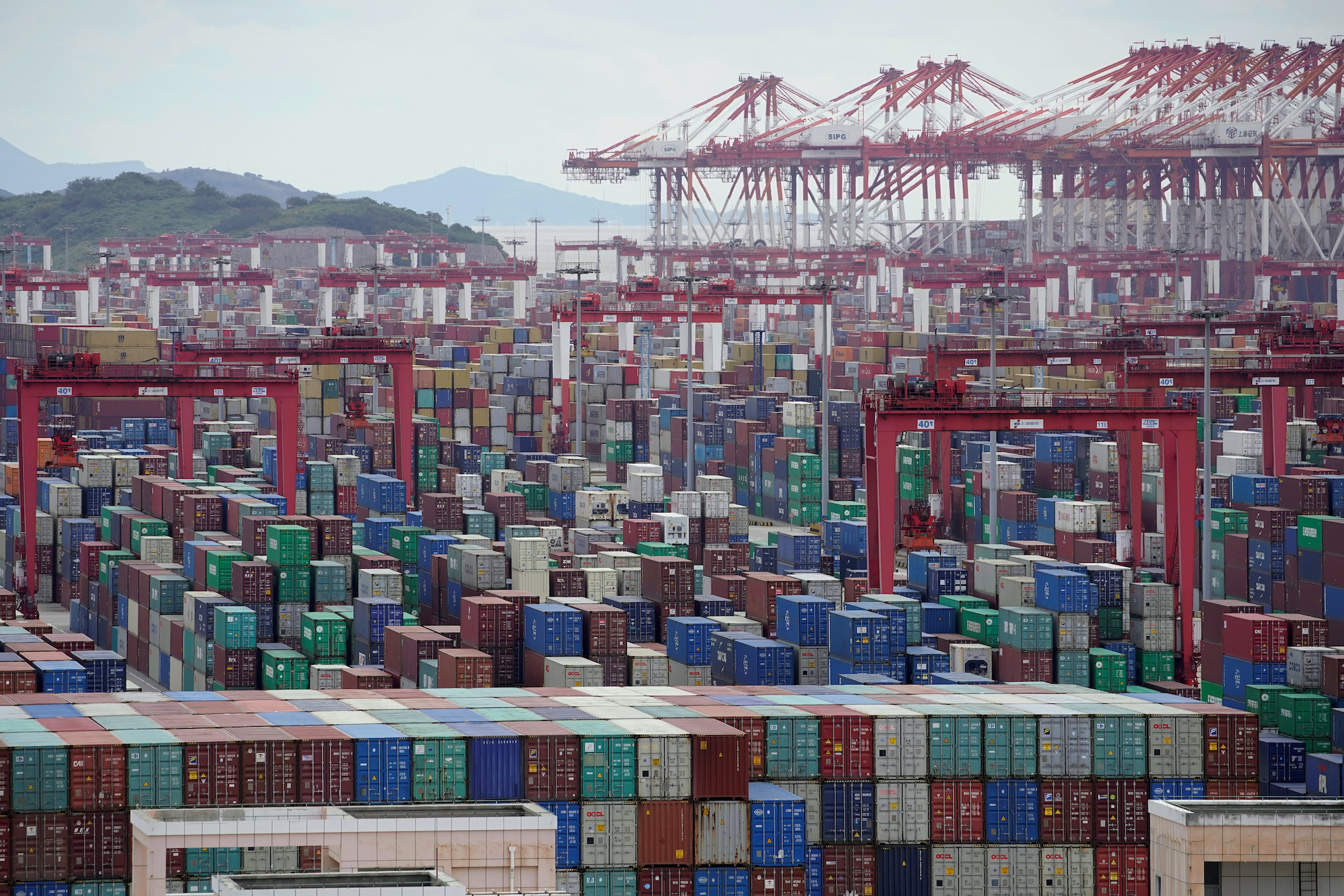
While beneficial to oil prices and freight haulers, the boom is straining important transport infrastructure. Bottlenecks are worsening at ports around the world, contorting supply chains for everything from car parts to cosmetics. The recent closing of freight deliveries from France into the U.K. serves as a reminder that things could become even more snarled — but also that the full economic and trade impacts of the coronavirus remain far from certain.
Los Angeles is emblematic of the turnaround in activity. Together with Long Beach, L.A. is a corridor for the import of goods from Asia into the U.S. Earlier this year, thousands of empty containers were sitting at the dock in Los Angeles, a symptom of both trade tensions with China, and Covid. Today, imported goods are now flooding in.
“Right now, what we are grappling with is a change in buying habits,” said Gene Seroka, executive director of the Port of Los Angeles. “Where we were once buying mainly services, now you and I have turned back to buying products and those warehouses need to be restocked. Folks have been ordering so much for delivery, we can’t process it fast enough.”
Exports from China are surging, pushing the country’s trade surplus to a record. The nation’s companies shipped $268 billion of goods in November, a 21% increase year-on-year.
In India, the lifting of lockdown restrictions and a full resumption of intra-state vehicle movement led to a boost in road transport fuel consumption in October, with diesel demand growing more than 7% year-on-year, according to Senthil Kumaran, head of South Asia oil at industry consultant FGE.
Shipping rates are going crazy. Moving a 40-foot steel box by sea from Shanghai to the European trade hub of Rotterdam costs about $6,500 per container, the most for the time of year since at least 2011, according to data from Drewry.
The trends matter for the oil market because trucking accounts for about 16% of global oil consumption and almost half of all diesel demand, according to 2019 data from the International Energy Agency.
The rebound in activity, combined with the onset of Northern Hemisphere winter, has been lifting a previously disastrous market for the fuel for about two months.
Back in September, the so-called crack spread — diesel’s premium to crude — plunged as low as $2 a barrel in Europe.
As well as stuttering demand, a key cause of the diesel-market weakness was a collapse in global aviation. Oil refineries responded to that slump by diverting output of jet fuel into making diesel instead, boosting output when consumption was weak. In addition, because people were often staying off public transport to avoid catching the virus, refineries needed to keep high output levels to service gasoline demand — further swelling diesel supply at a time when it wasn’t needed.
Those dynamics have turned. Last week, the crack spread rallied to $6.28 a barrel. That’s at a time when the underlying price of crude oil has also rallied strongly.
Keep on Trucking
In the U.S., freight by truck is the primary influencer of diesel and viewed as a sign of the health of the wider economy. Interstate miles covered by trucks are up above 9% over last year, while traffic for all vehicles is down more than 10%, federal Department of Transportation statistics show.
A proxy for demand in U.S. is how much of a petroleum product oil refineries supply. And in the week to Dec. 11, they supplied 4 million barrels a day of distillate fuel oil, the category that includes diesel. Back in May, that figure slumped to 2.7 million a day, the lowest in decades, Energy Information Administration data show. Stockpiles remain high but are far less bloated than they were earlier this year.
The pull on diesel can be seen in excess demand for deliveries this year. Data from consultant Freight Waves show that 26% of requests for freight hauling are being turned down this quarter, double the rejection rate from a year ago.
While trucking may be the mainstay of diesel demand, one of the largest U.S. buyers of the fuel — after the Navy — is Buffett’s BNSF Railway. It too reports surging activity.
“We have seen a strong recovery in intermodal volumes as an increase in e-commerce sales drives demand for parcel and truckload intermodal shipments on our network,” said Tom G. Williams, BNSF group vice president consumer products. “As cities and states began reopening, intermodal demand was further supported by recovering brick-and-mortar retailers.”
Current volumes at some of BNSF’s intermodal facilities are as much as 20% higher than they were at this time last year, and the company is continuing to work with its customers to meet a “consistent surge” in demand while replenishing inventories that have been low since the onset of the pandemic, he said.
Even Europe
Over in Europe, the continent’s biggest owner of trucks reports the same dynamics, filling the company’s fleet and boosting usage of diesel.
“There is definitely a new consumer pattern,” said Kristian Kaas Mortensen, an executive at Girteka Logistics, a Vilnius, Lithuania-based owner of more than 7,500 trucks. “Because we can’t give it face-to-face we are shipping it.”
Girteka is so busy that it’s giving overflow business to other trucking companies. It anticipates the busiest year-end in its history.
In Germany, miles driven by large trucks have been steadily rising since September and are currently their highest in a month, according to the nation’s statistics office. Polish heavy traffic in the week to Dec. 20 is about 20% higher than the equivalent year ago. It was a similar picture in the U.K. prior to the country’s most recent set of lockdown rules.
But it’s a surge that’s global and may well be without precedent, according to Gebr. Weiss, a 500-year-old firm that lays claim to being the world’s oldest logistics company.
“Looking back at our history, you could say we’ve weathered a few challenges: a war, a revolution or two but still, in all my years in logistics I’ve never had a year like this,” said Gebr. Weiss board member Lothar Thoma. “Covid choked up, disrupted transport arteries on a global scale, messed the cycles of goods-in, goods-out, be it air, sea, rail or road.”
–With assistance from Thomas Black, Jack Wittels and Brian Parkin.
© 2020 Bloomberg L.P.
Recent Comments