

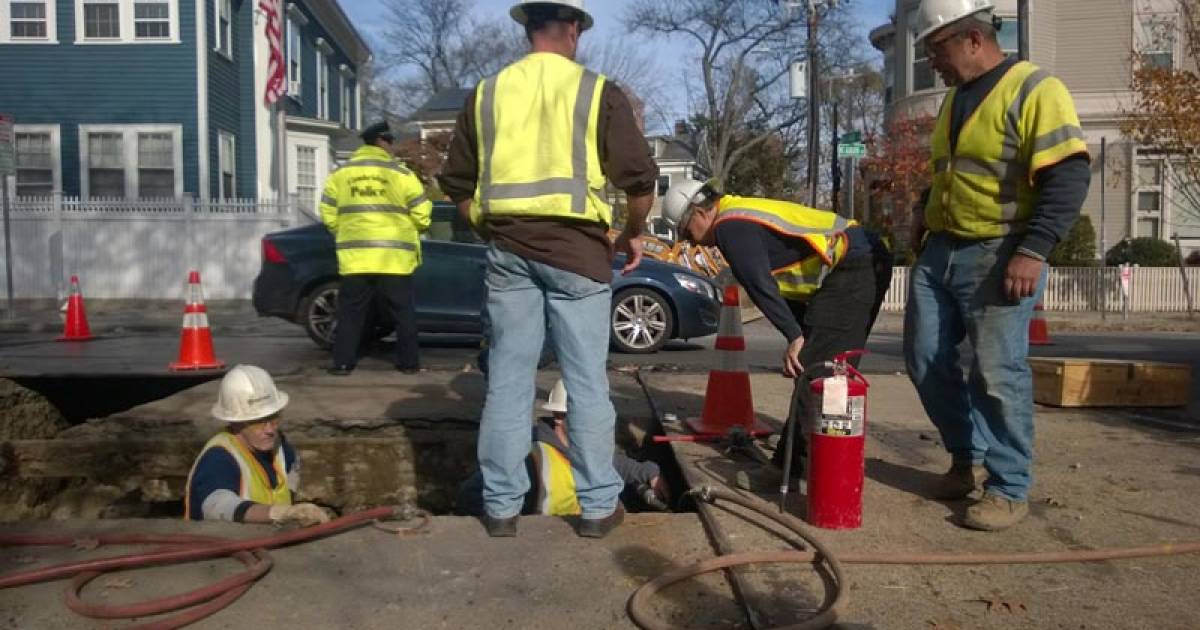

A panel reviewing the physical integrity and safety of the state’s natural gas distribution system found a gap exists between the way gas utilities say their crews perform work on the gas system and the way that work actually happens in the field.
Dynamic Risk Assessment Systems Inc., a company contracted by the Baker administration to examine the safety of natural gas infrastructure in the wake of the September 2018 natural gas disaster in the Merrimack Valley, turned in its final report — including specific observations about each of the state’s gas utilities — this week after spending time observing gas work job sites and reviewing gas company manuals, policies and procedures.
The firm’s phase one report found that the state’s natural gas system is “generally reliable” but is made up of a higher proportion of leak-prone pipes, mains, and services made out of cast iron, wrought iron or unprotected steel. It highlighted emergency response preparedness and overall safety as areas that must become greater points of emphasis at most every level of utility companies and the Department of Public Utilities.
After the meetings with all 11 gas companies operating in the state, interviews with executives and front-line workers, conversations with state regulators, listening sessions with stakeholder groups and a review of tens of thousands of pages of documents produced by gas companies, the DPU and agencies like the U.S. Department of Transportation Pipeline and Hazardous Materials Safety Administration (PHMSA), Dynamic Risk undertook physical inspections of pipeline infrastructure and on-site spot checks of gas company safety plans.
“The Panel learned more about each Gas Company’s operations by making site visits in the field than reviewing documents or talking to management,” the group wrote. “Moreover, what was observed in the field often did not match what the Panel expected based on company presentations or the reviewed company documents.”
Dynamic Risk said its team found that gas company operation and maintenance manuals are compliant with regulations, but “are rarely helpful or relied upon in the field,” that excavation practices “vary widely and often appeared to be out of alignment with company or State guidance,” and that meaningful pre-work briefings were largely non-existent.
“This suggests a gap between what Gas Company management, State Agencies, and Stakeholders believe is happening in the field and what actually happens in the field,” the company wrote in its report.
The analysts also found a culture at gas utility work sites in which workers stick to their own lanes and generally do not sense a need for continued education or critical review.
“A learning culture is present when individuals and the organization actively seek out learning opportunities, critically evaluate current practices, and develop a deep understanding of the causes of failure. The first barrier to identifying learning opportunities is overconfidence. The Panel observed a misplaced but often expressed belief that matters were going well at job sites across the Gas Companies,” Dynamic Risk wrote. “When the Panel asked questions and expressed concerns about specific aspects of the work being performed, the response often indicated that is the way it is always done, there was no need to look for similar errors, or, alternatively, that it was not that person’s responsibility.”
But that culture, Dynamic Risk said, was not isolated to the in-field workers.
“When the Panel talked with management at Gas Companies at which the Panel had identified immediate safety concerns, management from two of the four Companies reacted defensively. At three of the four Gas Companies, the corrective actions proposed to the Panel were inadequate,” the report stated.
The Dynamic Risk panel also observed the on-the-ground implementation of the new law which requires that all natural gas work that could pose a material risk to the public be reviewed and approved by a certified professional engineer. But in its report, Dynamic Risk wrote that additional guidance is needed to implement the law and that its safety benefits should be further reviewed.
“The Panel observed the use of PE-stamped drawings at many field sites. The PE stamp appears to add value in complex projects by providing another layer of review, and creating a pause in the work to consider options,” the group wrote. “On other occasions, the value of the PE stamp was less clear. The Panel was made aware of several instances in which the need for the PE stamp to review a minor change added days to the construction process, resulting in a stop-start-stop-start cycle that increases risk but with little benefit.”
And, Dynamic Risk added, “In several instances, the Panel observed PE-stamped drawings that contained errors.”
The review team also looked at the state’s Department of Public Utilities, which had been identified as having room for improvement in the first Dynamic Risk report, and found the agency “has made notable improvements since the September 2018 incident in Merrimack Valley and in response to the Phase I Report.” Still, DPU has “opportunities to continue its progress and improvements to pipeline safety,” the report concluded.
“In the past several months, the Department of Public Utilities has already tripled the number of pipeline safety inspectors, required certified professional engineers to approve natural gas work, issued regulations to reduce incidents of excavation damage and ensured that natural gas companies move to adopt recommended comprehensive pipeline safety management standards,” DPU spokeswoman Katie Gronendyke said. “This final report represents a valuable tool to improve public safety, and the Department looks forward to working with utilities and other stakeholders to implement the report’s recommendations and ensure the Commonwealth’s natural gas distribution system is as safe as possible.”
Gronendyke said the completion of the Dynamic Risk review “is a critical part of the Baker-Polito Administration’s efforts to improve pipeline safety in the Commonwealth.”
In the fiscal year 2021 budget the governor filed last week, he is proposing to sharply increase the fines it can assess on companies that do work on or near natural gas pipelines and to make utilities establish a timeline for replacing leak-prone pipes, in addition to making a $5 million outlay for the DPU’s Pipeline Safety Division to ensure natural gas companies are in compliance with safety regulations.
Outside sections in Baker’s budget (H 2) would increase fines for Dig Safe violations, emergency response violations and for violations of the state’s pipeline code. They would also eliminate the exemption municipal water companies have from Dig Safe requirements and add new requirements for gas companies’ gas safety enhancement plans, which were introduced under a 2014 gas leaks law.
“I think from our point of view, there were a series of recommendations that were made in the original report that came out around Columbia [Gas] and I think our view was that making those investments would be an important part of our ability to do the work that we need to do here in Massachusetts to make sure that our grid is safe,” the governor said when he unveiled his spending plan.
During the Mass. Senate’s debate on climate policy bills Thursday, a handful of senators withdrew their gas safety-related amendments saying that they are satisfied with a commitment from Senate President Karen Spilka and others to address the state’s gas infrastructure in standalone legislation in the coming months.
Recent Comments