
Tech News, Magazine & Review WordPress Theme 2017
  • Home
  • Supply Chain Updates
  • Global News
  • Contact Us
  • Home
  • Supply Chain Updates
  • Global News
  • Contact Us
No Result
View All Result
No Result
View All Result
Home Supply Chain Updates

High freight costs and fierce competition for space hit agricultural importers and exporters

usscmc by usscmc
January 7, 2021
High freight costs and fierce competition for space hit agricultural importers and exporters
Share on FacebookShare on Twitter

Agricultural businesses are grappling with significant increases in international freight costs amid fierce competition for space and ongoing disruption to pre-COVID travel arrangements.

Key points:

  • Importers and exporters report big increases in freight costs
  • Businesses “fighting for space” on flights
  • Loss of passenger flights continues to bite

Tasmanian rural equipment and feed supplier Tony Williams said a container from China was US$6,000 more expensive than the highest price he had ever seen in his 15 years as an importer.

“It’s not really a China trade issue. It’s shipping lines taking advantage of us,” he said.

Southern Tasmanian rural equipment and feed supplier Tony Williams
Southern Tasmanian rural equipment and feed supplier Tony Williams.(ABC Rural: Lachlan Bennett)

Mr Williams said higher freight costs added about $12 to a single cattle panel while delays meant he was “ordering further and further in advance and then hoping it turned up”.

“We get told it will be here in October and it arrives in late December,” he said.

Mr Williams said he understood why shipping lines had “put ships off” in the early days of the pandemic as factories shut and freight bookings dried up.

“But I think they’ve had more than enough opportunity to put more ships back on to solve this issue,” he said.

Navigating the changes to trade
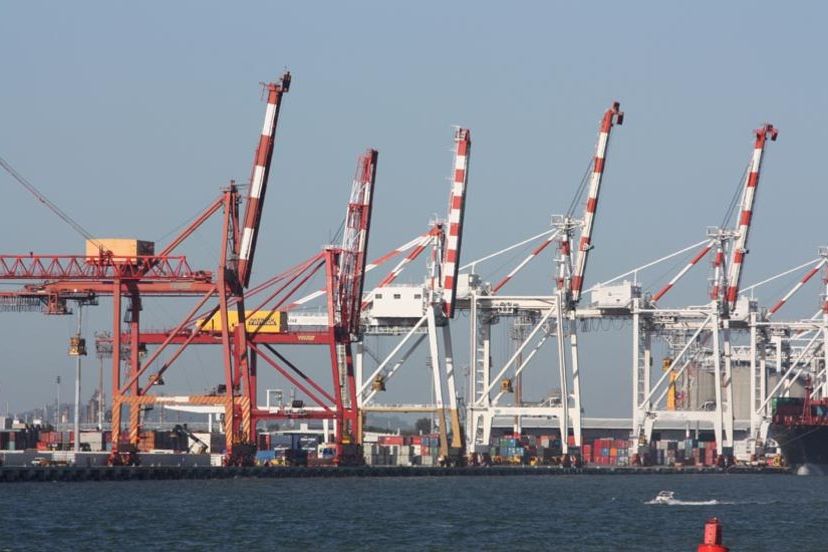
Shipping container cranes at Port of Brisbane
Shipping delays might prompt changes to the “just in time” cargo model.(ABC TV News, Kerrin Binnie: – file image)

Tasmanian Logistics Committee chair Brett Charlton said there was a range of factors influencing freight prices, including supply and demand, shipping equipment stuck in overseas markets, industrial action in Sydney and changes to trade arrangements.

“Shipping lines are going to adjust wherever they can to get the best margins. They’re not altruistic,” he said.

“It’s frustrating for the importers and exporters to deal with, not just the constant shift of ships changing schedule, capacity, freight rates, but also to try to tap into where their markets are going to be due to the changing markets around the world.”

Brett Charlton stands in front to the new Toll ship Tasmanian Achiever Two
Tasmanian Freight Logistics Committee chairman, Brett Charlton, says shipping lines have challenges at the moment.(ABC News: Laura Beavis)

Mr Charlton said the ongoing disruption to the pre-COVID arrangements might prompt changes to the reliance on the “just-in-time” cargo model.

He said businesses might implement larger buffers for transportation time or keep an “emergency supply” of stock in Australia “rather than relying on manufacturing and shipping to be exactly as it used to be”.

Mr Charlton said shipping lines were commercial entities and had their own considerations, such as money lost in previous years from industry competition and costs racked up at the start of the pandemic by stranded ships.

“They had costs they had to take up during that time, and on top of that they have crews and have to work out how they can manoeuvre crews across the world,” he said.

“Shipping lines are having their challenges but there’s no denying they are making significant profits at the moment.”

‘Fighting for space’
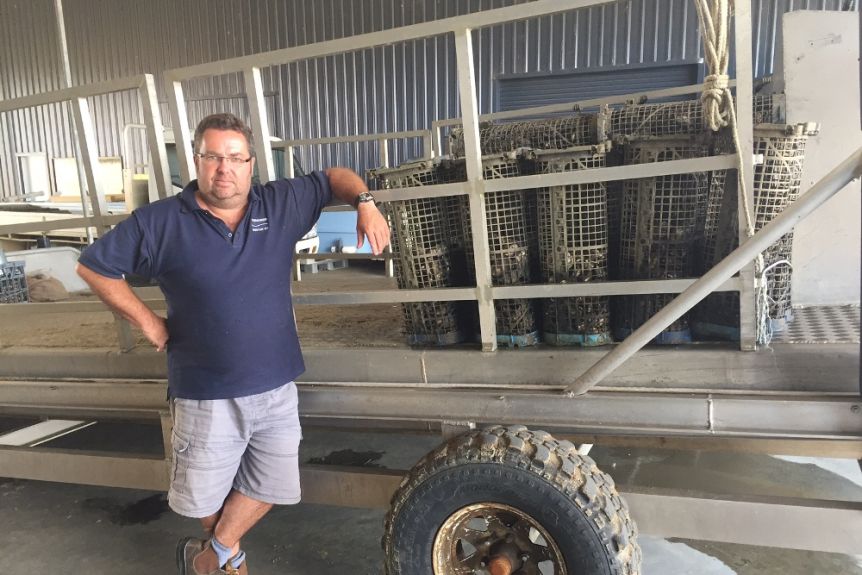
Tasmanian Pacific Oyster farmer James Calvert
Managing director of Tasmanian Oyster Company James Calvert says there’s very few flights available.(ABC Rural: Sally Dakis)

The shipping squeeze comes amid ongoing concerns about the cost and availability of air freight, particularly for perishable goods.

The state and federal governments have tried to relieve pressure by supporting new freight flights, such as the service between Hobart and Hong Kong launched in December.

Abalone exporter Alex Cuthbertson said these initiatives had helped alleviate export costs on some routes but not all.

He said some shipments to Taiwan, for example, had jumped from $5 or $6 a kilogram to $14.

“The freight costs are definitely up. Some shipments have gone up 100 per cent,” he said.

“There’s less freight, fewer planes. So, they can pick and choose what they want to take where.”

The dramatic drop in passenger flights due to ongoing travel restrictions is a key factor as those flights once carried significant volumes of international freight.

Get the latest rural news

Oyster exporter James Calvert said air freight costs “trebled overnight” in some cases as flights dried up.

“Everyone’s fighting for space and the smaller number of flights available now to these markets compared to what we’re used to,” he said.

“We had the choice of probably 10, 12 flights every time we wanted to go out to export. Now we are down to one.

“And we’ve had instances where we’re just about to load product, and the flight would get cancelled, or we’d get bumped.”

‘Really rough road’ ahead
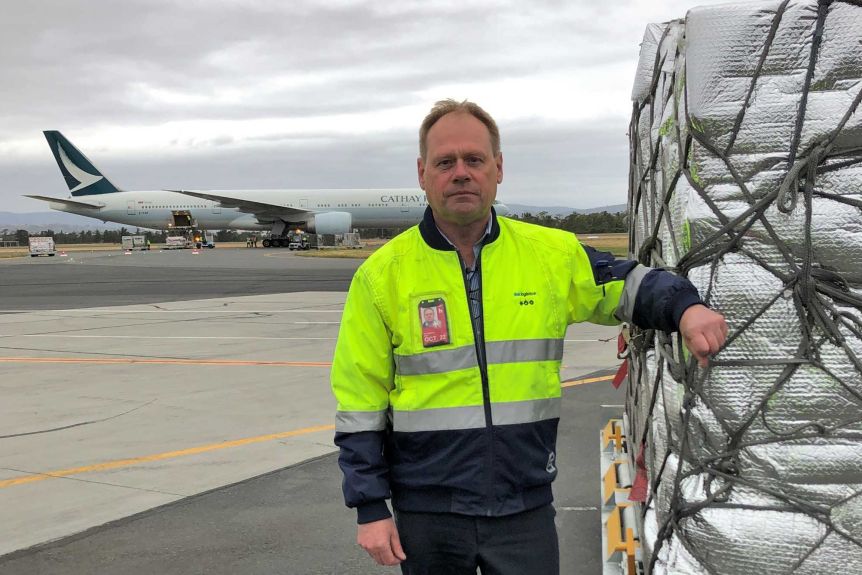
Link Logistics managing director Chris Fox
Link Logistics managing director Chris Fox says there is a rough road ahead.(ABC Rural: Fiona Breen)

Link Logistics managing director Chris Fox said air freight costs would likely stay high until commercial, international passenger flights returned.

“In the past, I suppose, cargo has been subsidised quite heavily because of the passenger numbers,” he said.

“I think the days of seeing cheap air freight rates out of Australia have certainty gone for quite some time.

Mr Fox said some former passenger flights were now being used solely for freight and that was “not the most economical way to move cargo”.

He said the air and sea freight environment remained “quite volatile” and expected the next year to bring “a lot more of the same, unfortunately”.

“It will quieten off a little bit around the April period, and we’ll just re-evaluate to see where things are,” he said.

“But I believe for the next 12 to 24 months we’ve got this really rough road.”

usscmc

usscmc

No Result
View All Result

Recent Posts

  • How Hapag Lloyd captured a major market share in the Container Shipping Industry in USA
  • Why USA’s East Coast is the Favorite Destination for Manufacturing Companies
  • How Trade Relations Between the USA and UK Improved After Keir Starmer Became Prime Minister
  • Tips and Tricks for Procurement Managers to Handle Their Supplier Woes
  • The Crazy Supply Chain of Walmart Spanning Across the Globe

Recent Comments

  • Top 5 Supply Chain Certifications that are in high demand | Top 5 Certifications on Top 5 Globally Recognized Supply Chain Certifications
  • 3 Best Procurement Certifications that are most valuable | Procurement Newz on Top 5 Globally Recognized Supply Chain Certifications

Archives

  • July 2024
  • June 2024
  • May 2024
  • April 2024
  • March 2024
  • February 2024
  • January 2024
  • December 2023
  • November 2023
  • October 2023
  • September 2023
  • August 2023
  • July 2023
  • June 2023
  • May 2023
  • April 2023
  • March 2023
  • February 2023
  • January 2023
  • December 2022
  • November 2022
  • October 2022
  • September 2022
  • August 2022
  • July 2022
  • June 2022
  • May 2022
  • April 2022
  • March 2022
  • February 2022
  • January 2022
  • December 2021
  • November 2021
  • October 2021
  • September 2021
  • August 2021
  • July 2021
  • June 2021
  • May 2021
  • April 2021
  • March 2021
  • February 2021
  • January 2021
  • December 2020
  • November 2020
  • October 2020
  • September 2020
  • August 2020
  • July 2020
  • June 2020
  • May 2020
  • April 2020
  • March 2020
  • February 2020
  • January 2020
  • December 2019
  • November 2019
  • September 2019

Categories

  • Global News
  • Supply Chain Updates

Meta

  • Log in
  • Entries feed
  • Comments feed
  • WordPress.org
  • Antispam
  • Contact Us
  • Disclaimer
  • Home
  • Privacy Policy
  • Terms of Use

© 2025 www.usscmc.com

This website uses cookies to improve your experience. We'll assume you're ok with this, but you can opt-out if you wish. Cookie settingsACCEPT
Privacy & Cookies Policy

Privacy Overview

This website uses cookies to improve your experience while you navigate through the website. Out of these cookies, the cookies that are categorized as necessary are stored on your browser as they are essential for the working of basic functionalities of the website. We also use third-party cookies that help us analyze and understand how you use this website. These cookies will be stored in your browser only with your consent. You also have the option to opt-out of these cookies. But opting out of some of these cookies may have an effect on your browsing experience.
Necessary
Always Enabled
Necessary cookies are absolutely essential for the website to function properly. This category only includes cookies that ensures basic functionalities and security features of the website. These cookies do not store any personal information.
Non-necessary
Any cookies that may not be particularly necessary for the website to function and is used specifically to collect user personal data via analytics, ads, other embedded contents are termed as non-necessary cookies. It is mandatory to procure user consent prior to running these cookies on your website.
SAVE & ACCEPT
No Result
View All Result
  • Home
  • Supply Chain Updates
  • Global News
  • Contact Us

© 2025 www.usscmc.com