

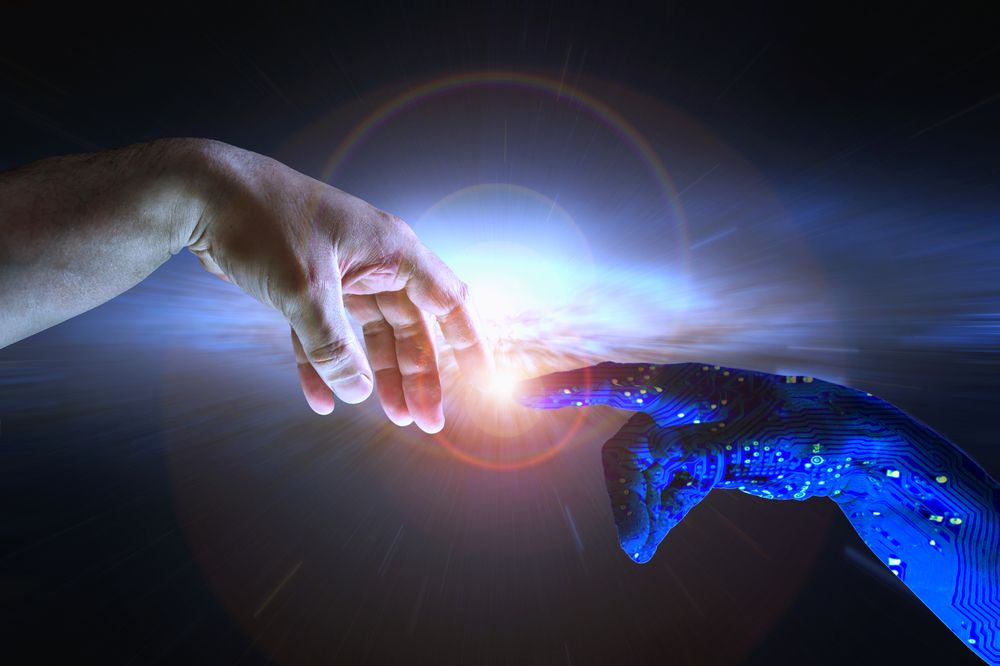

Technological advancements throughout time have caused periods of huge change across industries and jobs roles. Currently, it is the rapid advances in automation and Artificial Intelligence (AI) technologies which have the potential to significantly disrupt global supply chains. However, the question remains how and to what extent these changes will impact in supply chain roles?
What is apparent is that automation and AI will likely transform almost all work to some degree, due to its ability to enhance the productivity of some workers and replace the work of others. When assessing the impact of these advances, the opinions of experts and pundits can by and large be broadly placed into two buckets – that AI & automation leads to functions being substituted or complemented.
Viewpoint – workers will be substituted
The rapid advancement in AI and automation means that, at a not universally agreed upon time in the future, the ability of computers and robots will soon surpass that of workers in numerous tasks. Consequently, when computers are both better and more cost effective than workers, the human workforce will be replaced through labour substitution.
The replacement of workers will happen not just in warehousing (robots) and transportation (self-driving trucks) but also in supply chain planning and execution with automated forecasting, exception handling and replenishment. One study has forecasted that about 47 per cent of US jobs are at risk of computerisation. Another study looked at the impacts of robots in employment opportunities in US manufacturing and found significant decreases in both employment and wages.
Viewpoint – workers will be complemented
The more optimistic view is that there will be an AI-driven shift in the workforce, as technology increases the opportunity for workers who are not in direct competition with it. Whilst technology may depress employment for certain types of labour, it has the potential to create new needs and new opportunities through the “creative destruction” of the complementary effect.
This is exemplified when looking at the introduction of the spreadsheet in the early 1980’s first with VisiCalc and then Lotus 1-2-3. This made manipulating large quantities of related data much easier without time consuming and error-prone methods. Suddenly, you could change commodity costs, currency exchange rates, component prices or interest rates and instantly see the impact on revenues and profits into the future. In the finance and accounting discipline (e.g. in “supply chain finance”) it simplified routine bookkeeping and made many tasks simpler like modelling alternate scenarios.
This technology tremendously impacted the demand for bookkeepers (44 per cent less in number between 1985 and 2017) but greatly increased the need for people who could run the numbers on this new software like accountants, financial managers and management consultants. In the United States between 1985 and 2017, the ranks of accountants and auditors had grown 41 per cent to 1.8 million, while financial managers and management consultants had nearly quadrupled to 2.1 million.
What do the experts think – Pessimism or Optimism?
A pessimistic view is that advances in AI and automation will be so rapid, that machines will eventually be better than humans in most activities, and as access to the technology becomes mainstream it will be the “default choice” for businesses. Consequently, there will be a few highly paid workers who will still be employed and the rest will struggle to find work, or be stuck in jobs that are poorly paid, unstable and stressful.
Alternatively, economist Roger Bootle takes a more optimistic view in his book “The AI Economy: Work, Wealth and Welfare in the Robot Age”. Bootle theorises that AI and robotics would improve productivity and drive economic growth, whilst at the same time release people from performing the most mundane, boring and unfulfilling tasks. New jobs will be created, including those that will always need a human touch with increased social, collaboration and design skills.
Which of these alternate visions of the future should we believe? Recent history has not been able to support convincingly the optimists or the pessimists. Unemployment is a record low which suggests that automation has not led to labour displacement. On the other hand, economists have been pointing out that the growth in overall productivity attributed to technology has been consistently disappointing. Though Erik Brynjolfsson, who studies the economics of information technology, suggests in his explanation of the productivity paradox, that measurements of the impacts may be time delayed and that the wrong (“old economy”) measures are being used.
Supply chain professionals need to re-invent themselves before it’s too late
Whether you fall in the side of pessimism or optimism, what is clear is that technology is causing tremendous disruption in supply chains and for professionals to survive and thrive, they will have to begin to re-invent themselves.
It is not just technological advancements that are driving the re-invention of the supply chain, but rising customer expectations has also had a monumental impact. Customers increasingly expect products and services in their hands more quickly, whilst also demanding a more personalised experience and all this at a lower cost. These changing consumer demands requires faster order fulfilment times and super-efficient delivery. To do this businesses must invent an entirely new way to architect, design and manage supply chains across broader ecosystems, new technologies and new roles and skill sets.
The new supply chain roles being created will increasingly require working directly with customers, customer facing departments, product development, manufacturing and logistics to define the right product and service portfolios. This customer co-creation paradigm will drive the need for supply chain professionals, that can orchestrate the silos across organisations, while at the same time leveraging the latest modelling and analytical tools for insights and decision making.
The high level of cooperation needed in the new roles will require the leveraging of AI and automation to make intelligent decisions around new product attributes, product portfolios, product pricing and distribution, network design, product flow paths, capacity, inventory placement and transportation modes. The emergence of the digital twin of the supply chain, is key to making those interconnected trade-offs, in order to deliver in an environment of ever-changing customer needs, at new levels of speed and scale.
The supply chain ecosystem has always been at its core a people business. As AI and automation enter the mainstream humans and machines can no longer just co-exist but work together to achieve common goals. This cooperation will ultimately benefit all involved as it leads to a more efficient and sustainable supply chain that delivers better business outcomes.
Vikram Murthi, Vice President, Industry Strategy, LLamasoft
Recent Comments