


Sometimes it takes a collapse of the system to realize the flaws lying dormant within it. The coronavirus, which causes the disease known as COVID-19, hasn’t exactly collapsed the global supply chain, but ripples from the outbreak are sure to affect wide swaths of mainstream commercial activity.
A Feb. 11 Dun & Bradstreet white paper, “The Worldwide Business Impact of the Coronavirus,” recently highlighted a few startling statistics:
- An alarming 938 of the Fortune 1000 companies had one or more tier-two suppliers in impacted regions in China.
- More than 90% of all companies globally with tier-one (direct) suppliers in impacted regions were headquartered in the U.S. Coming in second was Canada, with 7.5%.
At the time that white paper was published, there were about 44,000 known cases of COVID-19 in mainland China. At the time of this writing, there are more than 80,000.
A Gravity Not Unique to Apple
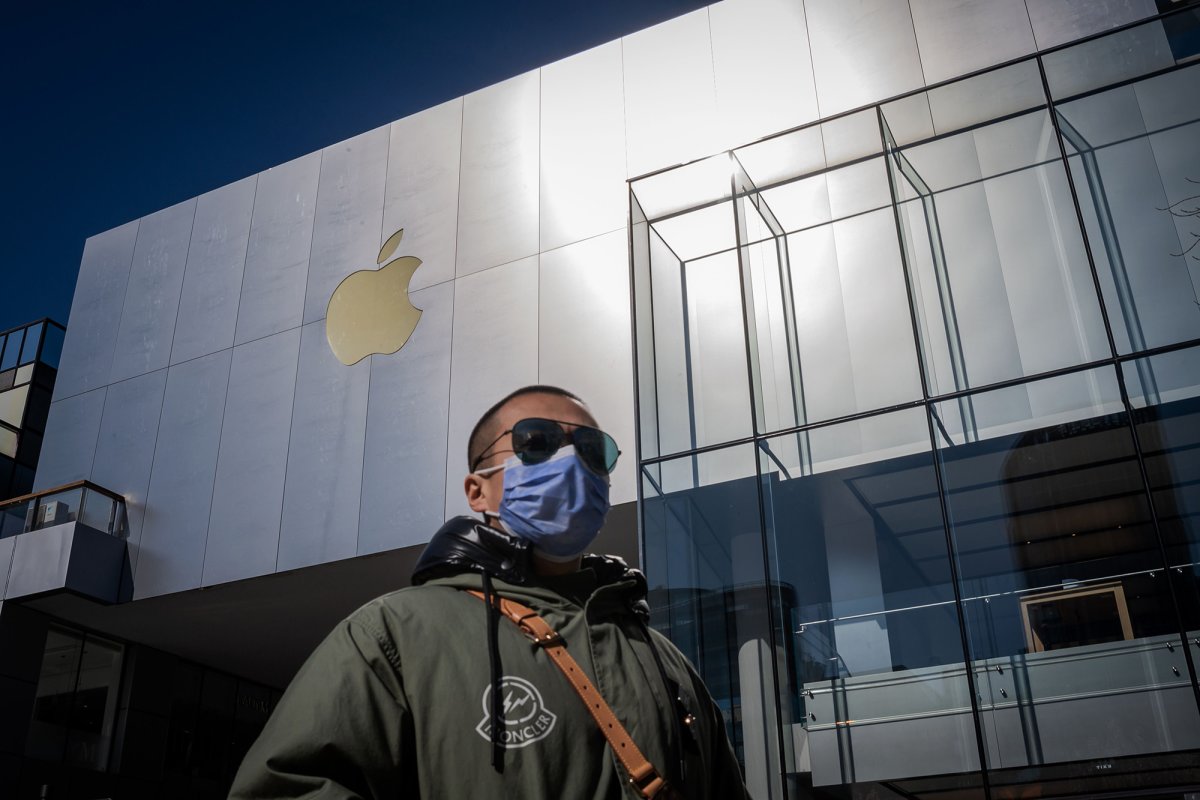
Apple (ticker: AAPL), the most valuable publicly traded company on U.S. exchanges, was quick to see its China-heavy supply chain hit operations.
Less than three weeks after issuing quarterly guidance on Jan. 28, Apple issued a press release on Feb. 17 warning shareholders that revenue for the March quarter would fall short of those recent projections.
Apple had a good reason to reduce expectations. Two good reasons, actually.
First, the company noted that “worldwide iPhone supply will be temporarily constrained,” due to a slow ramp-up of major Chinese manufacturing facilities. Second, demand in China itself was plummeting; this came as no major shock since by this point Apple had closed all its Chinese retail locations.
It’s not just blue-chip companies that are already suffering from the very real global supply chain disruptions caused by the virus.
Metromile, a per-mile car insurance app, ran into trouble when expanding its San Francisco headquarters just last week.
“The arrival of computer displays and TVs, data and Ethernet cables and outlets are delayed due to factory shutdowns and lacking inventory from our distributors and resellers,” says Rick Chen, a spokesperson for Metromile. “As a result, some conference rooms are missing equipment and network connections, and we do not have hardwired data connections at employee desks.”
The Curse of Interconnectivity
While it’s typically wise to not concentrate too much manufacturing in one country or region, taking that simple precaution won’t automatically insulate you in today’s economy, cautions Harry Broadman, a managing director at Berkeley Research Group and the chair of the firm’s emerging markets practice.
Broadman, who was chief of staff for the President’s Council of Economic Advisers under President George H.W. Bush and subsequently served as assistant United States trade representative under President Bill Clinton, describes an intricate matrix of commercial relationships in today’s supply chains.
“Modern companies have different vertical suppliers around the world. It could be the input that’s not being produced in China – because of the disease – isn’t making its way to a factory in Thailand, which then goes to Brazil and then comes to the U.S.,” Broadman says.
What Is the Lesson Here?
Almost nine years ago to the day, Japan’s Fukushima region was hit by a magnitude 9.0-earthquake and subsequent tsunami. Not only did the natural disaster cause three nuclear meltdowns at a nuclear power plant, it effectively took offline production facilities that reportedly produced 22% of all 300-millimeter silicon wafers, a vital component in semiconductors, globally.
On top of that, as much as 60% of certain necessary auto parts were made in Fukushima.
Although the coronavirus is a different beast entirely, it is an ugly surprise from Mother Nature forcing mainstays of the global economy to reexamine their risk tolerances and supply chain dependencies.
For Broadman, the fact that the coronavirus isn’t just hitting some concentrated region is what makes it such a dynamic threat.
“The coronavirus is something that knows no borders and is far more diversified than any supply chain. That’s why you’re seeing pretty pronounced effects reverberating,” he says.
Still, there’s a lesson or two here. Even if they rhyme with the lessons presumably learned from Fukushima.
“One of the lessons is that there probably needs to be more attention paid to either redundancies or alternative suppliers should a particular supplier not be available,” Broadman says.
“There’s always a reaction to say, ‘OK, we’ve learned from this.’ Companies will learn, just as consumers will learn, to stockpile things if all of a sudden they’re frightened because they couldn’t find something. The question is: What’s the half-life of that fear factor?” Broadman says.
In a way, one central question for supply chain dynamics moving forward seems to be greed versus safety. Stockpiling, redundant suppliers – these prophylactic measures cost money, Broadman says.
“The reality is that many of these manufacturers and retailers have experienced disruption in the past and agreed that the cost savings were worth the risk,” says Steven Agran, a managing director with Carl Marks Advisors, a middle-market investment bank and advisory service.
Both Broadman and Agran commented on a certain inertia in global supply chain practices. China’s scale, combined with its foothold in capital intensive businesses that are time-consuming and expensive to relocate, give the country some enviable competitive advantages.
China is already working diligently and beginning to get some of its production back on track. Unless the coronavirus‘ supply-side impact continues unabated for the next two to four months, Agran says, “I will be shocked if this changes the way the world does business.”
Recent Comments