


The COVID-19 pandemic has definitely had its impact on the world. Health and economic indicators have been compromised and all industries have been touched in one way or another. One of the industries in which this was clearly visible is the agriculture and food industry.
In 2019, the Dutch agriculture and food industry contributed 6.4% to the gross domestic product (CBS, 2020). According to the FoodService Instituut, the foodservice industry in the Netherlands lost € 7.1 billion in 2020[1]. The hospitality industry lost 41.5% of its turnover, while at the same time supermarkets increased their turnover with € 1.8 billion.
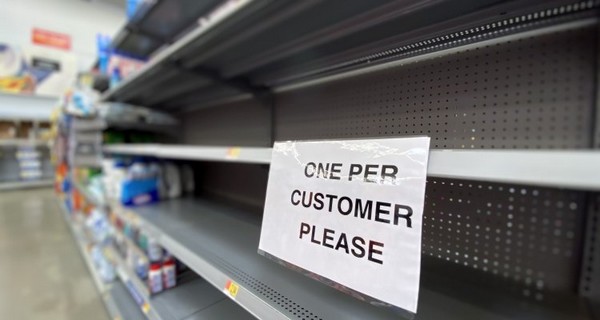
Disruptions in the food chain have major consequences for the Dutch economy and food security as many stakeholders are affected. Even though it was clear to most people that there was a significant impact at the end of the chain (e.g., hoarding in supermarkets, restaurants closing) and at the beginning of the chain (e.g., harvested potatoes not finding customers), there are many actors in the supply chain for which the impact is less clear. It is therefore important to determine how well the food supply chain as a whole is equipped to deal with disruptions. Researchers from the Operations Research and Logistics Group at Wageningen University and from Wageningen Economics Research, led by Professor Sander de Leeuw, studied the effects of the COVID-19 pandemic throughout the food supply chain. They based their analysis on interviews with around 30 Dutch supply chain actors.
Demand in retail up, in food service down
It is obvious and widely known that demand in the foodservice channels went down due to the closure of restaurants, amongst others. In some cases, sales for suppliers in the food service industry therefore fell to about 20% of the original volume. As a side effect, demand in the retail channels went up and remained at a level of about 10-20% higher than before the crisis started.
Products that had to come from abroad had their own problems. With the shift in demand from foodservice to retail, the demand for packaging changed dramatically, More tin, glass and plastic was needed for use in consumer packaging. As more of this packaging material ended up in consumers’ homes rather than in restaurants, the cardboard recycling process got disrupted as well, causing shortages.
The shifts in demand have had a major impact on production activities. In some cases, this even meant a complete stop in production (e.g. in the duck farming industry, which came to a standstill due to demand fall-out in the foodservice sector). In other situations, a significant part of the personnel contracted corona (e.g. in the meat processing industry), resulting in a closure of facilities.
Distribution activities were also affected. The start of the Corona crisis in China caused the flow of sea containers to slow down fairly soon in 2020. This resulted in limited transport capacity during the first weeks of the crisis, and high costs for container transport as a result. Truck transport faced different problems. Initially, there were uncertainties about how transport would be handled at borders, which in the end were not as strict as feared. What was problematic in many cases, however, was the availability of drivers.
The response to COVID-19 – supply chain resilience
The supply chain resilience analysis held by Prof. de Leeuw and colleagues, was based on the overview of the core elements of supply chain resilience:
Using this framework for the analysis of the interviews, the findings show that few companies were well prepared for the corona crisis and in fact mainly applied responsive practices. The most notable supply chain lessons were:

Figure 1. Eight best practices for food supply chain resilience
First, the need to design the supply chain for flexibility and agility. This seems especially challenging for smaller companies: building resilience into a supply chain takes time and attention in the organization, and smaller organizations often do not have the capacity to do so.
Second, it was found that more attention was needed on spreading risk and aiming for risk reduction in the supply chain. For the future, this means more attention should be given to the way companies depend on specific countries, customers, and suppliers.
Third, attention is needed for explicit prioritization and intelligent rationing strategies in situations where demand cannot be met. Explicit prioritization is needed to continue to meet market expectations but also to increase market shares where competitors miss opportunities. This challenge is not new, but it has also been underexposed in this crisis and was often not part of preparatory activities.
Fourthly, the corona crisis teaches us that the financial impact of a crisis also depends on the way cooperation in the chain is set up. It is often unclear how additional costs (and benefits) are distributed in a chain, if at all.
Finally, relative to other functional departments, the operations and supply chain functions are in the driving seat during a crisis. Product development and marketing activities need to go hand in hand with supply chain activities. Whether the corona pandemic will structurally change the classic discussions between production and logistics on the one hand and marketing on the other, the future will have to tell.
 For more information:
Wageningen University & Research
www.wur.nl
Recent Comments