

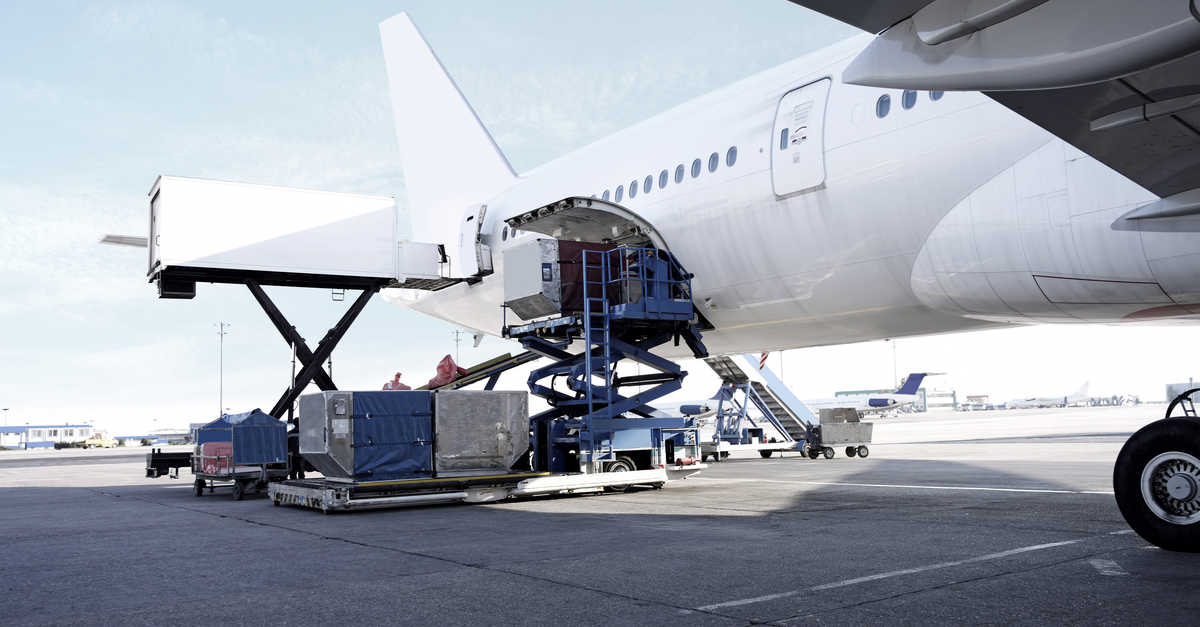

With technology’s influence on the logistics sector growing, Supply Chain Digital examines the current state of air freight and the impact of digitisation.
The effect that technology has had on industries all over the world cannot be understated. Its influence is prevalent and has transformed the way in which companies operate, as artificial intelligence (AI), automation and Big Data begin to take hold. The air freight industry is certainly no exception.
However, despite the influx of technology, the air freight space has felt demand for its services weaken over the past year, following the International Air Transport Association’s (IATA) findings which examined 2019’s full year data. The research showed that demand fell by 3.3% in comparison to 2018, while capacity increased by 2.1%. It is the first year of declining freight volumes since 2012, and the worst performance since 2009, where figures were significantly affected by the global financial crisis in 2008. These findings contrast with McKinsey & Company’s analysis in 2018 which anticipated that air freight volumes would continue to increase by around 3% every year until 2025, and likely 2030 thereafter. Although land and ship cargo transportation remain the most popular methods of transporting goods, air freight is regarded as the quickest and least hindered avenue of transport. While still considered a costlier method of transportation, the increasing demand for perishables, chemicals and valuables has provided a timely boost to the industry amidst the shortfall in demand.
Due to the widespread adoption of technology, traditional air freight forwarders are under more pressure than ever to digitise. This is primarily from three places: digital forwarding specialists providing solutions for one or two elements of the value chain, digital forwarders offering a range of transport services and a better customer experience at a low cost and, lastly, carriers building and improving their digital channels to better serve customers. Amanda King, VP & General Manager of Connectivity Hardware at Honeywell Connected Enterprise, believes that the air freight industry is on the verge of vast digital change, driven primarily by the shifts in consumer and supplier demands. “Everyone is demanding more of logistics providers, especially with regard to the speed and frequency of deliveries,” says King. “As a result, air cargo companies are expected to deliver packages faster – and with more accuracy – while keeping costs to a new competitive low.” Technology is helping to transform freight forwarding in several different ways, from robotics and automated systems to augmented reality, drones, Big Data and AI. Anton Inshutin, partner at technology venture capital firm RTP Global, believes that the logistics industry still has some catching up to do in comparison to its counterparts. “The logistics sector on the whole has been relatively slow to embrace innovation, and arguably the last big, industry-defining leap forward in logistics came in the middle of the 20th century with the arrival of the standardised shipping container,” explains Inshutin. “Many processes in the freight-forwarding industry remain very inefficient and traditional LSPs are struggling to, or failing to, innovate. The shippers, their clients, are still heavily reliant on emails, phone calls and Excel spreadsheets to run their logistics procurement processes. It’s estimated that currently less than 10% of the logistics industry uses electronic procurement and just 1% of worldwide freight volume is purchased digitally.”
Spencer Davern, Director of Air and Ocean at Rhenus Logistics UK, believes the air freight industry is going through a period of modernisation, with digitisation leading the way. “Many who work in the logistics industry will have experienced the painful hours spent in line at airport sheds during peak times, waiting to collect or deliver cargo shipments,” explains Davern. “Thankfully, due to technological advancements and the fast-paced nature in which the logistics industry adapts, this no longer has to be the case. Through the implementation of E-AWB (electronic Air Waybill), the logistics industry has seen significant improvements in efficiency. Removing the need for paper documentation has proven instrumental in streamlining the process of handling air cargo shipments. In addition to this, E-AWB enables information to be provided electronically to the airline before delivery, with some forwarders able to book in their E-AWB shipments using a smartphone direct to the carrier’s warehouse shed without the need for queuing at reception. This new process ensures that cargo shipments are processed in the most efficient manner, saving not only time and money but also the environment.”
SEE ALSO:
Customer-centricity is widely considered key to long-term success worldwide, particularly in the logistics space. Customers want to feel like they’re in control and, by providing customers with the ability to track their orders from the warehouse to their front door in real-time, it allows continuous visibility and an element of control which ultimately means a more fulfilling delivery experience and return business. “One key to consumer satisfaction is the ability to trace packaged goods throughout the delivery process – even when in the air,” adds King. “While this might seem like a challenge – particularly for air cargo companies that have been slow to digitalise – it is also an opportunity to give customers a better delivery experience.”
Despite the slow year, there are positive signs that confidence and orders in air freight will bounce back in 2020 and beyond. However, Alexandre de Juniac, IATA’s Director General and CEO is under no illusions about the challenge ahead for the air freight industry. “Trade tensions are at the root of the worst year for air cargo since the end of the global financial crisis,” said Juniac in a press release. “While these are easing, there is little relief in that good news as we are in unknown territory with respect to the eventual impact of the coronavirus on the global economy. With all the restrictions being put in place, it will certainly be a drag on economic growth. 2020 will be another challenging year for the air cargo business.”
Recent Comments