
Tech News, Magazine & Review WordPress Theme 2017
  • Home
  • Supply Chain Updates
  • Global News
  • Contact Us
  • Home
  • Supply Chain Updates
  • Global News
  • Contact Us
No Result
View All Result
No Result
View All Result
Home Supply Chain Updates

How the Next Industrial Revolution is Shaping the Supply Chain Industry

usscmc by usscmc
February 21, 2021
How the Next Industrial Revolution is Shaping the Supply Chain Industry
Share on FacebookShare on Twitter

Every year, global business leaders meet in Davos, Switzerland, for the World Economic Forum’s (WEF) annual meeting. It’s a meeting of the minds, if you will, that brings together some of the preeminent leaders across a variety of sectors. Fortunately, thanks to the power of video communications, it continued this year virtually. 

As speakers discussed the future of their respective industries and how these sectors will move past the Coronavirus disease (COVID-19) pandemic, I couldn’t help but think of how this year will propel us into a state of accelerated modernity never experienced before.

The fact of the matter is, the ability to hold video conferencing and virtual events are still part of the waning Third Industrial Revolution. While they are still relatively new, in their current form they are part of a previous era of innovation. 2020 is currently remembered as the year of pestilence, mask-wearing and social distancing, but in many ways, it will go down in history as the link between the outgoing industrial period and the incoming technological age.

Innovation brings about Fourth Industrial Revolution

The Third Industrial Revolution began in the mid-20th Century with the creation and innovation of useful semiconductors, computing power, and toward the dawn of the new millennium, the Internet. But, a Fourth Industrial Revolution is well underway, and is taking hold at a faster rate because of the events of 2020 — technological repositioning in terms of connecting the human worker to the Internet of Things (IoT), enhancing human-machine collaboration and the relentless drive toward digitization symbolize this new phase of work.

Coupled with a stronger emphasis on workplace safety that has been improving ever since the age of unions, corporate responsibility and general efficacy, workplace efficiency has become a byproduct of safety in many ways. Integrating human workers’ day-to-day tasks with smart machines and valuable gadgets protects the worker from injuries and calamities that were common in the Second Industrial Revolution along the assembly line.

Technology for the new era

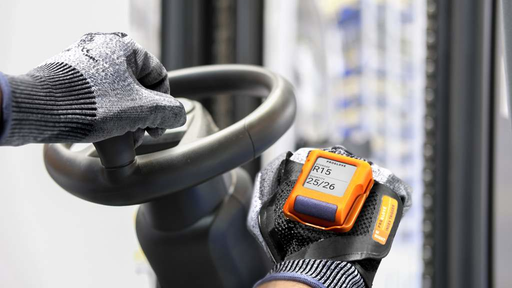
Technology that puts human workers first, like the use of hands-free wearable technology, can also benefit the safety of workers. Ergonomic workspaces aim to decrease the risk of repetitive strain injury and accidents resulting from fatigue and exhaustion. By removing unnecessary repetitive actions, such as picking up a scanning gun or time-consuming walks across the warehouse, wearable technology can ease the strain on the worker by avoiding extraneous tasks. Merging workers and the IoT combines the positives associated with technology (speed of computing, large databases of information, interconnectivity with workers near and far) and the irreplaceable values of humans (ingenuity, critical thinking along with strategizing and empathy). Digitization allows for many shortcuts to be taken, which gives way for the removal of tedious tasks. That time can then be reinvested into projects elsewhere. This will allow businesses to tap into micro-efficiencies and continue to scale them.

Why the WEF gives hope for this new industrial revolution

Technology augments the human worker’s experience, which by its very nature, gives the worker an upper hand. It’s almost like a super power of sorts — machines scan, process and do a lot of the dirty work and calculations that humans would otherwise have to accomplish themselves without such a valuable tool. Where former industrial revolutions left behind the worker, this movement brings them to the forefront. It’s a type of worker empowerment that isn’t showing any signs of receding in the near future because not only does the worker benefit—the employer does too. And, ultimately, so does the consumer of the product.


usscmc

usscmc

No Result
View All Result

Recent Posts

  • How Hapag Lloyd captured a major market share in the Container Shipping Industry in USA
  • Why USA’s East Coast is the Favorite Destination for Manufacturing Companies
  • How Trade Relations Between the USA and UK Improved After Keir Starmer Became Prime Minister
  • Tips and Tricks for Procurement Managers to Handle Their Supplier Woes
  • The Crazy Supply Chain of Walmart Spanning Across the Globe

Recent Comments

  • Top 5 Supply Chain Certifications that are in high demand | Top 5 Certifications on Top 5 Globally Recognized Supply Chain Certifications
  • 3 Best Procurement Certifications that are most valuable | Procurement Newz on Top 5 Globally Recognized Supply Chain Certifications

Archives

  • July 2024
  • June 2024
  • May 2024
  • April 2024
  • March 2024
  • February 2024
  • January 2024
  • December 2023
  • November 2023
  • October 2023
  • September 2023
  • August 2023
  • July 2023
  • June 2023
  • May 2023
  • April 2023
  • March 2023
  • February 2023
  • January 2023
  • December 2022
  • November 2022
  • October 2022
  • September 2022
  • August 2022
  • July 2022
  • June 2022
  • May 2022
  • April 2022
  • March 2022
  • February 2022
  • January 2022
  • December 2021
  • November 2021
  • October 2021
  • September 2021
  • August 2021
  • July 2021
  • June 2021
  • May 2021
  • April 2021
  • March 2021
  • February 2021
  • January 2021
  • December 2020
  • November 2020
  • October 2020
  • September 2020
  • August 2020
  • July 2020
  • June 2020
  • May 2020
  • April 2020
  • March 2020
  • February 2020
  • January 2020
  • December 2019
  • November 2019
  • September 2019

Categories

  • Global News
  • Supply Chain Updates

Meta

  • Log in
  • Entries feed
  • Comments feed
  • WordPress.org
  • Antispam
  • Contact Us
  • Disclaimer
  • Home
  • Privacy Policy
  • Terms of Use

© 2025 www.usscmc.com

This website uses cookies to improve your experience. We'll assume you're ok with this, but you can opt-out if you wish. Cookie settingsACCEPT
Privacy & Cookies Policy

Privacy Overview

This website uses cookies to improve your experience while you navigate through the website. Out of these cookies, the cookies that are categorized as necessary are stored on your browser as they are essential for the working of basic functionalities of the website. We also use third-party cookies that help us analyze and understand how you use this website. These cookies will be stored in your browser only with your consent. You also have the option to opt-out of these cookies. But opting out of some of these cookies may have an effect on your browsing experience.
Necessary
Always Enabled
Necessary cookies are absolutely essential for the website to function properly. This category only includes cookies that ensures basic functionalities and security features of the website. These cookies do not store any personal information.
Non-necessary
Any cookies that may not be particularly necessary for the website to function and is used specifically to collect user personal data via analytics, ads, other embedded contents are termed as non-necessary cookies. It is mandatory to procure user consent prior to running these cookies on your website.
SAVE & ACCEPT
No Result
View All Result
  • Home
  • Supply Chain Updates
  • Global News
  • Contact Us

© 2025 www.usscmc.com