Tech News, Magazine & Review WordPress Theme 2017
  • Home
  • Supply Chain Updates
  • Global News
  • Contact Us
  • Home
  • Supply Chain Updates
  • Global News
  • Contact Us
No Result
View All Result
No Result
View All Result
Home Supply Chain Updates

IMO Sulfur Rules Saga Continues on, as Shipping Official Says Carriers not Recouping New Costs from Shippers

usscmc by usscmc
March 3, 2020
State of the 3PL Union
Share on FacebookShare on Twitter

Now battered by a giant drop in container ship sailings in and out China and more due the coronavirus, the perpetually financially beleaguered ocean container lines are unlikely to get fully compensated by shippers for the cost of compliance for new International Maritime Organization (IMO) mandates on sulfur emissions.

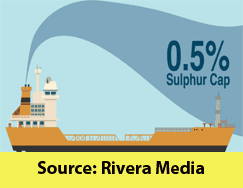
The new IMO rules, which went into effect on Jan. 1, require that ocean cargo ships dramatically reduce sulfur emissions by either switching from bunker fuel to much more expensive low sulfur diesel, or installing expensive scrubbing systems than cost millions of dollars per ship.


Supply Chain Digest Says…


Officials around the world are expected to start getting tough on enforcement of the new rules starting in March, after a grace period of sorts since the beginning of the year.


What do you say?

Click here to send us your comments
 
Click here to see reader feedback

From the time the IMO mandates were issued in 2018, there were concerned by many in the industry that if financially weak container carriers had to absorb a significant share of the new costs instead of passing them on to shippers, the result could be outright failures at some carriers and more mergers and acquisitions in the sector.

Peter Sand, chief shipping analyst at BIMCO, the world’s largest international shipping association, says container freight rates indeed have not risen sufficiently to cover the price of compliance.

As reported on TheLoadstar.com web site, Sand added that “The hike this year was not enough, with the market offering little support to carriers attempting to pass these costs on fully.”

Sand added that container lines’ surcharge mechanisms had been “widely criticized for not being transparent, or for being too complex to understand, leading to carriers having trouble implementing them”.

And, Sand says, even if carriers are able to get shippers to pay additional surcharges for use of the new fuel, “Those that have succeeded may have done so by lowering the underlying freight cost such that the total price shippers pay has not changed much.”

Even giant Maersk Line, the largest container carrier, is now saying that it classifies a failure to pass on the extra cost of the IMO sulfur rules cap ias a high risk in latest overall business strategy a document, with a risk of probability of 25%.

That percentage may well be too low.

Meanwhile the battle over use of scrubbers continues on, as the technology involves discharging the water used for eliminating the sulfur from air emissions back into the sea.

The discharge naturally enough contains sulfur, though at levels proponents claim is not damaging to the ecosystem.

What’s more, it appears scrubbers are performing better than the low sulfur fuels. The IMO rules preduced the limit on sulfur emissions for maritime shipping from 3.5% to 0.5%, but scrubber technology is capable of reducing the level to just 0.1%.


(See More Below)


CATEGORY SPONSOR: SOFTEON

Learn More about Softeon’s Innovative Supply Chain Solutions


Nevertheless, environmental group criticism of the scrubber approach has resulted in more than 80 ports around the world banning the use of the  systems in their territorial waters, where ships must switch to low sulfur fuels even though they have the scrubbers.

Officials around the world are expected to start getting tough on enforcement of the new rules starting in March, after a grace period of sorts since the beginning of the year.

For example, now ships without scrubbers found to be merely storing – not just using – high-sulfur, noncompliant fuel will be in violation of the regulation.

The penalties can be steep.


The US Coast Guard says that ship owners may first receive a warning letter for violating the IMO 2020 regulation. But it could also issue an owner a “Notice of Violation,” which could include penalties of $2,000 to $10,000. Owners could potentially also be liable for civil penalties assessed by the US Environmental Protection Agency of over $75,000 per violation per day.


How this all plays out in terms of the financial health of container lines remains to be seen, but the prospects for carriers appear poor.

Do you think carriers wil even get back the full IMO compliance costs? Let us know your thoughts at the Feedback section below.


Your Comments/Feedback


usscmc

usscmc

No Result
View All Result

Recent Posts

  • How Hapag Lloyd captured a major market share in the Container Shipping Industry in USA
  • Why USA’s East Coast is the Favorite Destination for Manufacturing Companies
  • How Trade Relations Between the USA and UK Improved After Keir Starmer Became Prime Minister
  • Tips and Tricks for Procurement Managers to Handle Their Supplier Woes
  • The Crazy Supply Chain of Walmart Spanning Across the Globe

Recent Comments

  • Top 5 Supply Chain Certifications that are in high demand | Top 5 Certifications on Top 5 Globally Recognized Supply Chain Certifications
  • 3 Best Procurement Certifications that are most valuable | Procurement Newz on Top 5 Globally Recognized Supply Chain Certifications

Archives

  • July 2024
  • June 2024
  • May 2024
  • April 2024
  • March 2024
  • February 2024
  • January 2024
  • December 2023
  • November 2023
  • October 2023
  • September 2023
  • August 2023
  • July 2023
  • June 2023
  • May 2023
  • April 2023
  • March 2023
  • February 2023
  • January 2023
  • December 2022
  • November 2022
  • October 2022
  • September 2022
  • August 2022
  • July 2022
  • June 2022
  • May 2022
  • April 2022
  • March 2022
  • February 2022
  • January 2022
  • December 2021
  • November 2021
  • October 2021
  • September 2021
  • August 2021
  • July 2021
  • June 2021
  • May 2021
  • April 2021
  • March 2021
  • February 2021
  • January 2021
  • December 2020
  • November 2020
  • October 2020
  • September 2020
  • August 2020
  • July 2020
  • June 2020
  • May 2020
  • April 2020
  • March 2020
  • February 2020
  • January 2020
  • December 2019
  • November 2019
  • September 2019

Categories

  • Global News
  • Supply Chain Updates

Meta

  • Log in
  • Entries feed
  • Comments feed
  • WordPress.org
  • Antispam
  • Contact Us
  • Disclaimer
  • Home
  • Privacy Policy
  • Terms of Use

© 2025 www.usscmc.com

This website uses cookies to improve your experience. We'll assume you're ok with this, but you can opt-out if you wish. Cookie settingsACCEPT
Privacy & Cookies Policy

Privacy Overview

This website uses cookies to improve your experience while you navigate through the website. Out of these cookies, the cookies that are categorized as necessary are stored on your browser as they are essential for the working of basic functionalities of the website. We also use third-party cookies that help us analyze and understand how you use this website. These cookies will be stored in your browser only with your consent. You also have the option to opt-out of these cookies. But opting out of some of these cookies may have an effect on your browsing experience.
Necessary
Always Enabled
Necessary cookies are absolutely essential for the website to function properly. This category only includes cookies that ensures basic functionalities and security features of the website. These cookies do not store any personal information.
Non-necessary
Any cookies that may not be particularly necessary for the website to function and is used specifically to collect user personal data via analytics, ads, other embedded contents are termed as non-necessary cookies. It is mandatory to procure user consent prior to running these cookies on your website.
SAVE & ACCEPT
No Result
View All Result
  • Home
  • Supply Chain Updates
  • Global News
  • Contact Us

© 2025 www.usscmc.com