


Intermodal transportation provides reliable and predictable shipment of freight, according to a recent whitepaper, and it’s available at a competitive price and can be integrated into an existing freight transportation strategy. Meanwhile, intermodal freight volumes declined in the fourth quarter of 2019 and have continued to fall into the first quarter of 2020.
In Schneider whitepaper, “The State of Intermodal: How Shipping Via Rail Is Changing The Transportation Industry,” it highlights benefits related to intermodal transportation, which refers to the movement of freight by truck and train. The U.S. rail industry accounts for the shipment of more than 40 tons of freight per capita, according to the whitepaper, and intermodal shipments usually take place in 53-foot-long containers. One intermodal train can move the same amount of freight as 280 trucks, according to a 2016 estimate by railroad CSX.
The whitepaper notes shippers should consider several factors when looking to use intermodal transportation, including inefficiencies related to railroad conversions to precision scheduled railroading (PSR), the availability of shipping equipment, the ongoing truck driver shortage and load pricing.
While demand has risen for a faster and more efficient shipment of goods, the rail industry has worked to improve operations by implementing precision scheduled railroading. PSR regards the shipment of the same amount of freight with fewer railcars and locomotives, using a scheduled direct line for shipments across a rail network, the whitepaper shows. Conventional trains move freight when they are full, but under PSR, trains begin to move at a set time whether the freight is there. This goal of PSR is to enable longer trains, faster speeds and less dwell time in terminals. But as the rail industry has moved to PSR, it’s impacted existing shipping lanes and led to a reduction in equipment and staff.
Some delays that shippers can expect of railroads looking to move to PSR include ramp closures, poor service, and increased costs. However, the initial issues related to the transition are expected to be replaced by the benefits of increased on-time delivery and rail freight reliability, the whitepaper shows.
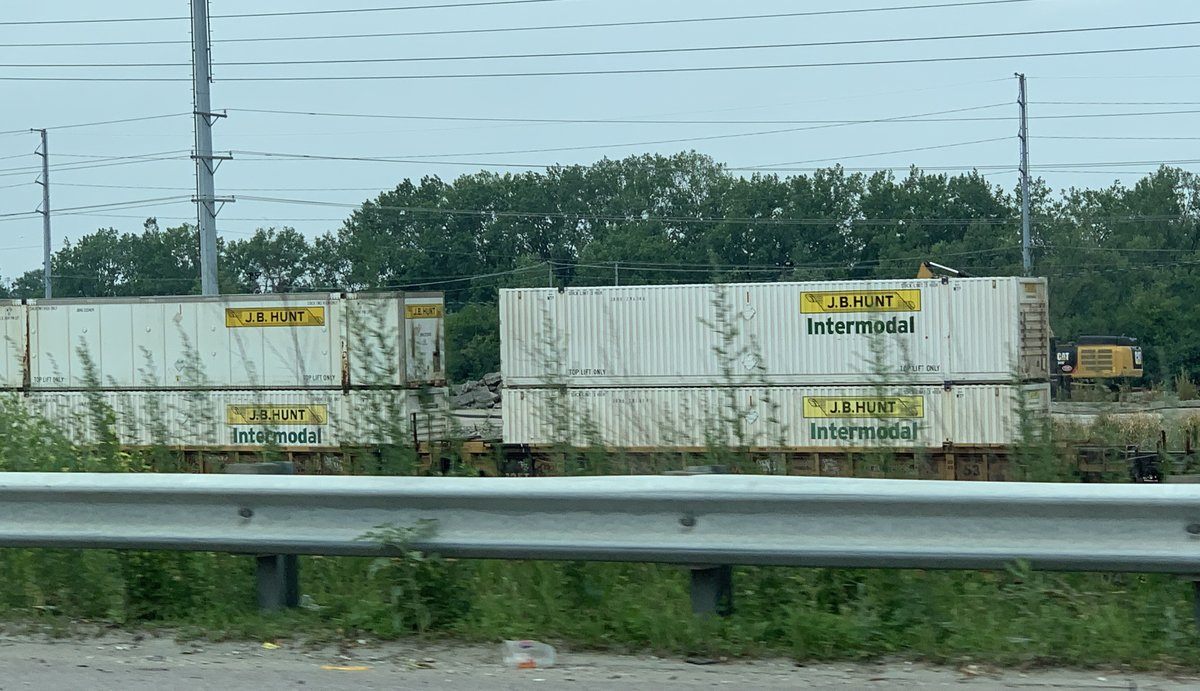
Railroads used to own all of the shipping containers that transported freight via rail, but as of 2019, they own about one-third of the more than 300,000 U.S. shipping containers that are available, the whitepaper shows. By comparison, Lowell-based carrier J.B. Hunt Transport Services had about 96,700 intermodal containers and trailers in its intermodal business segment as of the end of 2019. The carrier’s intermodal segment accounted for 61% of its operating income and 52% of its revenue in 2019. J.B. Hunt reported Jan. 17 net income increased 5.5% to $516.32 million, from $489.59 million in 2018. Revenue rose 6.4% to $9.17 billion, from $8.61 billion.
The Schneider whitepaper shows railroads have started to shift investments from shipping equipment and to improve efficiencies at ramps and across their networks. Between 2017 and 2018, Schneider increased its number of intermodal shipping containers by 24%. In 2018, it added more than 4,200 intermodal containers. By comparison, J.B. Hunt added 6,262 intermodal containers and trailers in its intermodal segment in 2018.
The whitepaper also addressed the driver shortage and retention. The carrier puts an emphasis on shipper of choice strategies for its customers and evaluates their freight and how they treat drivers, based on driver feedback. This helps customers to determine and resolve issues and help to increase driver retention.
“We’re following the mantra we had when times were bad and focusing on being a shipper of choice,” said John Janson, global logistics director for SanMar. “We’re sticking with the people who stuck with us [in 2018]. This is a cyclical industry, and relationships matter.”
Shippers should use caution when looking to the spot market for intermodal freight pricing, the whitepaper shows. The spot market allows shippers to receive lower pricing when excess capacity is available and might be a good short-term strategy for intermodal shipping. But when capacity starts to tighten and shippers look to use the carriers with which they previously worked, shippers might find that the same service is no longer available where they need it. And replacing that capacity where they need it, could take longer than expected.
“The most important action strategic shippers can take to obtain and keep long-term capacity at fair, market-driven costs is to diversify their carrier base and modes to include expert carriers in intermodal transportation,” said Jim Filter, senior vice president and general manager of Schneider Intermodal Division.
In North America, total intermodal volumes declined 7.4% in the fourth quarter of 2019, from the same period in 2018, according to the Intermodal Association of North America. Domestic containers declined 2.7%, international shipments fell 9.1%, and trailers decreased by 21.4%.
“We haven’t seen full-year declines like these since the 2009 recession,” said Joni Casey, president and CEO of the Intermodal Association of North America. “Looser trucking capacity played a role on the domestic side of intermodal, while tariffs and tough comparisons to 2018 volumes affected international. A comeback could be hastened by a number of factors, including further resolution to trade issues, but it’s difficult to predict that timing.”
The number of containers and trailers on U.S. railroads fell 5.4% to 1.25 million in January, from the same month in 2019, according to the Association of American Railroads.
John T. Gray, senior vice president of the Association of American Railroads, explained the decline in rail volumes reflected the softness in manufacturing and global economic weakness along with trade uncertainties. Gray also was uncertain when volumes might start to improve but was hopeful for 2020.
In a recent report on the transportation industry, senior research analyst Benjamin Hartford and research analyst Andrew Reed, both of Baird, noted a modest improvement in intermodal volume in the first quarter of 2020, but they expect weak import activity after the Lunar New Year because of reduced ocean vessel sailings as a result of the coronavirus outbreak. This is expected to negatively impact intermodal and trucking volumes in the upcoming weeks, according to Hartford and Reed.
Recent Comments