


The coronavirus pandemic has materially altered the way people shop. It’s a global phenomenon that’s turned boring warehouse space into a hot commodity. If you’re looking at this real estate investment trust (REIT) niche, you may have run across Americold Realty Trust (NYSE: COLD), which has a unique position in the subsector. But does that make it worth buying?
A bit of background
Warehouses are not an exciting asset class in the REIT universe. They’re basically big boxes where stuff sits temporarily before being sent on to a final destination. That said, they’re vital assets from a logistics perspective and, thus, are a pretty reliable investment. Prologis (NYSE: PLD), for example, has created a massive $72 billion market cap business by putting warehouses near key global transportation hubs.
However, efforts to control the spread of the coronavirus have changed the dynamics here. With brick-and-mortar stores forced to close and more shopping being done online, these boring logistics boxes got a lot more sexy. To put a number on that, Prologis is up around 10% in 2020, while the average REIT, using Vanguard Real Estate ETF (NYSEARCA: VNQ) as a proxy, is down about 7%. Clearly, investors recognize that warehouse owners are a vital cog in the online shopping dynamic.
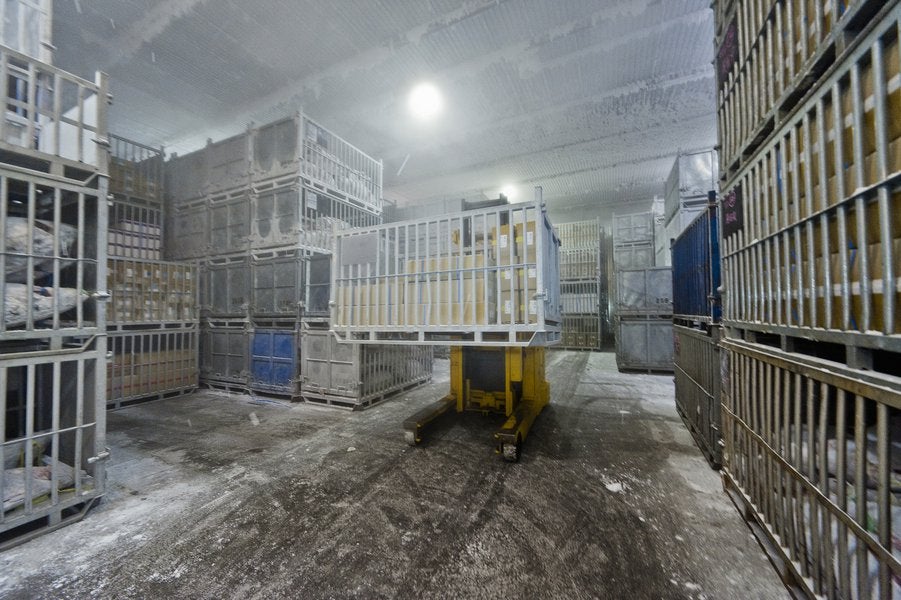
Americold Realty, with an approximately $7.5 billion market cap, isn’t nearly as big as Prologis. However, it has a differentiated approach, choosing to own temperature-controlled warehouses. It’s got just shy of 200 warehouses in its portfolio, which is spread across five countries (the United States is the biggest piece of the pie, accounting for 164 properties). This niche is all about food, which is increasingly going directly to end customers in addition to the more traditional grocery store. In summary, Americold is a key cog in the food distribution mechanism.
Is it worth owning?
The need for humans to acquire and consume food isn’t going away anytime soon, so Americold’s core focus should continue to be a good one. Thus, there’s no particular reason to worry about the company’s focus. In fact, it has been expanding fairly rapidly of late. In November, it closed on the purchase of eight distribution centers in New Jersey. And in October, it agreed to acquire a competitor with 46 facilities across 10 countries. It’s been expanding existing assets to meet the needs of key customers. Americold is one of the largest players in temperature-controlled warehouse space and is clearly taking advantage of its position.
The problem here for investors is figuring out a valuation for Americold that makes sense. The company has only been publicly traded since September 2018, meaning there’s only around two years of history to go on. That’s not great news. For example, the REIT’s 2.3% yield isn’t particularly compelling on an absolute basis. But with only two years or so of trading history, there’s also no way to really tell if that’s really a high or low number for the REIT. It’s roughly in line with industry bellwether Prologis, which at least suggests the yield isn’t out of line with the warehouse sector norm. But that still doesn’t provide any idea about whether Americold is a bargain or relatively expensive.
That said, if you take Americold’s 2020 adjusted funds from operations (FFO) projection of $1.26 to $1.29 per share, it has a price-to-adjusted FFO ratio of nearly 30 times today. That’s the type of number you’d expect to see from a tech company, not a landlord. But Prologis’ price-to-“core” FFO ratio, using its core FFO projection range of $3.76 to $3.78 per share, is around 26 times, so Americold isn’t wildly out of range.
However, this comparison does show Americold’s valuation is currently a bit higher than warehouse bellwether Prologis. That’s likely to be due in part to Americold’s recent acquisitions, both of which are incorporated into the company’s adjusted FFO projections. But investors need to consider if a premium is really warranted here.
Conservative types looking at the warehouse niche will probably want to err on the side of caution, noting that Prologis is larger, more diversified, and provides some exposure to temperature-controlled warehouses as well. The fly in the ointment is that Prologis’ dividend yield is near its all-time lows, hinting that investors are affording it, and the warehouse niche in general, a very dear price.
Keep an eye on this one
Americold is not a bad REIT by any stretch of the imagination. However, it does appear to be a bit expensive in a sector that itself appears to be a bit expensive, judging by bellwether Prologis’ historically low dividend yield. Most investors would probably be better off watching for a lower price than jumping aboard Americold today. But consider keeping this REIT on your wish list.
Recent Comments