

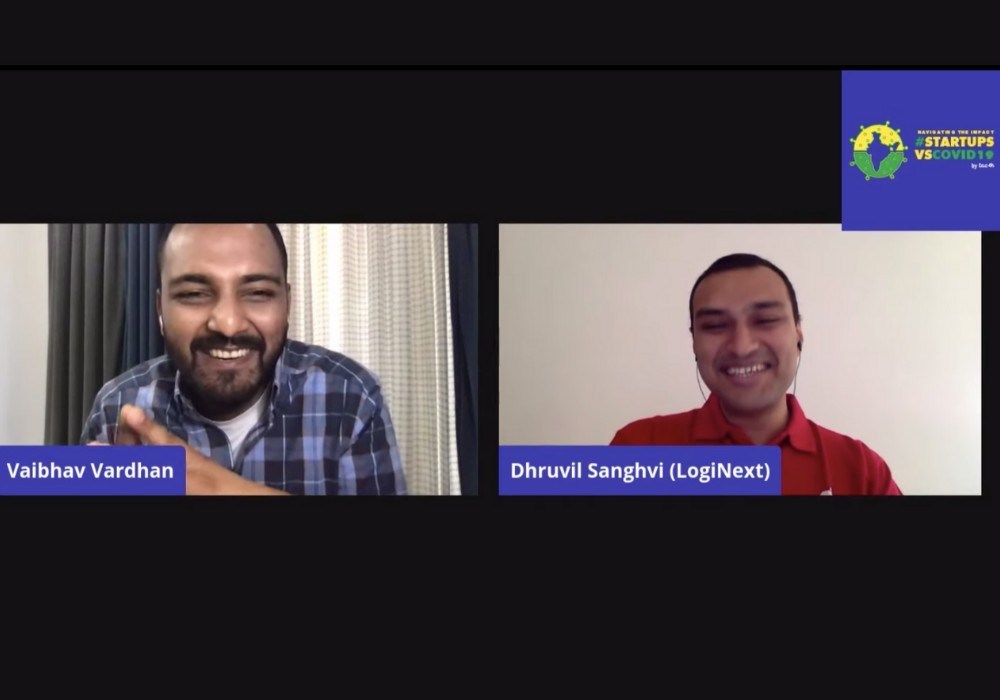

Today, we hosted Dhruvil Sanghvi, CEO of LogiNext in ‘Ask Me Anything’ series of our campaign #StartupsVsCovid19
He spoke about potential and current challenges in the logistics sector, expected trends in the SaaS industry and more
#StartupsVsCovid19 is an Inc42 initiative to help businesses overcome the impact of the Covid-19 pandemic
As the access to essential goods gets more complex with every passing day, people are growing more and more conscious about where their online orders are coming from and the supply chains. The coronavirus pandemic and the mandatory lockdowns across the world are expected to bring fundamental shifts in the world as we know today.
Today, we hosted Dhruvil Sanghvi, CEO of LogiNext in Inc42’s ‘Ask Me Anything’ series as part of our #StartupsVsCovid19 campaign. Sanghvi spoke about potential and current challenges in the logistics sector, expected trends in the SaaS industry, his experience under lockdown as a CEO and the challenges he is facing managing the team and more.
Earlier this week, POSist’s Ashish Tulisan anticipated food deliveries and cloud kitchens to emerge as the new norm in the post-coronavirus world. Sanghvi further affirmed this and said that any negative impact on restaurants will also have an impact on the popularity of food aggregators as well.
Sanghvi said, “A lot of QSR (quick service restaurants) chains such as KFC, McDonald’s, Burger King, Starbucks across different geographies are quickly moving away from the food aggregator kind of a model. They don’t want to give that 25% profit cut to the likes of UberEats, Swiggy or any other such player. They now want to directly find people who can just pick up the food and deliver it.”
Earlier restaurants were okay with sharing their delivery revenues with the aggregators because they did not make much of their total EBITDA. But, as delivery revenues start making the majority part of the businesses. They will become resistant towards giving away 20% of their order value, because that will bring their bottom lines down by 20%, and most businesses have like 35%-40% EBITDA.
This will naturally lead them to look for more innovative ways of delivery, and that will drive the demand for a pure-play crowdsourced delivery model, which LogiNext claims to be working on. The company is working on introducing a Jobs board, which will allow any individual to pick up and deliver orders instead of going through the contracts and lock-in period of food aggregators.
Crowdsourcing The Delivery Fleet
Anybody can take up deliveries for maybe just two hours because food trends have a heavy volume between 12 pm to 2 pm or 6 pm to 9 pm. It would essentially be a freelancing model for last-mile deliveries, Sanghvi added.
In addition to bringing the gig economy to last-mile deliveries, another big change that Sanghvi expects to see in the logistics industry is increased supply chain visibility. “Even when the pandemic goes away, people would want to know where their goods originated from, where it got repackaged, which companies/drivers carried it and which areas it came from.”
The biggest change in the logistics sector is that consumers have started paying attention to how the goods arrive at their doorsteps and that’s something nobody cared about earlier. So supply chain visibility is going to be fundamentally different in this new world.
Such visibility in the supply chain would also help curb customer anxiety around crowdsourced deliveries. It would enable customers to see who has picked their food, pose more trust in the delivery person and track their location. But if transparency is brought in the supply chain, it becomes a complete model.
Alternative supply chain models are already being explored in this lockdown. Housing societies are getting together to build a system where one person who visits the grocery store is also buying essentials for others in the building.
“Because nobody wants to really wait in the line and do it. So a lot of those things which were kind of cliches, which were not accepted in the society earlier are starting to become the norm,” said Sanghvi.
Last week, B2B grocery delivery company Ninjacart also devised an alternative supply chain model for selling his fresh produce. With big retailers also shutting shop with no restaurants to supply the goods to, Ninjacart has now started delivering farm produce to housing societies.
A person from the housing complex or a company is appointed to aggregate orders from each home, then this person becomes the point of contact for Ninjacart to deliver the full stock of products required by the society members.
Drone Deliveries Are Not The Future
Further, Sanghvi addressed the popular talk about drone deliveries entering last-mile supply chains. He said, “I think there’s a fundamental unit economics issue in using automation technology for fulfillment such as drones. Firstly, the technology is expensive, there are regulatory restrictions and above all, there are range restrictions.”
Drones cannot be sent for a typical last-mile delivery which is up to 40 to 50 Km. This will make drones only useful for very hyper-localised businesses, and from the world economy perspective hardly 1% revenue or GDP of logistics actually comes from this segment
“I don’t think drones are gonna make any change. There are a lot of improvements in battery ranges, hardware cost, reliability, and safety —- there’s so much work to be done yet. This will not suddenly make an entry into the door, not for the next 5-10 years at least,” said Sanghvi.
Though he did say that drone deliveries might have a better opportunity in the B2B space, including in surveillance, construction and more.
Market Opportunity For SMB SaaS Players
Indian SMB retailers were a very tough market to crack earlier. Most SaaS companies failed at selling to Indian small retailers but now every SMB is trying to go online. While earlier Indian SMBs were only attracted to free services, SaaS companies now have the perfect opportunity to convert these small retailers into paying customers due to the forced adoption of tools in a lockdown.
“The market timing is very strong, because these retailers already know about the software. They have been fishing for it, but they never actually spent it. This is the time where they’ll have to pay for it, they’ll have to pay for an online inventory system, they’ll have to pay for an online delivery system, they have to pay for the last-mile fulfilment system,” said Sanghvi.
This is the white space in the market right now, as there is no significant player currently and none with more than $1 Bn in revenue, he added.
Recent Comments