


The strong job market supports the Dallas-Fort Worth real estate market in two ways: It attracts new residents into the area, and increases demand for housing, putting upward pressure on prices. Here is a detailed analysis of this hot market and what to expect in 2021.
Home Price Metrics
The median home value in Dallas-Fort Worth was $320,000 in October 2020, up over 10 percent year-over-year. Owners in the area have realized a five-year increase of 41.6 percent and a 10-year surge in prices of over 80 percent. New listing inventory remains 10-20 percent lower than previous years. Home price appreciation re-accelerated in 2020 due to low interest rates, low inventory, and high demand.
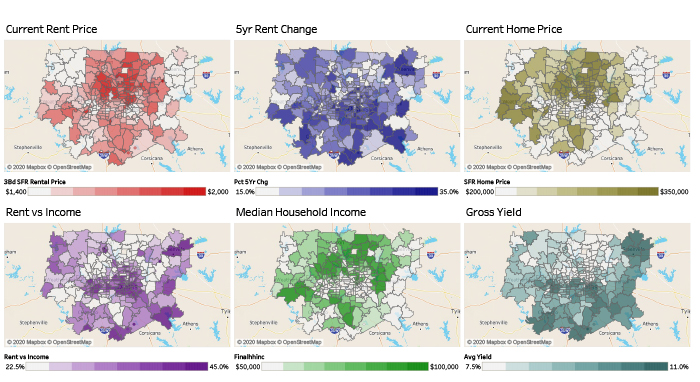
South Dallas, Mesquite, Hutchins, Arlington and Fort Worth areas have median prices for SFR near $200k, leading to many high-yield opportunities for investors. The most expensive areas are in northern Dallas along the Dallas North Tollway. Most expensive is in University Park ($1M+) and descends in value moving toward Frisco which is around $500k. Colleyville and Grapevine show another expensive pocket with prices ranging between $500-$800k.
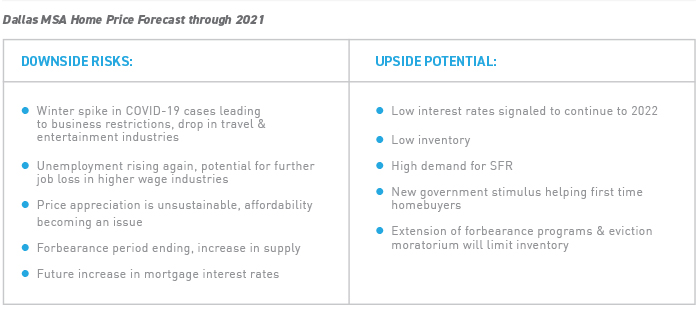
Dallas home prices will continue to rise in 2021, with the largest appreciation in the lower price tier. The historically low interest rates will continue to motivate buyers to compete for available inventory, and additional stimulus may help first time home buyers with extra cash for their down payment. Demand and price appreciation in the higher priced areas will be muted.
Many higher paying job industries have nearly recovered from pre-COVID levels due to flexibility of work-from-home. Real (non-stimulus) income will stay flat or decrease slightly as the economy gets back on its feet. Mortgage interest rates are expected to remain low until 2022, which will continue to fuel demand from both homebuyers and investors.
Risks for 2021 include variability around expiring forbearance and eviction policies. It is likely these programs will be extended again for a period; however, once the consumer protections expire, spikes in foreclosures and evictions could flood the market with inventory and have a negative effect on prices. CoreLogic reports FHA delinquencies around 18.8 percent with serious delinquencies at 12.5 percent for the Dallas market.
Affordability is beginning to become an issue. Rapid appreciation is causing first time home buyers to be priced out of the market, even with historically low interest rates. Tighter lending restrictions are also constraining otherwise qualified buyers.
2021 SFR Housing Price Forecast: +2 percent to +5 percent
Disclaimer: The variability around this forecast is wide and dependent upon data available as of September 2020. The severity and duration of the COVID-19 epidemic, as well as the response of the public and policymakers, continues to change daily.
Rental Rates
Real estate investors in the Dallas market have had strong SFR price appreciation over the last five years with an average increase in rent prices of over 26 percent. Several sub-markets have seen rental prices increase over 40 percent. As of October 2020, the median three-bedroom SFR home in the Dallas MSA is $1,775/mo (an increase of five percent from last year).
The growing economy and rapid population growth has boosted wage growth in the market, increasing more than three percent year-over-year since 2012. Rent prices however, have accelerated nearly twice as much in the same time causing concern about affordability. The market-level rent-to-income ratio is at 31 percent, which is just below the national average for metro MSAs. South Dallas, Mesquite, Hutchins, Arlington, and Fort Worth areas are quickly becoming unaffordable with R/I ratios over 40 percent.
High unemployment has affected the renter class significantly and will continue to be a concern in 2021. Depending on the size and scope of the next federal stimulus package, renters could be in a tough position in 2021. Many landlords may find themselves unable to capture rent with substantial back-rent owed by tenants which they may never pay.
To assist with rent payments, the city of Dallas launched the $6 million Emergency Short Term Rental Assistance program using coronavirus rescue package funds, in partnership with DHA Housing Solutions for North Texas and several nonprofits. The program will issue payments for up to two months of past-due unpaid rent directly to landlords (not to exceed $1,500 per month).
Dallas Rental Rates Prediction 2021
Demand will stay elevated for SFR rentals as families relocate from cramped multifamily structures.
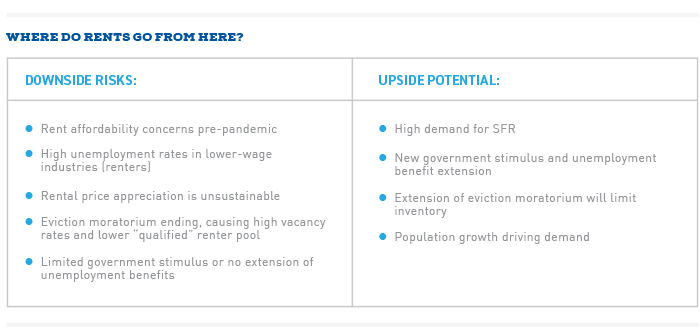
The main drivers for rental prices in 2021 are the expired eviction moratorium, limited job recovery for T&E sector, rising unemployment, and the timing and conditions for a new federal stimulus package.
Risks outweigh the upside potential in the rental market. For lower-income jobs affected by the high unemployment, a new stimulus package may be the only answer for some tenants to keep up with payments. Increased evictions will add to vacancies and lower overall demand. Depending how quickly the courts can process evictions, this could add a significant amount of vacant rental inventory in a short amount of time.
Once the eviction moratorium ends, a new challenge will be the reduced pool of “qualified” renters without eviction or recent job loss. Landlords will likely have to lower their requirements and reduce prices to fill vacancies.
At the same time, some areas are less expensive to own than rent. Previous renters in a good financial position are converting to buyers, further reducing rental demand.
SFR rentals will continue to have a demand advantage over multifamily. Due to the high unemployment rates, rental values may stagnate or drop lower until employment and wages recover. For the market to support higher rents, wages need to increase above current levels, which could take several years.
2021 SFR Rent Price Forecast: -8 percent to -3 percent
Conclusions
The Dallas-Fort Worth metro has been a great choice for single-family investment since the lows in 2012. It has been a favorite target for investors since the last recession for several reasons, including excellent equity and income appreciation supported by rising population, job growth, and wage increases.
Rapid single-family home price appreciation is beginning to price out first-time homebuyers, yet low inventory and record-low interest rates continue to spur demand and goose prices even higher.
Once forbearance programs end, we expect home prices to flatten or moderately drop with the increase in inventory. The largest concern for home prices may be 2+ years away, when the FED begins to raise interest rates again.
Even if there is a moderate pullback in home prices over the next couple years, we don’t foresee a large crash occurring. Owners have a record amount of equity built up, and a myriad of government programs to protect borrowers and mitigate another foreclosure crisis.
2021 rental price increases will be unsustainable if 10-20 percent of the renter-class workforce remains unemployed and thousands of renters are evicted. Rent prices were already reaching an affordability inflection point in some sub-markets before COVID, and low interest rates have created an environment where it is cheaper to own than rent for many areas of the market.
Investors currently looking at Dallas MSA would be wise to factor in a potential decrease in rental income for one-two years to make sure the numbers pencil on your next investment property due to a potential surge in evictions and ongoing unemployment challenges.
Bottom line, Dallas is a rapidly growing market with a strong and diverse economy which will bounce back after the pandemic abates. Low cost, high yield opportunities are scarce due to the limited inventory and low-rate driven demand. Short-term risks are building between the forbearance term and eviction moratoriums expiring around the new year. Cautious investors may want to see how the market reacts after the new year, as there could be better deals in the spring from distressed sales.
Fred Heigold III is the senior data analyst at Altisource® / RentRange®, an industry leader in market data and analytics for the single-family rental housing industry.
Recent Comments