


Aldatu Biosciences in Watertown usually makes diagnostic test kits for infectious diseases like drug-resistant HIV and Lassa Fever, which is endemic in central and western Africa.
But in early March, the startup shifted gears when COVID-19 cases started spreading quickly throughout Massachusetts, but the state lacked enough tests, said David Raiser, Aldatu’s CEO and co-founder.
“And when data started to become available on the sequence of the virus and, basically, the blueprints needed to develop a test, our previous experience allowed us to move quickly in designing and validating that test in our facility,” Raiser said.
Aldatu Biosciences is part of a growing number of Massachusetts businesses big and small mobilizing to supplement the medical supply chain where critics say the federal government has fallen short. Various industries are rising to the challenge, but it’s been a frenzied pursuit for business owners trying to figure out what it takes to make personal protective equipment, or PPE, and other needed medical devices.
Smaller businesses, like Theological Threads in Beverly — a religious garment factory — have begun making protective masks for healthcare workers.
Boston-based sneaker giant New Balance announced it will start doing the same. M.S. Walker, a Norwood-based alcohol distributor, has switched to producing hand sanitizer at its Hyde Park bottling plant.
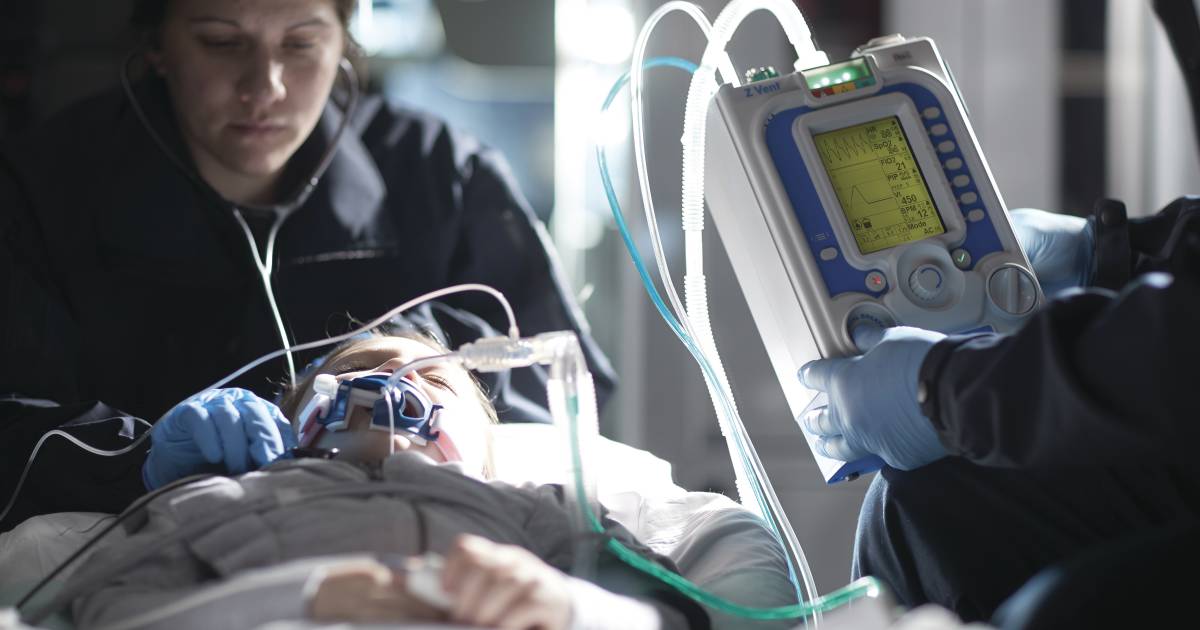
In Chelmsford, Zoll Medical Corp began producing almost four times as many ventilators as it has in the past, with plans to boost the number 25-fold. General Electric Life Sciences, based in Marlborough, has ramped up production of ventilators by an unspecified factor in a Wisconsin plant.
Industries that don’t usually collaborate have been coming together. Sencorp White, a packaging company in Hyannis, has modified its equipment so it can produce nearly 3 million N95 face masks a week. The company moved the equipment to another factory in Rhode Island.
Beth Israel Deaconess Medical Center reached out to Aldatu Biosciences to collaborate. Raiser said that’s when things started moving at breakneck speed. In a matter of days, the company completed an extraordinary trajectory that would typically take close to a year.
“We were able to move on an extremely accelerated timeline to get a test from concept to in use in a hospital to test hundreds of patient samples a day in about an 18-day timeline,” Raiser said.
It’s a timeline that’s unheard of, but in a public health crisis like this one, timing is everything. It’s not uncommon for hospital labs to come up with their own tests. Beth Israel’s lab machines were able to run Aldatu’s tests, proving their accuracy. It was a critical development at a time when the state’s public health laboratory and private labs were facing a backlog of COVID-19 test samples, leaving a turnaround time of seven days or longer.
The other part big of the equation was regulatory approval. Under the U.S. Food and Drug Administration’s Emergency Use Authorization Guidance, Beth Israel Deaconess Medical Center could immediately conduct on-site testing.
“So what the FDA was allowing in this crisis situation was using those existing qualifications and certifications as ways to vet sites that could do this on their own,” Raiser said. “We arrived on a Sunday morning into their lab, which we’d never been in before, on some equipment that we never worked with. And by Tuesday evening, they were running their first set of patient samples. One hundred and seventy simultaneously.”
Dr. Jeffrey Saffitz, chair of pathology at BIDMC, told WGBH News that Aldatu’s test gave his team a head start of a few days. The hospital has since bought two more machines. Avid, the company that makes the testing machines also made its own test kits, enabling BIDMC to run 1,500 tests a day, and not just their own samples.
“Some of the commercial labs have cornered the market to certain extent. So, if you’re a smaller hospital lab and you’re trying to get your order placed and you’re told, ‘well everything is being placed to Quest and LabCorp,’” Saffitz said. “What we’re trying to do is try to provide a 12-hour turnaround time.”
Saffitz said over a dozen hospitals, including Boston Medical Center and Cambridge Health Alliance, have reached out for help and are sending their COVID-19 samples to BIDMC’s laboratory for testing.
Raiser said being small enabled Aldatu to pivot quickly and fill an immediate gap.
Being large and established can have its benefits too. In Chelmsford, Zoll Medical Corp announced last week that it will ramp up its production of ventilators even further in response to the nationwide shortage. The company is a large supplier of defibrillators. Ordinarily, the company makes 400 ventilators a month. It has since ramped up monthly production to 1,500, but company president Elijah White said they’re reorienting the factory to produce 10,000 ventilators a month.
“It absolutely means more hours for our manufacturing associates,” White said. “We’re asking them to come in as a critical part of the health care system, much like doctors and nurses are being asked to come in to care for patients. You know, we’re asking our manufacturing associates to do the same. They’re working on two weekends of overtime now and with no end in sight.”
The other part of the challenge to producing at 25-fold capacity is supplies. A single ventilator has 175 individual parts, which means Zoll’s suppliers are also ramping up production on their end.
“Our supply base is putting product first and worrying about the details in the business end later, which is a remarkable thing,” White said. “It’s an honor to be a part of.”
He said Zoll Medical has been working with both the state and federal government to get their ventilators out as fast as possible. The company has preexisting contracts to supply some of that breathing equipment to the Defense Department.
When asked if he’s worried about what kind of impact this could have on his business in the long run once demand dies down, White said there’s no time to worry about it now. It’s a sentiment that other industries have echoed: Act now, worry later.
Christopher Geehern, executive vice prresident of Associated Industries of Massachusetts, said this is one of the positive points of an “otherwise very disconcerting time.” But it comes with a caveat.
“Companies don’t want to ramp up and gear up to make thousands more units. And then on the happy day that this issue finally recedes into the background, they’re over-supplying and having to retrench from all that gear up,” he said.
Geehern added it’s incumbent that public and economic policies and business decisions move forward in a coordinated manner.
“So the long term demand for ventilators, let’s say, beyond the immediate crisis is going to depend upon whether the government works and creates a health care policy that puts a premium on hospitals having x number of ventilators per patient load going forward,” Geehern said.
In Lawrence, 99 Degrees Custom, a sports apparel company that has built its business on technical performance activewear, is preparing to make PPE.
CEO Brenna Schneider shut down the factory more than two weeks ago to ensure everyone’s safety. In that time, she and her team have been swiftly and remotely planning how to mass produce medical isolation gowns for healthcare workers.
“It’s been a bit of a frenzied response because there isn’t clear direction or a demand. We know that these products are needed, but there’s no one saying, ‘here’s the product we need. Here’s the price point. Here are all the regulations around it,”’ Schneider said.
She said her employees’ safety is her priority, and the company is only going to go ahead with production once all safety measures are put in place in the factory so everyone can adhere to social distancing guidelines.
“Right now, we have hundreds of machines sitting idle so that we can open responsibly and safely for our team and also so that we’re making the right thing,” Schneider said. “And that’s been guided by the governor’s office and the state’s response.”
Developing a new product in this setting typically takes at least 6 months. Schneider expects to begin production sometime over the next week or two.
Recent Comments