

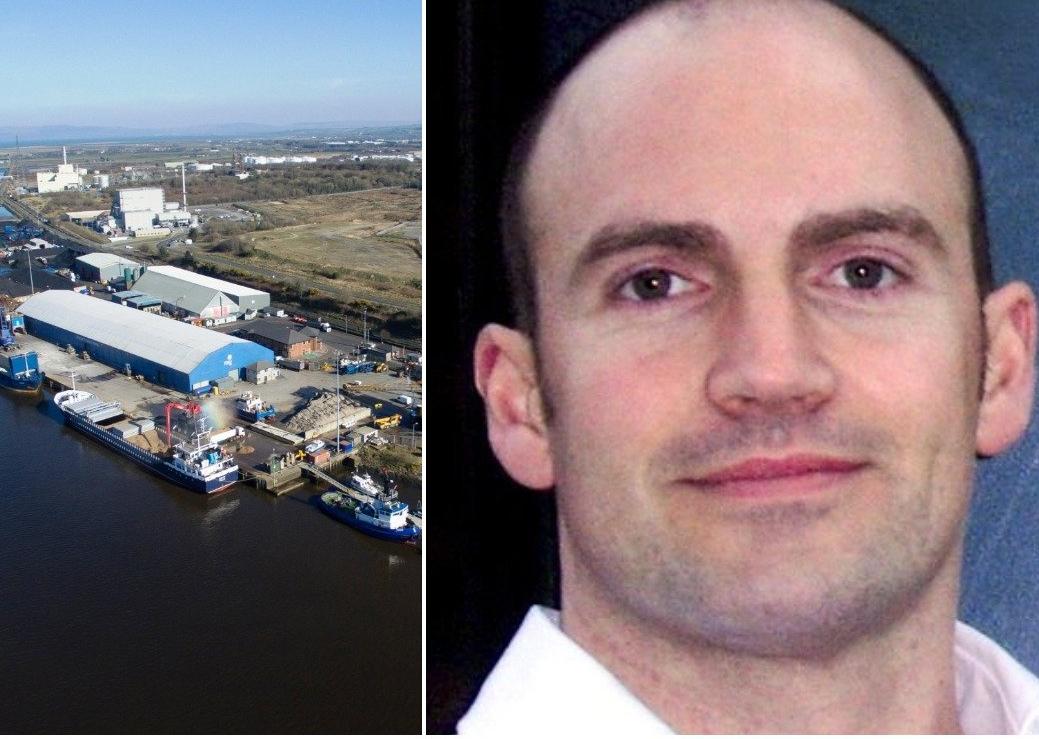

A bit like like Duty Free shops for industry, they’re designated areas which for customs purposes are treated as if they’re outside the country in which they are actually located. Foreign goods can enter Free Ports and be stored, processed or exported again – all without incurring the usual customs taxes and red tape, so long as they remain within the designated area. Free Trade Zones (FTZs) operate in a similar way, and are like an extension of a Free Port. Foreign imports can also enter them without incurring taxes, so long as they are intended for re-export. So for example, an FTZ could contain a car assembly plant – importing components from around the world to create finished vehicles. By importing the parts through the Free Port and assembling them within the Free Trade Zone, customs duties would be avoided on all the component – reducing the cost of making and re-exporting the finished vehicles. FTZs are therefore all about attracting investment, boosting manufacturing and jobs, and promoting international trade.
There are over 3,500 Free Ports and FTZs in 135 countries around the world, employing more than 66 million people. The world’s first Free Trade Zone was actually created in Ireland at Shannon Airport in 1959 – offering low taxes and duty-free incentives to encourage businesses to locate there. It was an instant success, and accounted for a third of the Republic’s exports within a decade. EEC membership necessitated the gradual removal of Shannon’s business perks, but to this day it remains the biggest multi-sector business park in Ireland – with over 100 international firms employing 7,000 people and generating €3.3bn in annual trade. It is also the island’s largest location for foreign investment outside of Dublin.
With the UK now able to make its own trading laws following Brexit, the Conservative government has seized upon Freeports as a way to help boost economically disadvantaged areas. In this they offer two attractive benefits to the government. Firstly, they can be introduced relatively quickly and easily – providing an economic boost within the term of this parliament, and reducing the negative impacts of EU withdrawal. Secondly – as most ports in the UK (including Foyle) are owned independently of the State, little or no government funding would be required to establish Free Ports (the ports could borrow any required capital themselves). Free Ports and Free Trade Zones therefore offer a low-cost way for the Government to ‘level-up’ disadvantaged areas in pursuit of its economic and political objectives.
It seems likely that somewhere between 4 and 10 such Freeport facilities will be licensed around the UK – with at least one guaranteed for each of Scotland, Wales and Northern Ireland. Opinions are divided over the benefits that Free Ports can bring to countries as a whole, and they certainly have their critics. There is also the fact that, if the UK and EU can’t agree on their future post-Brexit relationship, NI would be obliged to remain in the single market for goods – which could also create complexities for Freeports. But if such facilities are due to be introduced in the UK, especially with a guarantee that at least one would be allocated to Northern Ireland, then it would offer a huge potential opportunity for Derry and the north-west. It would be extremely unwise for our city to not go all-out in an attempt to secure such a facility here, and our civic and business leaders should already be working on a compelling bid for it.
The only credible location for a Freeport in NI would be at one of the four main ports already here – i.e. Belfast, Larne, Warrenpoint and Derry. Belfast is by-far the biggest player amongst these, accounting for two-thirds of NI’s and 20% of the entire island’s seaborne trade in 2018. Warrenpoint handled 12% of NI’s sea cargo that year, and Larne a further 10%. Foyle Port is therefore the smallest of the four, handling only 7% of NI’s sea freight in 2018. Despite this, the well-run facility has been growing continuously over the last seven years, and recently posted the best ever results in its 165yr history.
Five key factors make Foyle the ideal location for a Northern Irish Freeport facility :
1) Freeports are intended to help address regional inequality and economic imbalance, and Derry has the most obvious economic need. Belfast, Larne and Warrenpoint are all based in the east, where unemployment is relatively low and investment and economic activity relatively high. The same cannot be said for the west in general, nor Derry in particular – which is NI’s unemployment blackspot and most in need of ‘levelling up’. Placing NI’s only Freeport in the east would only reinforce and deepen the stark east-west economic divide that already exists here.
2) Land availability will be a key factor for any Freeport facility. Belfast Port has considerable land holdings, but has chosen to use much of it for non-related activities – like offices, hotels, car parking and film studios. In contrast, Foyle Port has amassed a 155 acre land bank for itself, and there is an abundance of further undeveloped land on its doorstep.
3) Infrastructure is a key component for Freeports, and Foyle has a strong hand to play in this regard. Whilst Belfast Port has an airport nearby, and Larne can offer both a rail connection and a dual carriageway, only Foyle Port has the ‘full house’ of infrastructure options on its doorstep – covering road, rail, air and sea. This presents a significant advantage in terms of connecting a Freeport facility there to the rest of the island and beyond.
4) Foyle Port’s location on a cross-border waterway next to Ireland’s only cross-border city enables proximity to the EU to be a core part of a Foyle Freeport offering.
5) Foyle’s current status as the smallest of NI’s ports could actually work to its advantage in a bid to become NI’s only Freeport. The freight through NI’s ports is currently dominated by lorry-based domestic imports from Britain. Larne and Belfast Ports also carry significant numbers of foot and car passengers. Foyle is located on the wrong side of the island to service domestic imports or passenger services. As Freeports are about overseas trade and are effectively ‘sealed’ economic areas, coexisting with large volumes of domestic goods and passengers would arguably prove a hindrance. There is therefore a case to be made for a clear division of roles between NI’s four ports – with the 3 in the east serving as gateways for domestic imports and passengers, and Foyle serving as a more niche freeport and manufacturing operator.
Foyle Port’s infrastructure trump card could significantly amplify the concept of an NI Freeport in a way that no other location can match. Granting Freeport status to BOTH Lisahally docks and to City of Derry Airport – and making the 3 mile stretch of industrial and agricultural land between them into a Free Trade Zone – would create a huge new economic engine room for our region. A self-contained area book-ended by the seaport and airport, located on Lough Foyle and beside the city’s only dual carriageway and railway line. Such a facility would have the potential to provide the single biggest boost to the north-west’s economy since the Second World War – ushering in a golden era for manufacturing and logistics here, and ensuring City of Derry Airport’s financial viability. With the Derry to Belfast train line running through this FTZ, new stations serving the Airport/Eglinton and the Port/Strathfoyle would also link the entire economic hub directly into Ireland’s rail network, whilst creating a new commuter rail network for the city. And if the UK’s post-Brexit negotiations with the EU did force NI to remain in the Single Market, a special cross-border Derry-Donegal Economic Zone could be considered as an alternative to an NI/UK-only facility.
It seems likely that the UK Government will open bids for Freeport status within the next few years, with NI likely to be guaranteed one such facility. It is vital that Derry recognises the huge opportunity this would present for the North-west, and begins compiling a multi-partner proposal for a unique Freeport and Free Trade Zone located on the Foyle. Not only can we prove the greatest economic need for this within NI, we also offer an unmatched combination of location, land availability, infrastructure and a dedicated focus. Fifty years ago the Irish government consciously looked beyond Dublin to create economic history via a Free Trade Zone in Shannon. Stormont, our Council, Foyle Port and appropriate partners should now follow suit by creating a compelling bid for NI’s only Freeport to be located in our city – as part of a broader Foyle Free Trade Zone for the North-west and Northern Ireland as a whole.
Recent Comments