
Tech News, Magazine & Review WordPress Theme 2017
  • Home
  • Supply Chain Updates
  • Global News
  • Contact Us
  • Home
  • Supply Chain Updates
  • Global News
  • Contact Us
No Result
View All Result
No Result
View All Result
Home Supply Chain Updates

Overcapacity will continue to dog container shipping in 2020

usscmc by usscmc
January 13, 2020
Overcapacity will continue to dog container shipping in 2020
Share on FacebookShare on Twitter

The shipping research and consulting firm Drewry says supply is expected to continue to outstrip demand in the container shipping industry but that carriers are “battle-hardened to cope with yet another challenging and unpredictable year.”

“Much like last year, carriers should be able to return solid if unspectacular results and continue to prepare the ground for a better future,” Drewry predicted in an article in the current issue of Container Insight Weekly. 

Ships delivered this year are expected to add 1.2 million twenty-foot equivalent units (TEUs) of capacity, with 569,000 TEUs of capacity on ultra large container vessels (ULCV), ships with capacity for more than 18,000 TEUs.

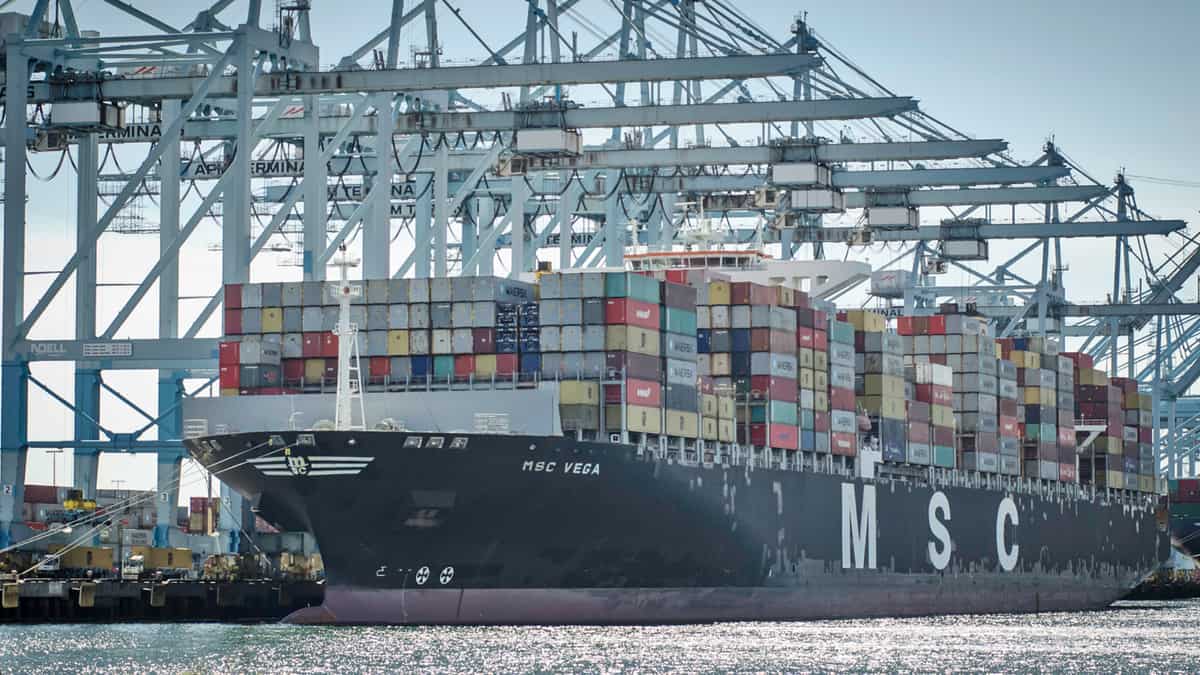
Drewry added that 23 of those ULCVs (with aggregate capacity of 532,000 TEUs) are being added by just three companies, each of which is a member of a different carrier vessel space-sharing agreement. They are Hyundai Merchant Marine, which will join THE Alliance in April; CMA CGM, which is a member of the Ocean Alliance; and Mediterranean Shipping Co., which is a member of the 2M Alliance.

“The current delivery schedules for the new ULCVs are spread evenly through 2020, which should make their integration a little easier than if they arrived en masse,” said Drewry. Should delivery of some of the new ships be delayed, as often happens, that could help temper overcapacity.

How severe is the overcapacity? Drewry has created a proprietary global supply-demand index for the container shipping industry, and it said anytime it is below 100 represents overcapacity. Its quarterly Container Forecaster report calls for a tiny decrease of 0.4 points to 90.6 in 2020, highlighting “just how far carriers have to go to compensate for the industry’s structural overcapacity and reach a comfortable balance that will promote sustainable freight rate gains.”

However, the London-based consultants said carriers have proven adept at controlling capacity by canceling selected weekly sailings. Drewry’s preliminary estimate is that there were 253 of these “void sailings” in 2019, up from 145 in 2018.  

Drewry noted that capacity will also be reduced this year because about 260 containerships (with aggregate capacity of nearly 2.4 million TEUs) are scheduled to be fitted with exhaust scrubbers. A ship is taken out of service during the several weeks it takes for a shipyard to install a scrubber.

In 2020, it said lines “will remain price-takers” from shippers “as the supply-demand fundamentals will work against them, although they will be able to remain profitable so long as operating costs are kept in check. It will be a tightrope act and the capacity levers of idling and void sailings will be pulled frequently.

“Looking beyond 2020, carriers’ best hope to reverse this course is to be much more ruthless on demolitions and to remain restrained when it comes to ordering new tonnage. The biggest risk to the latter is a significant government influence within some Asia-based carriers that could force politically driven rather than commercially driven investment decisions.”

Drewry believes orders for new ships will be constrained by three major factors: current structural overcapacity; new carrier strategies that require more spending on IT and logistics; and uncertainty about future environmental regulations and compliant vessel fuels as carriers try to figure out how to best reach the goal of becoming carbon neutral.

The International Maritime Organization has set the goal of reducing the shipping industry’s greenhouse gas emissions by at least 50% compared to what they were in 2008 and at the same time pursuing efforts to phase them out entirely.

usscmc

usscmc

No Result
View All Result

Recent Posts

  • How Hapag Lloyd captured a major market share in the Container Shipping Industry in USA
  • Why USA’s East Coast is the Favorite Destination for Manufacturing Companies
  • How Trade Relations Between the USA and UK Improved After Keir Starmer Became Prime Minister
  • Tips and Tricks for Procurement Managers to Handle Their Supplier Woes
  • The Crazy Supply Chain of Walmart Spanning Across the Globe

Recent Comments

  • Top 5 Supply Chain Certifications that are in high demand | Top 5 Certifications on Top 5 Globally Recognized Supply Chain Certifications
  • 3 Best Procurement Certifications that are most valuable | Procurement Newz on Top 5 Globally Recognized Supply Chain Certifications

Archives

  • July 2024
  • June 2024
  • May 2024
  • April 2024
  • March 2024
  • February 2024
  • January 2024
  • December 2023
  • November 2023
  • October 2023
  • September 2023
  • August 2023
  • July 2023
  • June 2023
  • May 2023
  • April 2023
  • March 2023
  • February 2023
  • January 2023
  • December 2022
  • November 2022
  • October 2022
  • September 2022
  • August 2022
  • July 2022
  • June 2022
  • May 2022
  • April 2022
  • March 2022
  • February 2022
  • January 2022
  • December 2021
  • November 2021
  • October 2021
  • September 2021
  • August 2021
  • July 2021
  • June 2021
  • May 2021
  • April 2021
  • March 2021
  • February 2021
  • January 2021
  • December 2020
  • November 2020
  • October 2020
  • September 2020
  • August 2020
  • July 2020
  • June 2020
  • May 2020
  • April 2020
  • March 2020
  • February 2020
  • January 2020
  • December 2019
  • November 2019
  • September 2019

Categories

  • Global News
  • Supply Chain Updates

Meta

  • Log in
  • Entries feed
  • Comments feed
  • WordPress.org
  • Antispam
  • Contact Us
  • Disclaimer
  • Home
  • Privacy Policy
  • Terms of Use

© 2025 www.usscmc.com

This website uses cookies to improve your experience. We'll assume you're ok with this, but you can opt-out if you wish. Cookie settingsACCEPT
Privacy & Cookies Policy

Privacy Overview

This website uses cookies to improve your experience while you navigate through the website. Out of these cookies, the cookies that are categorized as necessary are stored on your browser as they are essential for the working of basic functionalities of the website. We also use third-party cookies that help us analyze and understand how you use this website. These cookies will be stored in your browser only with your consent. You also have the option to opt-out of these cookies. But opting out of some of these cookies may have an effect on your browsing experience.
Necessary
Always Enabled
Necessary cookies are absolutely essential for the website to function properly. This category only includes cookies that ensures basic functionalities and security features of the website. These cookies do not store any personal information.
Non-necessary
Any cookies that may not be particularly necessary for the website to function and is used specifically to collect user personal data via analytics, ads, other embedded contents are termed as non-necessary cookies. It is mandatory to procure user consent prior to running these cookies on your website.
SAVE & ACCEPT
No Result
View All Result
  • Home
  • Supply Chain Updates
  • Global News
  • Contact Us

© 2025 www.usscmc.com