


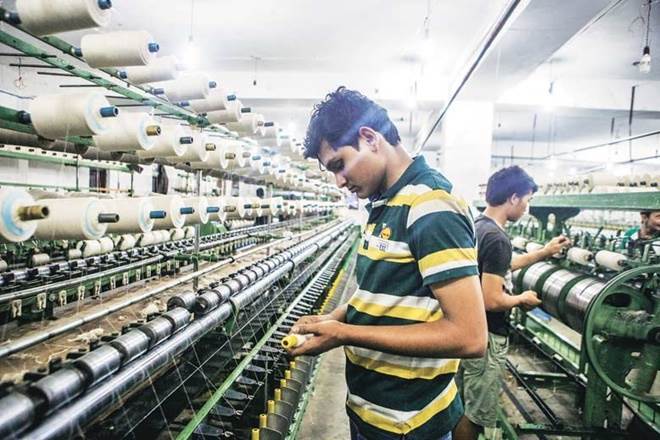
 The MSME sector will need a great deal of support from the Ministries and other government departments if it is to grow and become sustainable.
Ease of Doing Business for MSMEs: For the Indian economy to flourish, the prosperity of the Micro, Small and Medium Enterprises (MSME) sector is crucial. India is a developing nation and MSMEs fuel that drives by providing employment and income to almost 111 million people who work for small, family or local businesses as well as startups. MSMEs also advance a more equitable distribution of national income between urban and rural India. The sector generates 29 per cent of India’s GDP.
It is important for the government to take a hand in the health of a sector that provides a substantial part of the national income. The Public Procurement Policy, under Section 11 of the Micro, Small and Medium Enterprises Development (MSMED) Act, 2006, mandates minimum 20 per cent (now raised to 25 per cent) procurement of annual requirement for goods and services by all central ministries/departments/PSUs from MSEs.
Of this, the government has also earmarked а sub-target of 4 per cent procurement of goods and services from MSEs owned by SC/ST enterprises and a minimum of 3 per cent from enterprises owned by women entrepreneurs. MSEs registered with any public agency – the District Industries Centres (DICs), Khadi & Village Industries Commission (KVIC), Khadi & Village Industries Board (KVIB), Coir Board, National Small Industries Corporation, Directorate of Handicrafts and Handloom, or any other body specified by the Ministry of MSMEs – fall within the ambit of the Public Procurement Policy.
Hurdles in Implementation
The policy seeks to tackle the long-standing disadvantages affecting small enterprises in India – inadequate access to markets — especially the government procurement, infrastructure deficit, higher fixed costs compared to the large-scale sector, and lack of access to international markets. However, in practice, the operation of entry barriers prevent most of the government’s dedicated concessions and facilities from reaching the MSEs. A few departments and PSUs impose mandatory eligibility clauses, such as a minimum turnover limit and the number of purchase orders previously executed for the procurement of materials.
Some of the issues impeding policy implementation include the time, cost and effort required for the tendering process; poor understanding on the part of the government and procurement agencies of the markets; inadequate opportunities for buyer-seller interactions in the form of meets and events; and a lack of regulation in the Government e-Marketplace, which hurts the chances of genuine vendors.
Also read: Small business? Have you not yet signed up for this Modi scheme to raise manufacturing quality?
Government eMarketplace (GeM)
The GeM was launched in August 2016 as an end-to-end e-portal for procuring common-use goods and services by the government organisations. Prospective suppliers register themselves on the portal. The government entity seeking to buy the goods and services selects a supplier directly with the lowest price available on the portal for procurement. GeM is, however, still evolving as a trusted supplier to the government as many MSMEs complain that several traders have become vendors through this platform, which is hurting the interests of genuine MSEs. It is, therefore, essential that proper classification of vendors registered on GeM should be made to segregate the MSEs and other suppliers. This would prevent other categories of suppliers, particularly the traders, from taking away the allocation reserved for procurement from MSEs.
Other pressing issues include lengthy procedures and delays in dealing with the government, which leads to low participation from domestic MSMEs; the absence of a feedback portal and a timely grievance redressal mechanism; and the lack of quality control and certification.
Since MSMEs are small in size and face significant managerial constraints, they face problems such as inadequate information, timely and complex vendor registration processes, disproportionate qualification criteria and certification requirements.
Reformative Steps
The government must, first of all, take measures to ease the registration processes to encourage vendors to participate. There needs to be a digitised, easily-accessible central database of MSE vendors across the country. Authorities must also relax the qualification criteria of MSMEs vis-a-vis their large corporate counterparts to level the playing field.
The major procuring ministries must undertake measures for training MSE vendors as well as PSUs and their procurement officers to inculcate greater knowledge of the sector and markets amongst them to encourage better cooperation and efficiency. A product-wise list of MSE vendors under the 358 reserved items to assist with the identification of MSE vendors is also required.
While quality control ought to be stringent, semi-independent testing labs should be established in every state (their number contingent upon the state’s size, mean income, number of MSMEs and other factors) to ensure fair and quick testing of the products. Testing should also take into account any previous experience or lack thereof and be conducted accordingly. Certification norms should be drawn up by an Indian body, specific to Indian needs and standards.
The ministries should take extraordinary measures to reach out to and help register SC/ST and women-owned MSMEs. PSUs should also make outreach measures and vendor engagement/development programmes a priority. Mentorship programmes for micro and small businesses should be instituted to provide them with the tools required for growth.
A feedback and grievance redressal portal, as well as an on-ground team, should be set up. This measure will ensure queries are answered, and support is provided in a timely and adequate manner.
The MSME sector will need a great deal of support from the Ministries and other government departments if it is to grow and become sustainable. At this point in its development, handholding is the need of the hour, not just from Central Public Sector Enterprises (CPSEs) but also from other stakeholders. In doing so, they will be fostering the growth of an enormous source of national income, as well as protecting the livelihoods of millions of people. A robust coordination mechanism between the Ministry of MSME and other stakeholders is required to ensure the policy’s success, with periodic checks and amendments for addressing any issues that might develop as the sector grows.
(R Narayan is the Senior Vice President at FICCI-CMSME and Founder & CEO at Power2SME. Views expressed are the author’s own.)
Get live Stock Prices from BSE and NSE and latest NAV, portfolio of Mutual Funds, calculate your tax by Income Tax Calculator, know market’s Top Gainers, Top Losers & Best Equity Funds. Like us on Facebook and follow us on Twitter.
Recent Comments