

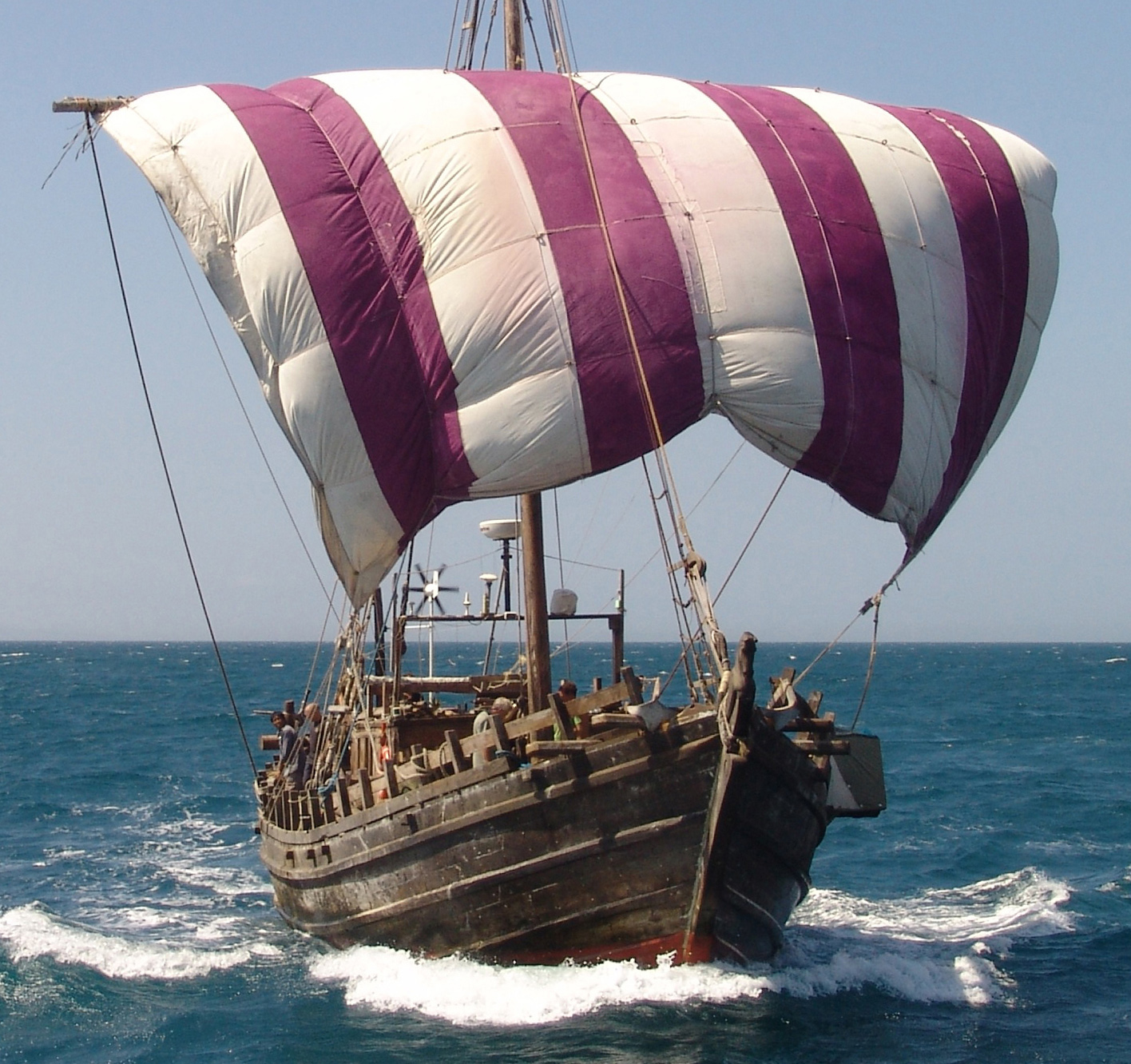

Shipping gold from Africa, tin from Britain and linen from Egypt, the Phoenicians were once one of the most significant trading powers in the world. Their position as dominant seafarers has been noted by Homer, The Bible, and Ancient Egyptian artwork. Artefacts show that their trade route stretched from Ancient Britain through to Southern Europe and Western Asia, and some believe that the Phoenicians were the first to make the perilous Atlantic crossing to the Americas—millennia before Columbus.
Over 2,000 years after their prominence, British adventurer, expedition leader and Phoenician enthusiast Philip Beale now captains The Phoenicia—the only known replica of a Phoenician ship in existence. Inspired by tales of the Phoenicians’ advanced naval capabilities for the time, in 2008 to 2010, Beale circumnavigated Africa on the replica. This marked the longest known voyage in a replica of an ancient ship in modern history.
On 23 September 2019, Beale took on a new challenge: a 6,000-mile, five-month voyage from Tunisia to the United States.
Beale’s motivation, unlike the Phoenicians, was not to find new materials to trade, but to collect knowledge and raise awareness about a material that is now ubiquitous all over the world: plastic.
The Phoenicia is an advocate for United Nations Environment Programme’s (UNEP) Clean Seas Campaign, which seeks to turn the tide on plastic. Its goal is to mobilize governments, the private sector and individuals, to reduce the production and consumption of single-use plastics, moving away from a culture of disposable goods and towards circularity.
By 2050, there could be more plastic in the ocean than fish, and much of this is not visible to the naked eye. In fact, most plastics don’t biodegrade, but instead break down into fragments smaller than 5 mm known as microplastics. Microplastics are so tiny that they cannot always be seen and are very difficult to remove from the ocean. In fact, studies show that 83 per cent of tap water contains plastic particles.
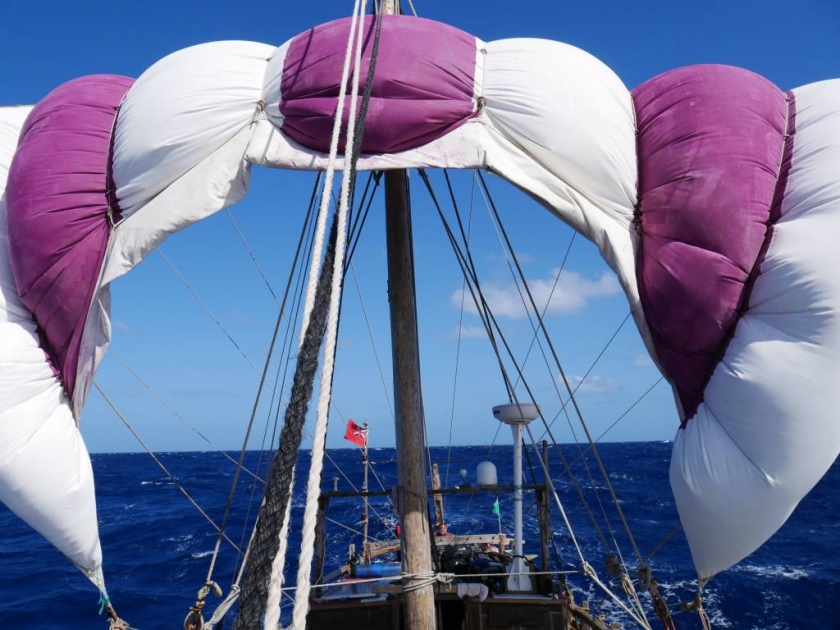
The Phoenicia trawled through the ocean, collecting microplastics, as it travelled from Carthage, Tunisia through to Cadiz (Spain), Essaouira (Morocco), Tenerife (Canary Islands) and Santo Domingo (Dominican Republic) before finally arriving in Fort Lauderdale, Florida on 4 February 2020.
2,000 years ago, The Phoenicians were able to take on treacherous voyages as a result of their naval innovation. They are credited to have navigated using the position of the stars, to have invented the Keel for ships’ stability and bitumen tar for waterproofing.
According to UNEP’s Head of Advocacy, Atif Butt, “We need to take the Phoenician approach to innovation. Humanity has benefitted hugely from the invention of plastic—from transportation to the health sector. However, the plastic pollution problem is now out of control. Single-use, unnecessary plastics can be found everywhere, and our consumption of it is not slowing down. We need innovative substitutes to plastic, and the courage for individuals, the private sector and governments to prioritize the phasing out of disposable plastics.”
Be part of the solution to end plastic pollution! To pledge to reduce your plastic footprint, click here.
About Clean Seas
The United Nations Environment Programme launched the Clean Seas Campaign in 2017 with the goal of galvanizing a global movement to turn the tide on plastic by reducing the use of unnecessary single-use plastics and phasing out intentionally added microplastics. Since then, 60 countries have pledged to do their part improve plastics management through, among other measures, reducing the prevalence of single-use plastics. Learn more about the campaign and how you can help, consider joining the global partnership on marine litter and follow our social media campaign @UNEP on Instagram, Facebook, Twitter and LinkedIn.
Phoenicians Before Columbus
This voyage was part of the Phoenicians Before Columbus expedition designed, with the help of the United States-based Phoenician International Research Center, to show that Phoenician ships could have crossed the Atlantic over 2,000 years before Christopher Columbus.
Recent Comments