

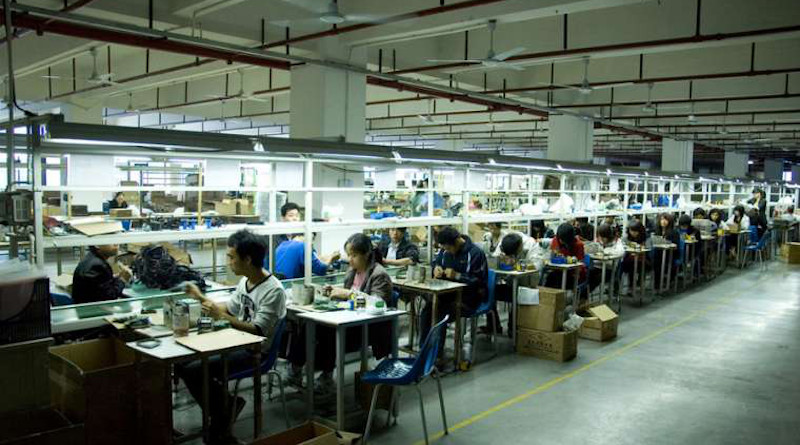

Hit by COVID 19, India is in the dichotomy of overdependence on imports for its emerging industries, which are import intensive. Rapid growth in electronic industries, including mobile phone manufacturing, telecommunication equipment, automobile and digital economy led India overdependent on imports .
China has been the main stakeholder in supply chain for parts, components and capital equipment for these industries. About 38-39 percent of electronic industries, including mobile phones and its parts, telecommunication equipment and parts, auto parts and over 80 percent of drug intermediates for pharmaceutical industries are imported from China. Arguments and counter-arguments sparked against the overdependence on China in the wake of supply chain disruption due to pandemic and rise in political tension, owing to border conflicts.
Government of India adopted Atma Nirbhar Bharat Abhiyan – movement for self reliance. The main aim is to promote domestic supply chain industries and insulate the nation from supply chain disruption. It splurged big financial packages to stimulate the sentiment of domestic entrepreneurs, especially MSMEs, for development of domestic supply chain industry.
But, are they enough to withstand the stiff competition from China? Alongside the financial doles, it needs transformation in the manufacturing and new dimension in policy perspectives to develop the supply chain industries. Currently, “Make in India” is bereft of policy dynamism to boost the supply chain industry. Supply chain industry is the backbone for assembly base industries, such as electronic industries, including mobile phones and its parts, telecommunication equipment and auto parts.
The essential part of self-reliance in supply chain industry is the development of Supporting Industry. Japan was the pioneer to develop Supporting Industry, which was followed by South Korea, China and South East countries. According to Japan Overseas Enterprises Association, Supporting industry was defined to supply raw materials, components, parts and capital goods for assembly type industries. Electronics, automobiles, telecommunications, automobile are Supporting industry base. With the West turning less cost effective, East and South East Asian countries emerged potential for development of Supporting industry. MNCs shifted their investment in China and South East Asian countries to procure component, parts, intermediates and capital goods for assembling finished or semi-finished products in the home countries or elsewhere.
Toyota Motor company is a case in point. It invested in China and South East Asian countries to develop component and parts manufacturing to support its car manufacturing in Japan and elsewhere, including India. Manufacturing “Inova” is an example.
Supporting industry has become the pillar for globalization of manufacturing in 2000’s. About 70 percent of the world international trade and investment include exchange of raw materials, components, intermediates and capital goods. Most of them have taken place in the form of GVC.
Currently, Vietnam can be a lesson for Supporting Industry. It has made a breakthrough in development of Supporting industry and has been the potential destination for alternative destination for China in the post COVID 19 . It has about 1800 supporting enterprises. It accounts for 4.5 percent of total manufacturing enterprises in Vietnam. Of these, 300 enterprises are engaged in supply chain for multinational corporation.
Supporting industry opened new opportunities in Vietnam during pandemic. Given COVID 19 hit production network in China, Japan and South Korea, foreign investors in Vietnam started relying on domestic enterprises for supply of component, parts and capital equipment. MOIT (Ministry of Industry and Trade), Vietnam, entered into MOU with South Korean giant Samsung to develop domestic supply chain industries. Samsung will cooperate with MOIT and provinces and cities in Vietnam in training and counseling for local enterprises, allowing them to take part in global value chain.
FDI has played an important role for development of Supporting Industry in Vietnam. Notwithstanding COVID 19, FDI surged in Vietnam. FDI in HCM City, increased by over 7 percent in first ten months of 2020. Six out of eleven newly FDI were in Supporting industry.
India too emerged potential destination for foreign investors, albeit global pandemic. FDI increased by 15 percent during first six months of 2020-21 over the preceding period in 2019-20. This was despite the fact that strict adherence to lockdown was maintained and the manufacturing growth was almost crippled by closer of factories.
Make in India was losing steam. This was affirmed by Prime Minister Narendra Modi’s silence in Independence speech on August 15, 2019. This was despite the fact that India’s rank in World Bank Ease of Doing Business improved. Observers believe this warrant transformation in manufacturing practices. Economic Survey 2019-20 advocated India to be a global hub for assembly operations as a transition in the manufacturing. It asserted for “integrating Assemble in India for the world into Make in India”. Given the global manufacturing practices shifted to Supporting industry under GVC (Global Value Chain) system , Economic Survey suggested that India should focus on exports of NP (Network Product) which are produced under GVC with the ownership of MNCs.
In the operation, MNCs depend on transnational companies as an workshop in developing nations, who are blessed with comparative cost merits and medium skilled manpower. Investment by Apple, Samsung, Sony for manufacturing mobile phones in India are the cases in point.
India has made beginning in the structural reforms in the industry to develop the domestic supply chain industry or Supporting industry. The new fiscal packages redefined MSMEs. It expanded the scope of MSMEs by making structural reforms in their sizes in terms of capital investment and turnover on the line of global standard. Hitherto, MSMEs were defined by investment in capital goods only. About one-third of India’s manufacturing output is contributed by MSMEs.
Similar on the line of Vietnam, MNCs should be brought in the drawing board for policy making decisions to develop Supporting Industry in the country. Since India continues to be the attractive destination for foreign investors, albeit COVID 19, time has ripen to grab foreign investors for counseling the development of domestic supply chain industry.
Recent Comments