

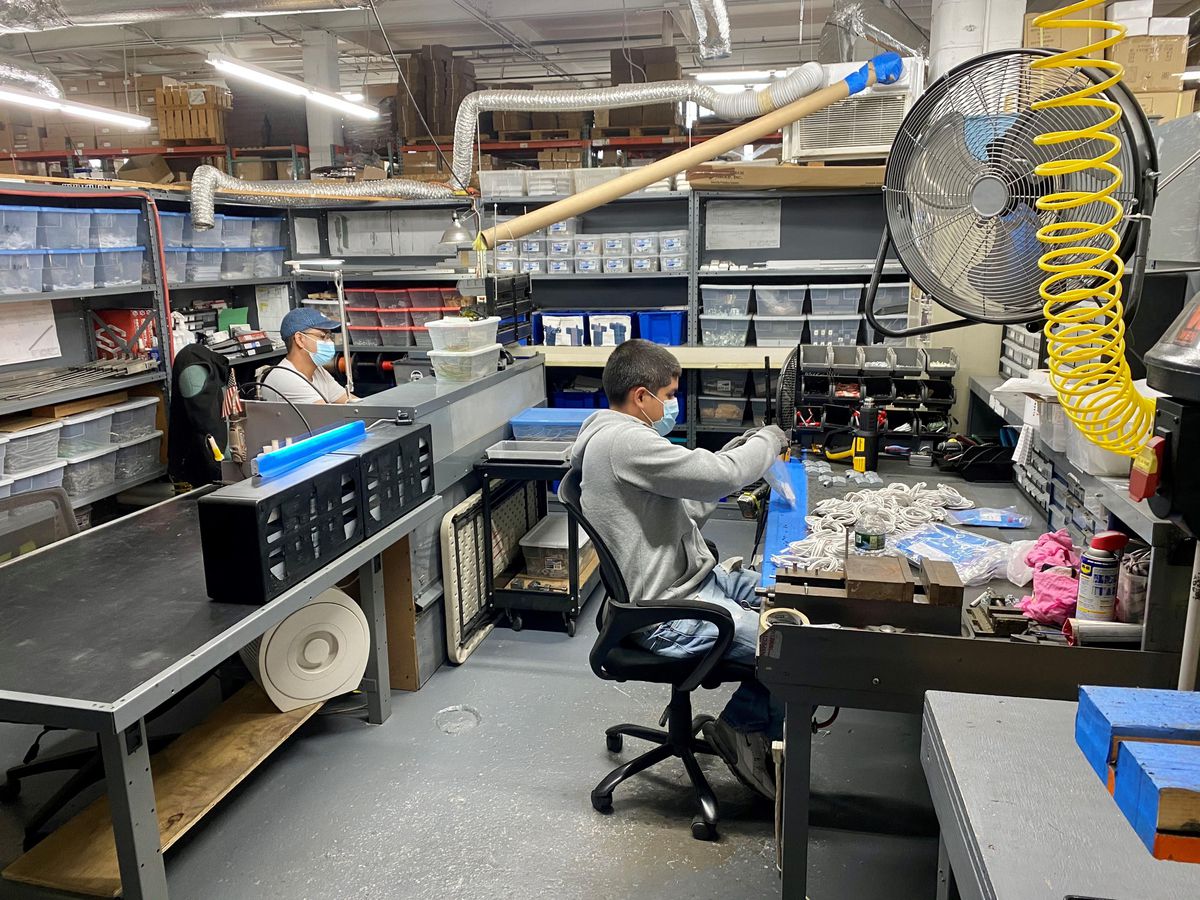

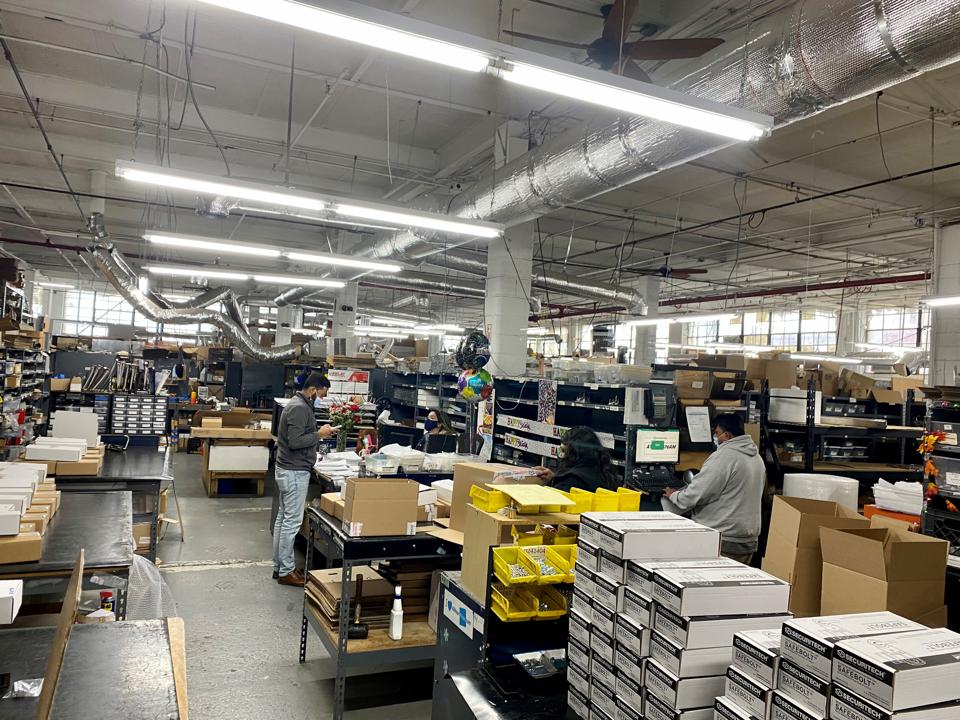
Manufacturing leaders now rank employees’ health and safely keeping operations going as major … [+]
Securitech Group
The pandemic has forced many businesses to pivot in order to survive—not only in terms of the products and services they offer, but also in terms of what it means to keep their employees safe. Visionary leaders like Mark Benioff, the CEO of Salesforce, took bold steps to support their community and protect their employees early on. When UCSF Medical Center asked Salesforce to help source hundreds of thousands of masks, we at Alibaba.com were able to jump in and quickly help them deliver. This responsibility to employees and communities extends to all business leaders, and is especially true for the leaders of U.S. factories, warehouses, assembly lines, and production facilities, which often require a large number of people to be on-site and in relatively close quarters. Although the heads of these facilities are used to looking out for employees’ physical safety, in recent months they’ve also had to act quickly to protect their health.
Manufacturing leaders now rank employees’ health and safely keeping operations going as major priorities for the year ahead, according to the recent Alibaba.com U.S. Small and Medium Business Survey. With that in mind, I spoke with business owners of manufacturing and production facilities located in Queens, New York, the epicenter of the first wave of the pandemic in the U.S. Here are six key steps industrial leaders can take to protect the health of workers based on these leaders’ experiences and insights.
Step 1: Promote a culture of respect.
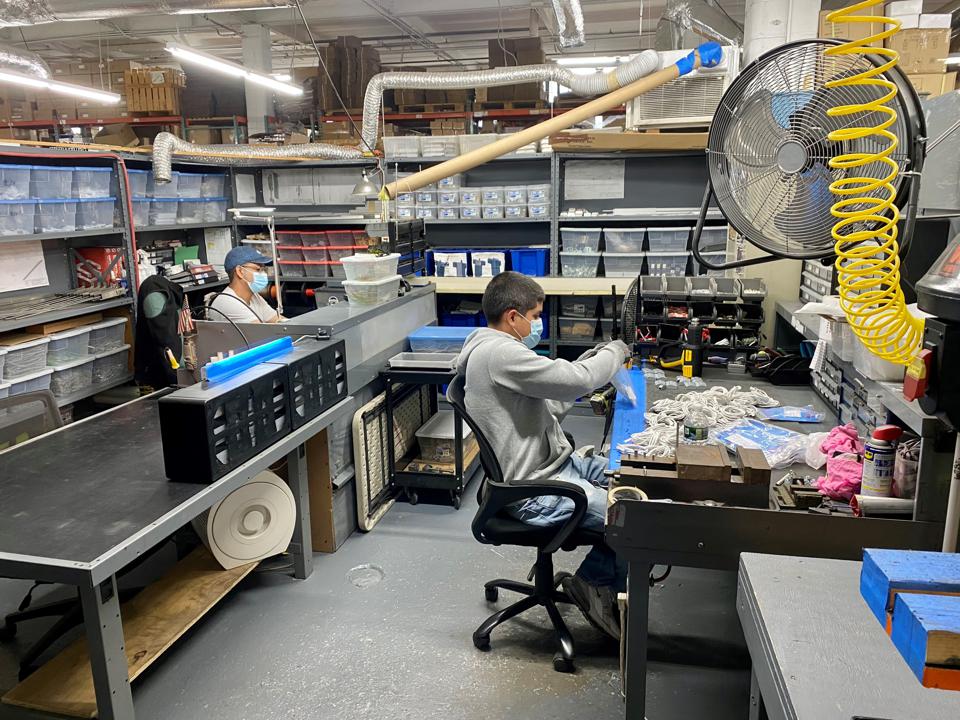
“Folks have to understand that they can’t just take their response to COVID-19 and look at it as a … [+]
Securitech Group
In the early days of the pandemic, Maspeth, Queens-based Securitech Group, NYC’s largest high-security door lock manufacturer, was able to get its employees to quickly adopt new health and safety policies because it already had a culture of respect in place. “I’m a big culture guy,” said Mark Berger, President and CEO of Securitech Group, during a recent interview. “Having a strong company culture of respect in place makes these kinds of policy shifts much easier to implement because people are used to modifying their behavior for each other. Folks have to understand that they can’t just take their response to COVID-19 and look at it as a separate silo; it has to be a part of the cultural philosophy across the entire enterprise. Once the pandemic hit, employees understood that they had to be masked for not only themselves, but also for their team and each others’ families.”
Back in March, Vassilaros & Sons, which has been roasting coffee in Flushing, Queens for more than a century, also made immediate changes to its health and safety policies. The company took immediate steps like mandating social distancing of more than six feet, bringing in cleaning crews before workers entered the building each morning, sanitizing work environments multiple times a day, equipping truck drivers with PPE, and providing extensive health and safety training to personnel. “All of these steps reinforced the idea that we are an extended family trying to create a safe environment for one another and for our customers,” said John Moore, CEO of Vassilaros & Sons.
Step 2: Set the example and lead with empathy.
It’s critical senior leadership sets the example when implementing major policy changes. “My CEO was very careful—double-masking, wearing gloves, never pulling his mask down,” said Alexandra Vassilaros, President of Vassilaros & Sons, referring to Moore. “His behavior gave him the credibility to address anyone who wasn’t complying with the company’s health and safety measures.”
Senior leadership at the coffee roasting plant also made a point of approaching the pandemic and the policy shifts it set in motion from a place of empathy. “Everyone here knows someone who has been very sick,” said Vassilaros. “One way to speak to the safety of the group is to highlight the individual struggle with Covid-19. When you see one person suffering, it magnifies your awareness, and you don’t want to put others at risk.”
Step 3: Give workers permission to stay home.
Especially when the economy is uncertain, employees can be tempted to come into work even when they aren’t feeling their best. Under normal circumstances, that might lead to a cold spreading around the shop floor at worst, but during a pandemic, the consequences are much more serious. It’s up to leadership to assure employees they won’t be penalized for staying home if they aren’t feeling well.
Securitech Group made it clear early on that if employees felt at all sick, they shouldn’t come in. The company uses a risk assessment app called SAFEN to help employees abide by the policy. “It uses some really cool technology,” said Berger. “You look into your phone and it takes your vital signs, and it also has you answer a questionnaire. While it doesn’t determine whether you have Covid-19, it suggests whether it’s safe for you to come into work.”
The company also made a point of reassuring employees early on that their jobs would not be in immediate jeopardy. “We told everyone that they were getting paid well before the PPP was issued,” said Berger. “We didn’t want to add panic to society.”
Step 4: Implement new cleaning protocols.
Cleaning spaces thoroughly and frequently may sound obvious now, but at the onset of the pandemic there was little consensus on how to keep employees safe. The leaders I spoke to went to great lengths to bring cleaning crews into their spaces and make hand sanitizer, gloves, and disinfectant wipes readily available for their employees. “We started conversations right away about sanitizing the whole environment multiple times a day—everything from the light switches and computer keyboards to the telephones and door knobs,” said Moore. “We even left the doors open so people wouldn’t have to touch them.”
Step 5: Reduce employees’ chances of exposure.
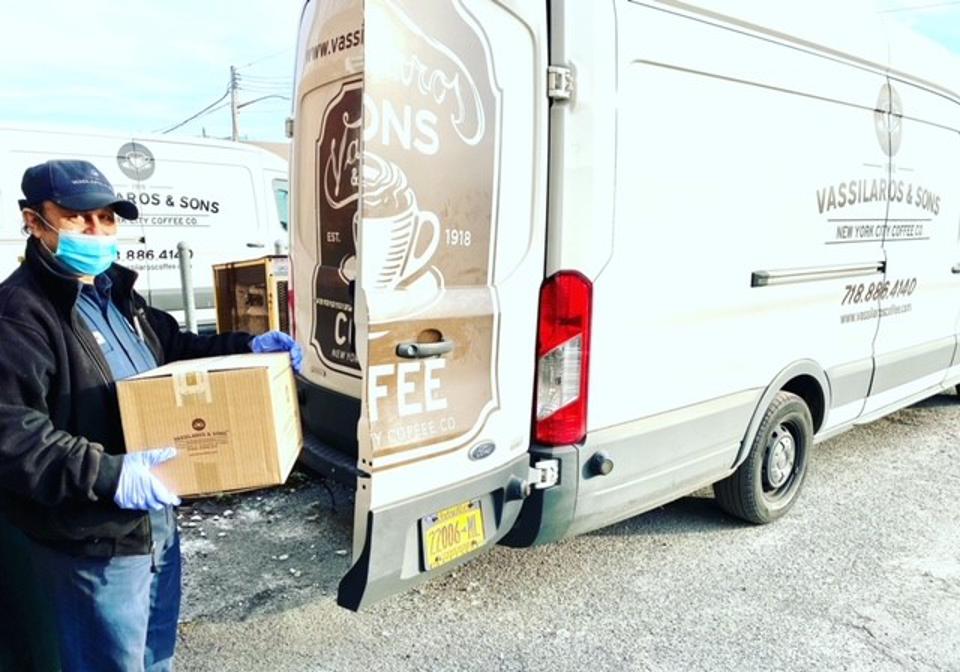
Vassilaros & Company also established silo work environments to essentially quarantine employees.
Vassilaros and Sons
Social distancing and other cautionary measures can help decrease the likelihood that workers are exposed to the coronavirus. “We integrated all the CDC guidelines with our team members and made a point of applying those to what their everyday behaviours might be per department,” said Moore. That meant asking delivery drivers to carry hand sanitizer, wear gloves and a mask, and take steps like sanitizing their hands upon entering a location or filling a tank with gasoline.
Vassilaros & Company also established silo work environments to essentially quarantine employees. “Everyone’s truck was treated as its own pod,” said Vassilaros. “When we would load the trucks, the drivers would stay in and wouldn’t get out and come into the factory. Everyone—on the delivery side, in the plant, and in the offices—was separated.”
Step 6: Don’t get comfortable.
If the pandemic has taught us anything, it’s that you never know what might happen. Companies must be prepared to pivot in an instant. That kind of flexibility requires transparency and frequent communication. “We had to be frank and nimble,” said Moore about the start of the pandemic. “Our board, ownership, and executive team were discussing what was going on, often multiple times per day.”
Moore’s team is also remaining cautious when it comes to lifting its Covid-19 policies. “Everything will remain in effect until we truly see significant change in the status quo,” said Moore. “If anything, we’re doubling down what we did in the past and keeping those policies in place.”
These steps helped Securitech Group continue manufacturing locks for clients throughout the crisis (including developing an innovative, hands-free door opener) and ensured Vassilaros & Sons could keep on roasting and delivering fresh coffee to customers around the tri-state area.
Now that vaccine distribution has begun, it’s possible to imagine a day in the not too distant future when some semblance of normalcy returns—at least, somewhat back to normal. Berger suspects that, just as 9/11 led to permanent changes in airport security, the pandemic will lead to permanent changes in the way we all approach health and safety. “Health is going to follow that same mindset shift in public spaces,” said Berger. He predicts, for example, that health screenings may become standard in crowded, public areas, such as ballparks or theaters. “We want to have confidence that people are as healthy as we are.”
Until that next normal arrives, we all have a responsibility to be like Benioff and the leaders of these resilient NYC businesses who are doing everything in their power to keep their businesses running and their employees, families and communities safe and healthy.
Recent Comments