


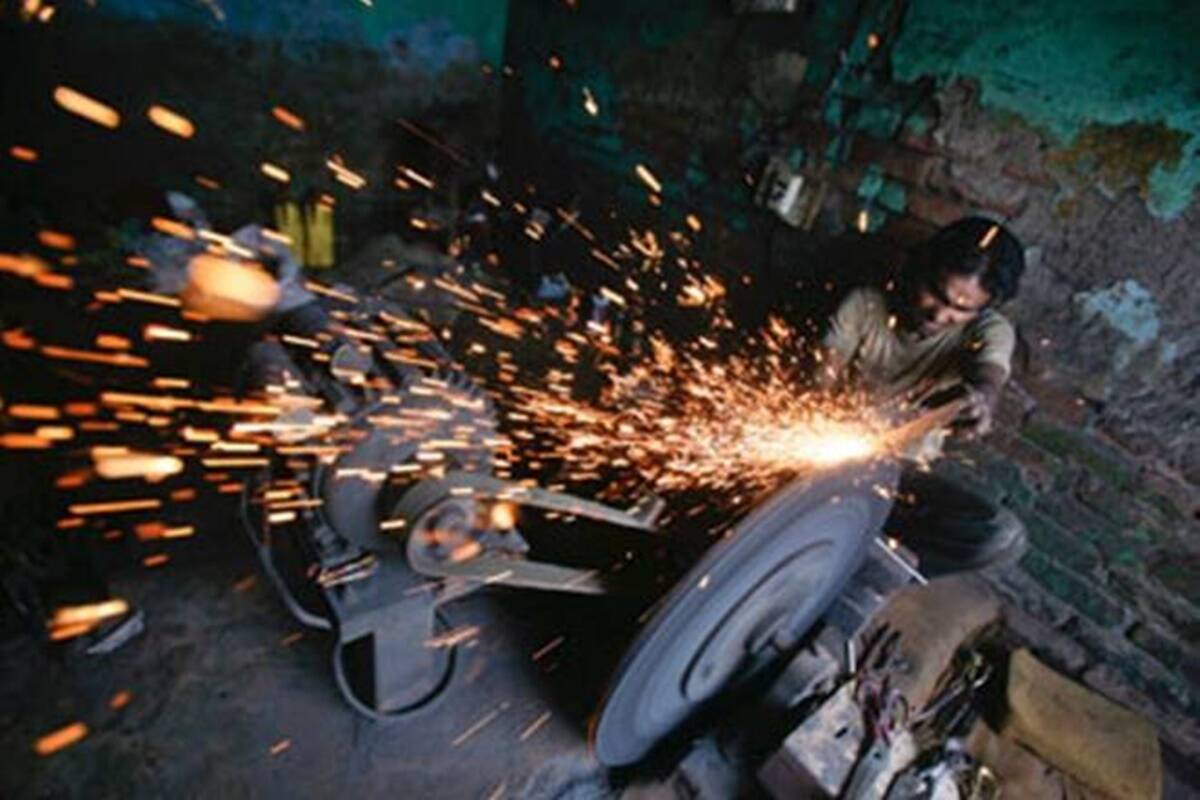
 Fourth Industrial Revolution new-age business model, smart corporations and digitally-enabled MSMEs can enjoy a symbiotic relationship.
Ease of Doing Business for MSMEs: As the pandemic propels a speedy shift towards automation, micro, small, and medium enterprises (MSMEs) need to be made part of this transition to ensure more inclusive growth and faster poverty alleviation. The Coronavirus outbreak caught digitally unschooled companies on the back foot. In the aftermath of the pandemic, industrial automation has seen an acceleration across sectors as it had a visible impact on operations in factories due to the fear of infections. Conversely, digital natives managed to keep operations ticking from the outset as they were conversant with the remote working model.
Indeed, digitally savvy companies have been part of the ongoing Industry 4.0 paradigm from its early days, introducing automation in their traditional manufacturing and industrial activities by deploying smart technologies. Besides automation, smart business and manufacturing practices comprise big data capabilities the Internet of Things, artificial intelligence, machine learning, and more.
Fourth Industrial Revolution Benefits
The pandemic only accelerated this transition as more corporates quickly realized the advantages of remotely managing industry operations backed by the right levels of cybersecurity. As a result, these companies kept their BCPs (business continuity plans) going notwithstanding lockdown restrictions and minimal access to their physical units.
Learning from how the digitally connected entities better-managed supply chain disruptions, some of the digital latecomers have been fast-tracking digital and automation programmes. Supported by 24×7 connectivity, automation, advanced analytics, and smart manufacturing practices, ‘acceleration’ is the buzzword in adopting norms of Industry 4.0 or the Fourth Industrial Revolution. Additionally, automation and AI-enabled tools are especially beneficial for sectors grappling with a severe shortage of workers. Some of the latter migrated to their native towns due to the closure of manufacturing units during the nationwide lockdown.
Despite multiple advantages of Industry 4.0, one crucial segment is missing the digital journey – MSMEs. Significantly, MSMEs play a pivotal role in India’s economic development by driving employment, exports, and inclusive growth opportunities. A silent pillar of India’s socio-economic progress, with about 60 million players the segment contributes to 45 per cent of the total industrial production and 40 per cent of its total exports. As per a report by the SME Chamber of India, MSMEs, manufacturing segment accounts for 7.9 per cent of GDP while its total contribution to GDP is 37.54 per cent and it also contributes to 30.50 per cent of services.
Most MSMEs confront major barriers in adopting Industry 4.0 practices, continuing with their old-world business practices and technologies based on Industry 3.0 or Industry 2.0 environments. This can be addressed by the adoption of a known standard IEC 61499 which allows for interoperability, which is quite required for this segment. By eliminating much of the hard work involved with adopting automation technologies, IEC 61499 makes automation potentially universal (ensuring interoperability and portability) – able to streamline processes from raw material handling to machine maintenance to finished goods and services.
Not just India, MSMEs are crucial for the global economy too, where they have made sizeable contributions over the decades. In the era of automation, however, these smaller players are steadily ceding ground to larger companies, because of technology, the adoption of which will help them scale up and stay competitive.
Business Barriers and Inclusive Development
Given their role in promoting inclusive development, if MSMEs miss the global automation journey, it will exacerbate economic inequality. In addressing this issue, MSMEs need to leverage the support that the government and industry ecosystem offers to work for the common cause in overcoming these challenges.
Some of these include paucity of skilled employees, no easy access to capital, and a plethora of rules and riders in embracing modern manufacturing practices that are more attuned to serving large companies. Consider the skills shortage. A 2019 Deloitte conclave of higher education experts found 64 per cent acknowledging that their curricula are not fully in sync with global standards.
Furthermore, even large sections of the present workforce may be unemployable in an Industry 4.0 ambience. Accordingly, apart from upgrading academic curricula, working persons must be provided opportunities to reskill or upskill in ascertaining they remain relevant for the new roles in the age of automation. In such a scenario, the industry, academia, and the government must all collaborate in enabling the emergence of an Industry 4.0-compatible workforce. Such skilling initiatives can be fast-tracked via subsidies, tax incentives, and other supportive measures for MSMEs to acquire the requisite Industry 4.0 talent.
Integrating MSMEs into the smart manufacturing realm is also required because the world of connected devices and sensors offers a treasure trove of data that can drive better business outcomes through substantial insights. Moreover, connected gadgets make up the edge devices of the IIoT (Industrial Internet of Things), which is the fountainhead of Industry 4.0.
Since many MSMEs are suppliers of raw materials and other goods for large corporations, the latter are also impacted if vendors in their value chain are not completely compliant with the latest smart manufacturing protocols. Therefore, if MSMEs are mainstreamed into Industry 4.0, all stakeholders stand to gain. Corporates can gain from an indigenous and reliable supply chain, the government from higher tax revenues, and society at large, from more inclusive outcomes and opportunities.
In emerging economies such as India, inclusive development is particularly pertinent in addressing COVID-19’s impact. MSMEs are critical for ensuring that economically vulnerable people have suitable opportunities to rise above the poverty line. These cohorts include women, migrants, and minorities, who have a better chance of exiting poverty by taking up employment in MSMEs spread across India. The sector assumes a pivotal role in driving the government’s Make in India initiative for an Aatma Nirbhar Bharat.
Through the Fourth Industrial Revolution’s new-age business model, smart corporations and digitally-enabled MSMEs can enjoy a symbiotic relationship that promotes greater production efficiency, ensures lower time to market as well as higher service satisfaction for customers and other stakeholders.
Anil Chaudhry is CEO of Schneider Electric India Pvt Ltd. & Zone President, Greater India. Views expressed are the author’s own.
Get live Stock Prices from BSE, NSE, US Market and latest NAV, portfolio of Mutual Funds, Check out latest IPO News, Best Performing IPOs, calculate your tax by Income Tax Calculator, know market’s Top Gainers, Top Losers & Best Equity Funds. Like us on Facebook and follow us on Twitter.
 Financial Express is now on Telegram. Click here to join our channel and stay updated with the latest Biz news and updates.
Recent Comments