
Tech News, Magazine & Review WordPress Theme 2017
  • Home
  • Supply Chain Updates
  • Global News
  • Contact Us
  • Home
  • Supply Chain Updates
  • Global News
  • Contact Us
No Result
View All Result
No Result
View All Result
Home Supply Chain Updates

South Korea bans hard-to-recycle plastic materials for F&B packaging

usscmc by usscmc
February 19, 2020
South Korea bans hard-to-recycle plastic materials for F&B packaging
Share on FacebookShare on Twitter

This is part of the country’s objective to reduce its plastic waste production by half, as well as more than double recycling rates from 34% to 70% by 2030.

“The comprehensive countermeasures focus on enhancing public management and stabilizing the recycling market,”​ South Korean Ministry of Environment (MoE) Minister Kim Eun-kyung said at an announcement back in 2018, not long after China announced an import ban on 24 types of recyclables.

“The government will be involved in the life cycle of the products, starting from production to the recycling process.”​

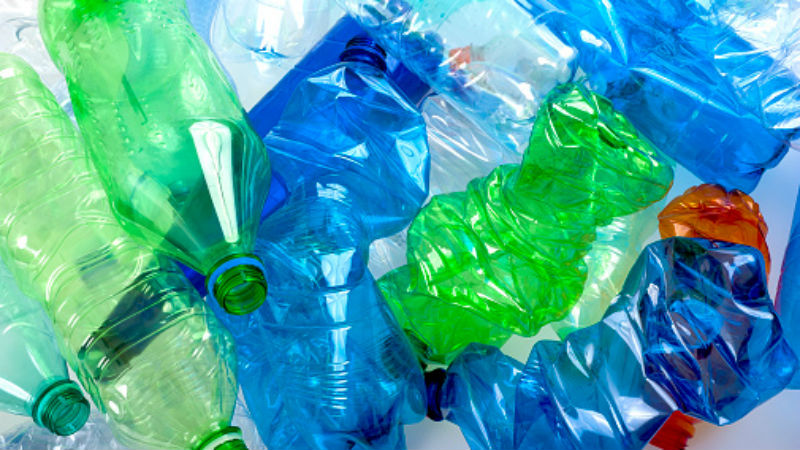
The ban was implemented by the MoE under the Act on the Promotion of Saving and Recycling of Resources​, focusing on PVC (Polyvinyl chloride) and coloured PET (Polyethylene terephthalate) plastic bottles, as these are known to be more difficult to recycle as compared to transparent PET plastic bottles.

In addition to this, MoE stated in the original statement announcing this change that even PET bottle labels that are hard to recycle would be prohibited.

“[The] use of PVC, coloured PET bottles and general adhesive PET bottle labels that cause problems or are difficult to recycle during the recycling process are prohibited from use,”​ said the ministry.
“[For PVC, especially those mixed with other resins], the reason is that it causes a variety of problems such as reduced robustness of the product and generation of harmful chemicals such as hydrogen chloride during the recycling process.​

“PET bottles should be colourless, and labels should be easily removed during recycling – coloured materials which inhibit recycling, and general adhesives which prevent the removal of labels during the recycling process are forbidden.”​

That said, PVC will still be allowed as a packaging material for certain items due to the unavailability of suitable alternatives. These include: medicines, health functional foods directly related to food and medicine safety, hams and sausages sold at room temperature, wet wraps for fish, packaging wraps for agricultural products and so on.

“Moving forward, the Ministry of Environment will designate additional prohibitions and review possible exceptions via an expert review committee every two years,”​ added MoE.

Violators of these regulations will be subject to suspension of sales, or a penalty of up to KRW1bn (US$857,832).

Four packaging material classifications​

In a separate document, nine accepted packaging materials were listed by the ministry and food manufacturers were ordered to classify these according to their ease of recycling.

These nine materials were: Paper packaging, glass bottles, steel cans, aluminium cans, ordinary foamed synthetic resin, polystyrene paper, (clear) PET bottles, synthetic resin (single material) container/tray and composite material films/sheets.

The classification for each of these depends on the form by which they are sent for recycling: For example, paper packaging made from unbleached pulp is more difficult to recycle as compared to those made from bleached pulp, and glass bottles made from soda-lime and in green or brown colour are more easily recyclable than other types of glass bottles.

“Manufacturers will need to evaluate the materials they are using and classify them [as Best/Excellent/Normal/Difficult to recycle]according to the guidelines given. The results must be submitted to the Korea Environment Corporation, who must issue a confirmation within 10 days of submission,”​ said MoE.

MoE Resource Circulation Policy Officer Lee Young-ki added that the ministry also planned to create a guidebook containing detailed case studies for companies to refer to, saying: “We hope to increase the production of packaging materials are easy to recycle.”​

usscmc

usscmc

No Result
View All Result

Recent Posts

  • How Hapag Lloyd captured a major market share in the Container Shipping Industry in USA
  • Why USA’s East Coast is the Favorite Destination for Manufacturing Companies
  • How Trade Relations Between the USA and UK Improved After Keir Starmer Became Prime Minister
  • Tips and Tricks for Procurement Managers to Handle Their Supplier Woes
  • The Crazy Supply Chain of Walmart Spanning Across the Globe

Recent Comments

  • Top 5 Supply Chain Certifications that are in high demand | Top 5 Certifications on Top 5 Globally Recognized Supply Chain Certifications
  • 3 Best Procurement Certifications that are most valuable | Procurement Newz on Top 5 Globally Recognized Supply Chain Certifications

Archives

  • July 2024
  • June 2024
  • May 2024
  • April 2024
  • March 2024
  • February 2024
  • January 2024
  • December 2023
  • November 2023
  • October 2023
  • September 2023
  • August 2023
  • July 2023
  • June 2023
  • May 2023
  • April 2023
  • March 2023
  • February 2023
  • January 2023
  • December 2022
  • November 2022
  • October 2022
  • September 2022
  • August 2022
  • July 2022
  • June 2022
  • May 2022
  • April 2022
  • March 2022
  • February 2022
  • January 2022
  • December 2021
  • November 2021
  • October 2021
  • September 2021
  • August 2021
  • July 2021
  • June 2021
  • May 2021
  • April 2021
  • March 2021
  • February 2021
  • January 2021
  • December 2020
  • November 2020
  • October 2020
  • September 2020
  • August 2020
  • July 2020
  • June 2020
  • May 2020
  • April 2020
  • March 2020
  • February 2020
  • January 2020
  • December 2019
  • November 2019
  • September 2019

Categories

  • Global News
  • Supply Chain Updates

Meta

  • Log in
  • Entries feed
  • Comments feed
  • WordPress.org
  • Antispam
  • Contact Us
  • Disclaimer
  • Home
  • Privacy Policy
  • Terms of Use

© 2025 www.usscmc.com

This website uses cookies to improve your experience. We'll assume you're ok with this, but you can opt-out if you wish. Cookie settingsACCEPT
Privacy & Cookies Policy

Privacy Overview

This website uses cookies to improve your experience while you navigate through the website. Out of these cookies, the cookies that are categorized as necessary are stored on your browser as they are essential for the working of basic functionalities of the website. We also use third-party cookies that help us analyze and understand how you use this website. These cookies will be stored in your browser only with your consent. You also have the option to opt-out of these cookies. But opting out of some of these cookies may have an effect on your browsing experience.
Necessary
Always Enabled
Necessary cookies are absolutely essential for the website to function properly. This category only includes cookies that ensures basic functionalities and security features of the website. These cookies do not store any personal information.
Non-necessary
Any cookies that may not be particularly necessary for the website to function and is used specifically to collect user personal data via analytics, ads, other embedded contents are termed as non-necessary cookies. It is mandatory to procure user consent prior to running these cookies on your website.
SAVE & ACCEPT
No Result
View All Result
  • Home
  • Supply Chain Updates
  • Global News
  • Contact Us

© 2025 www.usscmc.com