


This is the sixth article in a of the Sustainable Favela Network, which took place online on November 7, 2020.
The(SFN) is a project of Catalytic Communities (CatComm)* with the aim of building solidarity networks, increasing visibility, and developing joint activities that support the expansion of community-based initiatives that strengthen environmental sustainability and social resilience in favelas across the Rio de Janeiro Metropolitan Region. The project began with the 2012 film , followed in 2017 with thein favelas across Rio. In 2018, the program organized localbetween eight of the most well-established community programs, followed by the, launching the SFN formally on November 10, 2018. In 2019, the program organized another round of exchanges—this time open to all SFN members and to members of the public—in five favelas in Rio de Janeiro. The activities carried out in 2019 culminated in the. In 2020, the SFN’s Working Groups continued to meet—online, due to thepandemic—carrying out a range of activities such as rounds of support (rondas afetivas), teach-ins, seminars, fundraising campaigns, a for political candidates, and a debate with mayoral candidates. To close the year, the Sustainable Favela Network held its 3rd Annual Full-Network Meet-Up, summarized below, with the aim of bringing the network together, promoting the mutual strengthening of relationships among socio-environmental organizers, evaluating the SFN’s 2020 activities, and making plans for 2021.
Discussion Circle: Possibilities for Sustainable Solid Waste Management in Favelas
Among the afternoon activities of the Sustainable Favela Network’s 3rd Annual Full-Network Meet-Up, some working groups held discussions—with already-active members and new participants alike—on topics the groups had worked on during the period of the pandemic.
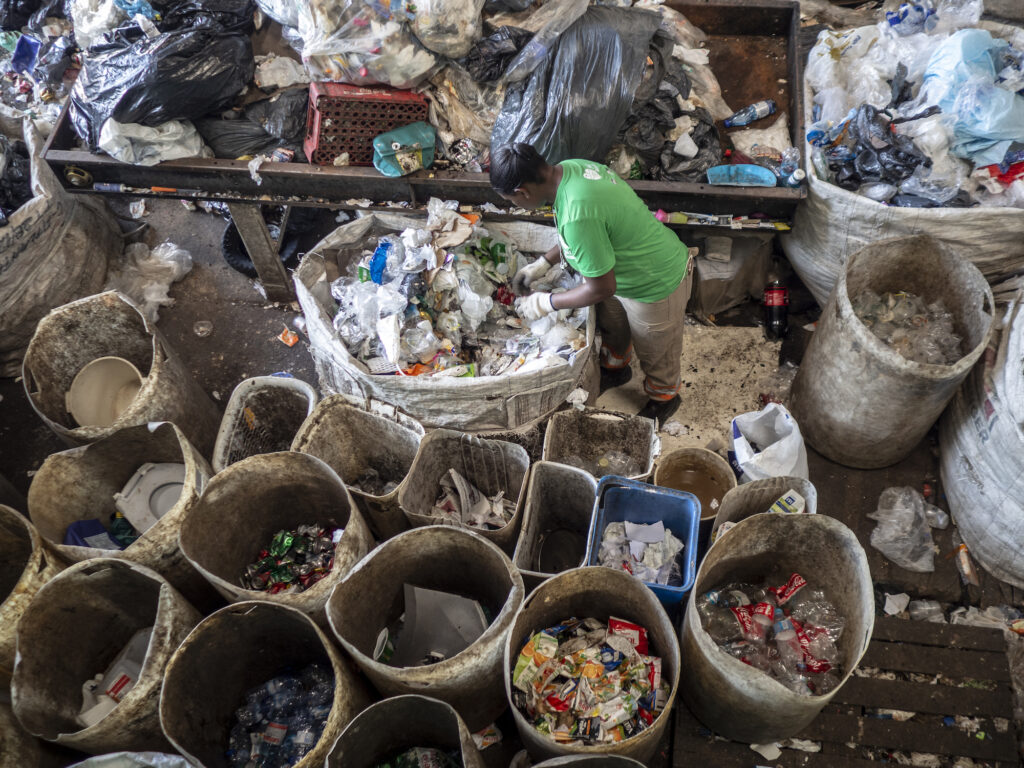
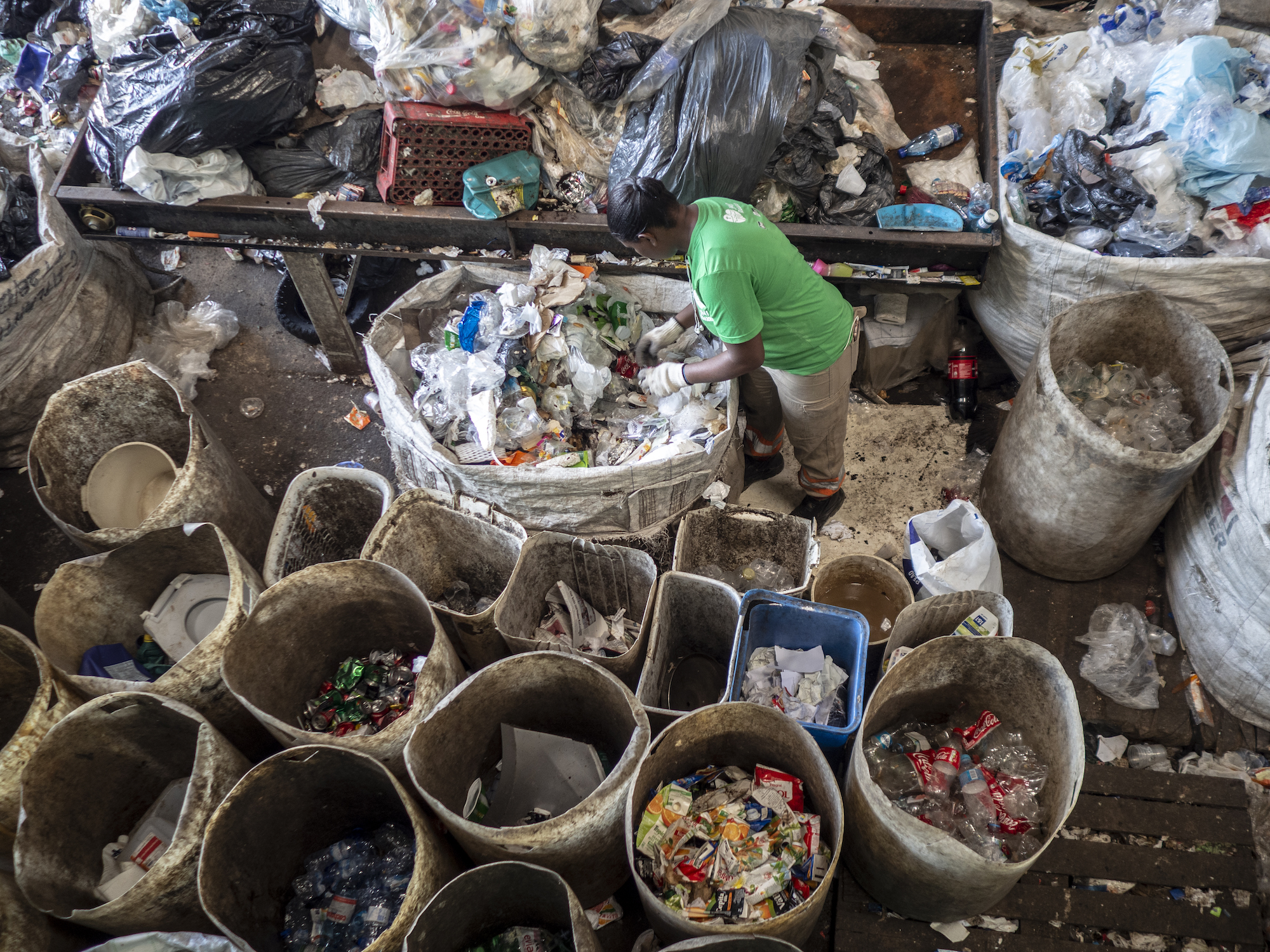
The Solid Waste Working Group hosted the dialogue “How Are We Dealing with Solid Waste in Favelas?” moderated by Patricia Camargo, a production engineer and technical ally of the Solid Waste Working Group. The discussion included the participation of favela residents and researchers who work with solid waste management, including organics, recyclables, and other materials.
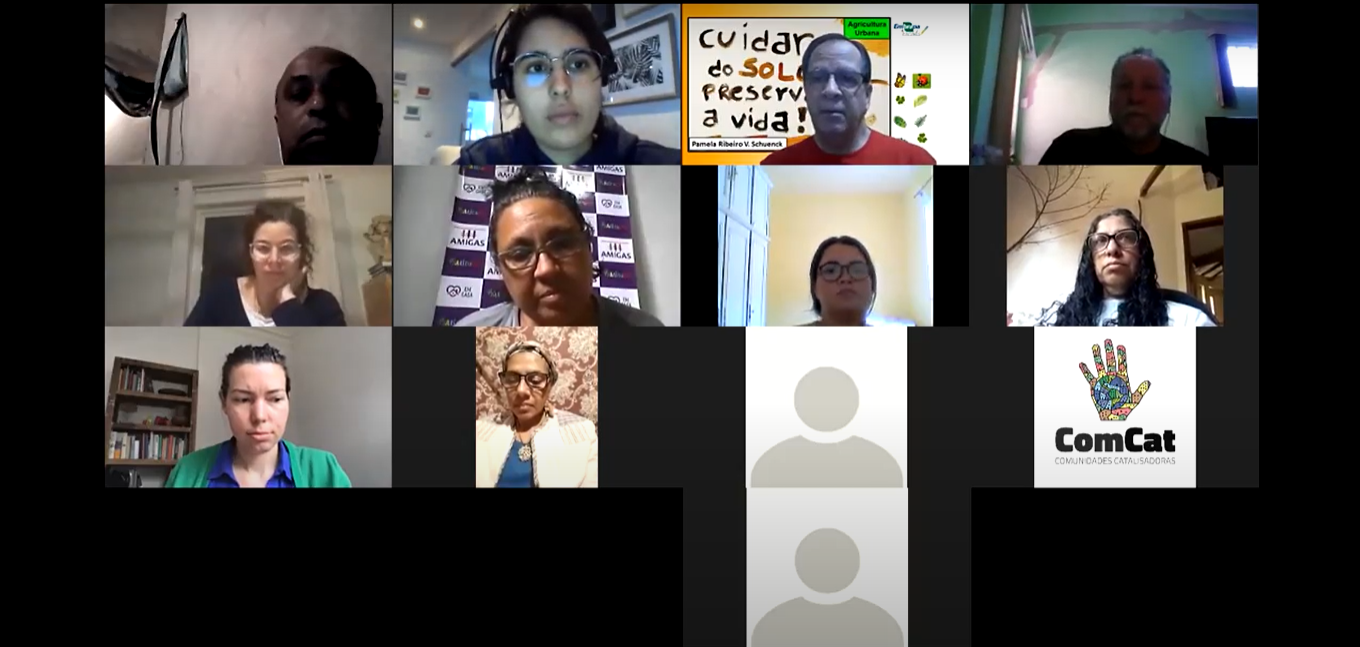
Starting the conversation, Antônio Oscar, a professor at the (UFRJ) and coordinator of the Waste Research Network (RIPeR), presented his project which, according to him “[is done to] encourage development and strengthen recycling within the concept of the solidarity economy.” To him, the issue of waste can be protagonized by people at three levels. First comes the individual level, where we separate waste in our homes. The second level is collective, in civil society projects such as at universities or in neighborhoods. And finally comes the level of citizenship, where we organize ourselves to generate local changes and press for public policies.
“The best solution for waste is called recycling: organizing recycling chains to structure the circular and solidarity economy… Landfills are prioritized today, in most Brazilian municipalities, which is an environmentally degrading policy, economically stupid and socially exclusive. We as citizens cannot allow this to happen with impunity.”
Patricia then shared a question for everyone to ask of their preferred candidates for public office, based on topics emphasized by Brazil’s : “If you don’t defend zero waste, how much waste do you defend?… Any amount that [your candidate] can commit to is already an advance, but 100% of the waste being thrown into the landfill or incinerated is not a policy that we can accept today. Brazil is a signatory to the Climate Agenda.”
Then, Ilaci de Oliveira, from the , founded in 2007, spoke. Transvida is a Vila Cruzeiro favela-based cooperative that carries out environmental education projects, mainly aimed at recycling. The cooperative has professional waste pickers, but children in the community also end up acting as environmental agents, collecting waste that would be discarded, such as caps, boxes and bottles. These materials are transformed into arts and crafts that can even generate income. These projects have the support of UFRJ, but they are mainly successful due to high popular support: “We already have 15 gallons of caps collected.”
Also active in the Working Group and working with youth, sustainability and socio-cultural issues, Anna Paula Sales gave a presentation on the Itaguaí Women’s Association – Warriors and Social Articulators () which, since 2015, has developed projects that involve training for young people on how to earn income through the reuse of waste, and even gives psychological support for waste pickers—who do such important work, but are still stigmatized. “Composed of six women engaged in social causes, in combating hunger… in tackling domestic and gender-based violence, promoting social inclusion through education and culture… we work on training and empowering community leaders in order to promote political action and sustainable community development… We propose and recycling as the basis for preserving the local environment,” explained Sales.
In early 2020, A.M.I.G.A.S. began the Young Friends of the Environment (JAMA) program, for young people starting from the age of 14 to be trained as environmental monitors in their communities and on their streets, making residents aware of waste generation and management. The idea is that this training will lead young people to prepare the way for waste pickers to have access to recyclable materials. Recicla Itaguaí—a cooperative of recyclable material workers in training—promotes the empowerment of waste pickers, by recognizing the dignity and importance of work, and by combating the negative social representation prevalent among waste pickers, as marginalized people, fostering recognition of waste pickers as key professionals in waste management.
Then Maria Consuelo Pereira dos Santos, a Rocinha favela resident working on several fronts of the Sustainable Favela Network, invited EMBRAPA Soils engineer Cláudio Lucas Capeche to share his knowledge. Working in the field of soil conservation and environmental education in a program called EMBRAPA & School, he develops activities in communities and schools about the best use of the soil and its types. Capeche invited the Sustainable Favela Network to participate in EMBRAPA Solos qualifications and training. It offers, for example, craft workshops using different types of soils, bringing knowledge about the types of soil: a type that is more sandy, or has more clay, or that may be more porous, or more dense, etc.
Capeche made it clear that there are many unusual or surprising uses for the soil, such as “the possibility of making paints using earth, in a completely sustainable way, which can be used on wood, tin, styrofoam, fabric, wall, plastic, notebook covers, frames, etc. You are going to take soil, put it to dry, unburden it, sift it—in a 2mm mason sieve—and mix two parts of soil with a part of white glue, the one used in schools, and water. Quite difficult, right?” he ironized, continuing: “It is not necessary to treat the painting made with earth paint, there is no need to apply varnish or anything, the soil paint itself is already safe, because the glue makes it waterproof.… It withstands the calm rain.”
Irenaldo Honório da Silva, former president of the Pica-Pau Residents’ Association in Cordovil and current president of the 45th Scout Group in Olaria, said that “[the scout group] participated in an international event that… collected garbage in . Last year, we managed to remove three tons of garbage.” According to him, it is important that the solid waste has an appropriate destination: “preferably, reuse.”
Meanwhile, the reduction of waste and its proper destination was defended by Geiza de Andrade, an environmental educator in the favela:
“Our main issue, as [environmental educators], is conscious consumption, reducing the consumption of things that we don’t need… we have to give the correct destination for the waste that already exists. We have a motto: ‘Poverty is not synonymous with trash. Enough with the culture of throwing garbage on the street!’ The population insists on throwing garbage in the river, which causes floods and so on. Our job is to make this population aware that we should dispose of garbage, which is already here, and reduce consumption to generate less waste.”
Closing the conversation, Iara Oliveira, from Alfazendo’s EcoRede in City of God, highlighted that her organization, which has been active for more than 20 years, is involved in a project to map waste pickers and waste accumulation points in City of God, in order to help them. “We organized their training in: solidarity economy, what is a waste, where does it go, how much does it cost. In addition, we set up 13 eco points in City of God and donated PPE materials to waste pickers… We have served around 7,000 people a year, working on the issue of solid waste and generating income from it,” said Oliveira, who insisted on the need to make young people aware of the importance of recycling, which was also mentioned by other participants in the discussion.
During the conversation round of the Solid Waste Working Group, she was reminded of the campaign promoted by the Working Group to raise emergency funds for waste pickers during the pandemic. The #SupportAWastePicker campaign, promoted by the Sustainable Favela Network in 2020, raised funds to alleviate the pandemic’s effect for these essential workers and provoked reflection in society about the importance of waste pickers and how we deal with our home waste, through a sequence of #ShowYourTrash videos.
Discussion Circle: Paths for a Favela-Centered Decolonized Environmental Education—Favela-University Manifesto
Based on its online teach-in “Favela-Academia Dialogue: Necessary Steps Toward Environmental Education,” the Environmental Education Working Group of the Sustainable Favela Network is producing a “Favela-University Manifesto,” which will include objective guidelines for universities to contribute in the most effective and appropriate way to the development of Rio’s favelas, to “treat the resident and the favela as subjects and not as objects of study,” said moderator Iamê da Silva, a researcher at the UFRJ Plant Ecology Laboratory and a member of the Working Group. This conversation was the group’s third meeting aiming to gather points to include in the manifesto, for 2021. On this day, the focus was different from the day of the public teach-in. It was less about environmental education itself and more about access to the university and understanding of what the university is for young people from favelas.
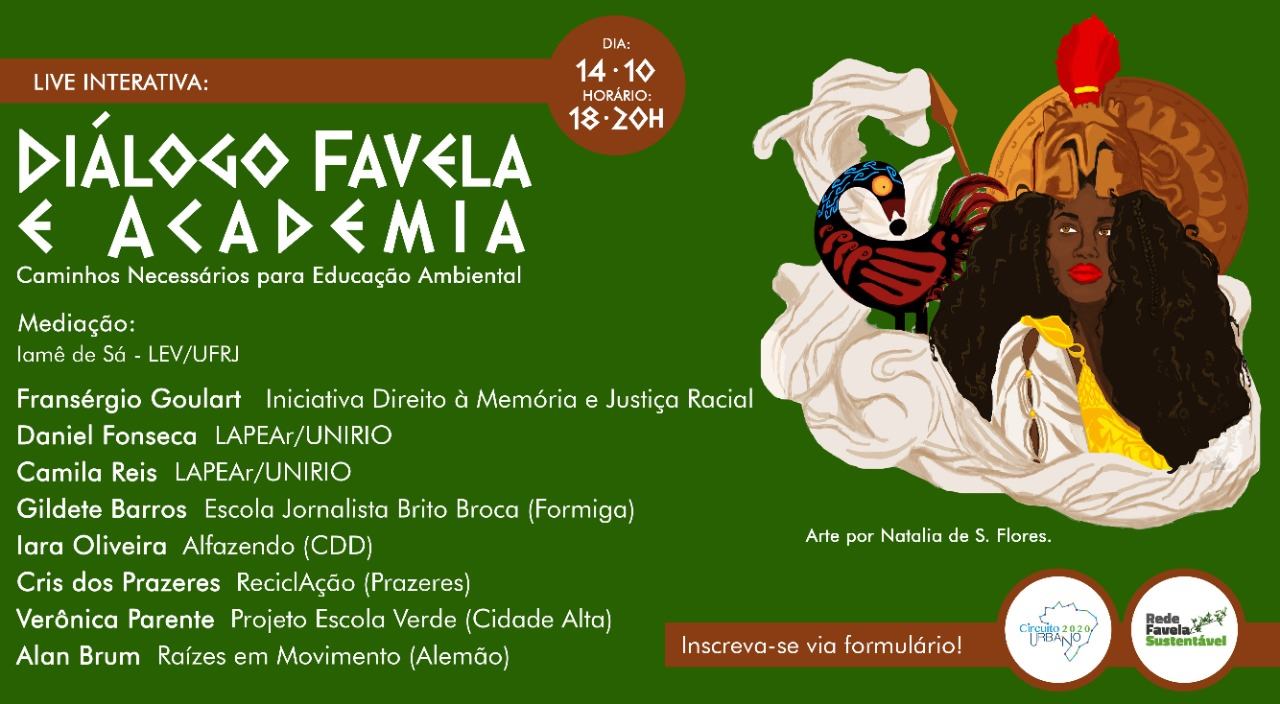
For the participants, in order to achieve greater diversity in decision-making, it is necessary not only to bring more young people from the favelas to the university, but also to keep them there, which is not always easy due to the lack of financial means. “We cannot have a panel discussion on public policies for favelas with only white people from the of Rio de Janeiro,” said Tarcyla Fidalgo, of the Favela Community Land Trust* project. Participants also stressed the importance of explaining concepts such as “undergraduate, master’s and doctorate,” both for residents and students, so that they can better plan for the future.
Da Silva believes that the Manifesto should be sent to universities with guidelines on how to foster a better dialogue between the university and favela territories. Irenaldo Honório da Silva, also present in this circle, argued that the manifesto can incentivize a closer exchange between favelas and academia: leaving space for people to talk about their own experiences instead of being mere objects of study.
Anjuli Fahlberg, a professor and researcher at Tufts University, said it was important to focus on the points of intersection between favelas and academia, and that this is exactly what she tries to promote through the Building Together Research Collective, which intends to capture what is important for residents, for all these different voices, regardless of their education levels. “What data are important? Are they narratives, are they quantitative data? And what do we do with these data? Is it to publish or to bring direct gains to the residents of the communities?”
Irenaldo da Silva drew attention to “the great importance of having more objective communication… so that the young people from the favela understand what the university is, so that they understand and see themselves in that space.” There was a consensus that, in addition to affirmative policies for access to university, there should be a more proactive practice by universities in the territories, “to show this young person that they have a path, that they have an objective, but that this requires encouragement.” Camila Reis, from LAPEAr (Laboratory for Actions and Research in Environmental Education) at the Federal University of the State of Rio de Janeiro (UNIRIO), said:
“There are projects like the Getting to Know UFRJ Project, which receives high school and elementary students to get to know the university. I think other universities could do the same thing, only in a more accessible way. Because going to the university demands money and time… taking advantage of the media, we could ask universities to have presentations on what courses are, what a degree is… We, from the pre-master’s program [for UNIRIO’s Ecotourism and Conservation Graduate Program], as our first workshop, answered the question ‘What is a master’s degree?,’ so presenting ‘What is a degree?’ is just as important. I don’t know about you, but I found out what a degree was just by doing it.”
Lidiane Santos, coordinator of the Alfazendo EcoRede project, in City of God, said that for her, it was exactly on a visit like the one described above in which: “I fell in love with that place [the university], because I visited UFRJ in elementary and high school. I still have pictures today! And I thought: ‘I need to be in this place!’ Even though I didn’t identify with those there, even though there weren’t black bodies and probably none from a favela, in 2007.” She is a living example of the importance of this type of initiative.
“The people I have contact with in the workshops [at Alfazendo in City of God], usually in high school, do not know what a degree is and that they can have access to it too… they do not understand how to do it. They have to finish high school and enter the job market. They don’t have that period of reflection.”
Fidalgo recalled the importance of acknowledging people’s different socially-situated perspectives (lugar de fala) during the construction of knowledge. She said that narratives about favela residents and favelas in academia are often poor and stigmatizing, due to the lack of first-person experience of those social relationships. This can be seen in the art of Geisa Paganini de Mio, below, the result of the public teach-in in October, “favela é vivência” (“favela is lived experience”). And, at the end of her comments, Fidalgo recalled the mantra, “Nothing about us, without us!” highlighting the importance of the presence of residents of impacted territories in academic spaces, and those academia in the territories of residents.
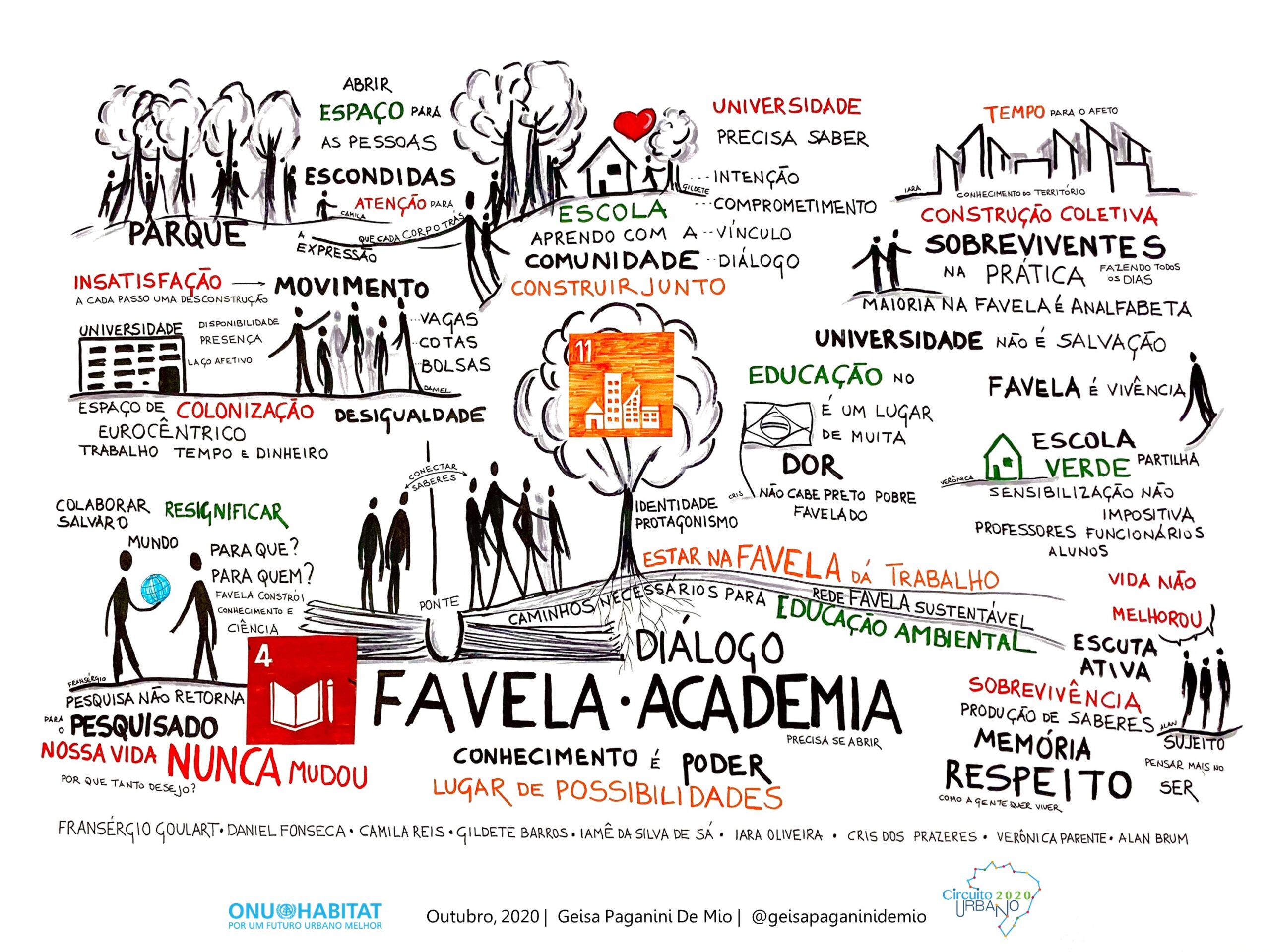
To overcome these barriers, Iamê da Silva said that it is necessary to “build this manifesto in the most collective and diverse way possible,” so that this relationship, sometimes predatory and colonizing, between the academy and the favela, finally ends. There is a need to refound this social pact. Natalia Revelo, a student at the University of Pennsylvania who was also present, argued: “Architecture as a profession has always been bad for communities, thinking that [the architects] have the answer.”
In short, the debate made clear that those who experience and have access to the daily sociability of these territories must be the authoritative speakers, rather than researchers with sporadic contact with the space and its actors.
To participate in the Solid Waste Working Group or Environmental Education Working Group of the SFN (including the production of the Favela-University Manifesto) in 2021, contact us by email [email protected].
This is the sixth article in a of the Sustainable Favela Network, which took place online on November 7, 2020.
*The Sustainable Favela Network, RioOnWatch, and the Favela Community Land Trusts Project are projects of (CatComm). The Sustainable Favela Network is supported by the Heinrich Böll Foundation Brazil.
Recent Comments