

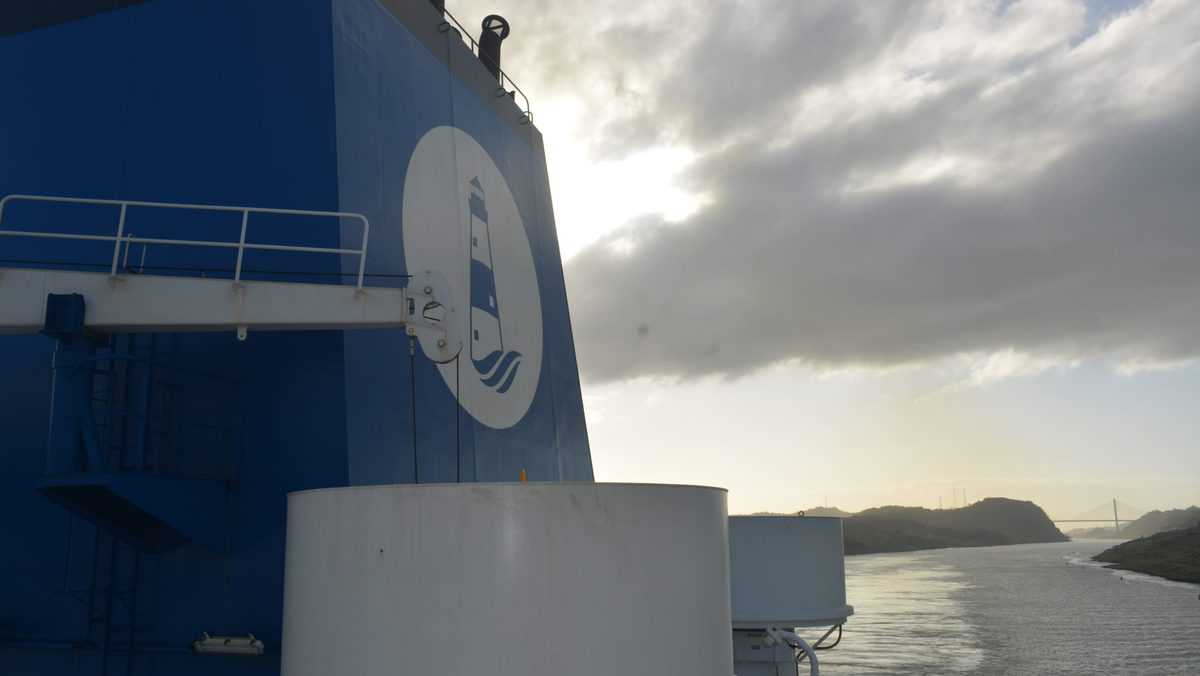

A new job title has been born: worldwide corona czar. That’s what Lois Zabrocky, CEO of Manhattan-based International Seaways (NYSE: INSW), dubbed her company’s head of IT, who spent the past several weeks preparing the company and its systems for working off-site.
“We are now working remotely, from our homes,” Zabrocky confirmed on Tuesday during the Virtual Investor Forum hosted by J Mintzmyer on Value Investor’s Edge via Seeking Alpha.
Coping with coronavirus
“The fact that the whole world is working remotely affects how quickly information is flowing and how everything is happening,” she emphasized, adding, “I think the coronavirus has taken everyone aback.”
For crude- and product-tanker owner INSW, which has staff across the globe, “it definitely builds in inefficiencies that would have been unthinkable just a month ago — the whole world is now shutting down flights in response to the coronavirus.”
The good news, she reported, is “we have not had any crew come down the coronavirus.” The bad news is that “repatriation of crew worldwide has become infinitely more complex. Countries are not wanting you to disembark your people or allow you to send your people easily to sea. That is where the challenges are logistically,” Zabrocky said.
Saudi surge
The CEO also spoke about the surge in export cargoes from Saudi Arabia, which has caused a spike in rates for very large crude carriers (VLCCs; tankers that carry 2 million barrels of crude oil).
There have been numerous reports of VLCC charters westward from the Middle East Gulf to the U.S. Gulf instead of the traditional eastern route to Asia. Zabrocky said that in some cases, the final destination is not yet determined.
“Bahri [Saudi Aramco’s shipping arm] is wise in the way it’s doing its chartering. It’s fixing [chartering] out into the future with options for discharge in the Far East as well as the U.S. Gulf. That gives it more freedom.”
She noted that “there is a lot of talk in the market now that China will use this opportunity [low prices] to shore up its version of the SPR [Strategic Petroleum Reserve] and they may have up to 200 million barrels of spare capacity.”
With regard to the U.S. plan to fill up 77 million barrels of spare capacity in its SPR, Zabrocky said, “it isn’t 100% clear whether that will be international barrels or domestic barrels.” With such stockpiling variables in mind, “it’s not clear where a lot of these barrels [from the Middle East Gulf] will be going. They’re fixed with a lot of options.”

Meanwhile, the VLCC rate surge is now cascading down to Suezmaxes (tankers that carry 1 million barrels of crude) in regions outside of the Middle East. “If a charterer is able to do so, it will split a 2 million-barrel cargo into two 1 million-barrel stems [cargoes] and take them on Suezmaxes instead,” she said, noting that the practice is particularly prevalent in West Africa.
A further consequence of Saudi Arabia’s export push relates to IMO 2020, the regulation that requires ships without exhaust gas scrubbers to burn more expensive 0.5% sulfur fuel known as very low sulfur fuel oil (VLSFO) as opposed to 3.5% sulfur heavy fuel oil (HFO).
Saudi Arabia’s decision to flood the market has caused crude pricing to collapse, and with it the price of VLSFO. This has narrowed the VLSFO-HFO spread, a negative for companies like INSW that invested in scrubbers. The narrower the spread, the less savings from burning HFO and the longer it will take to pay back the scrubber investment.
But Zabrocky pointed to a counterbalancing effect that could help the spread to re-widen, by pushing down the price of HFO.
“With Saudi deciding to crank up, a lot of those barrels will be Arab Heavy [grade]. There will be more heavy barrels on the market, which had been less prevalent previously. And that should translate into lower HFO prices,” she maintained. More FreightWaves/American Shipper articles by Greg Miller
Recent Comments