

The students filing into class for their “Discerning Leadership” programme are much like other business school newbies, eager to bag a seat in the lecture hall and log on to the WiFi.
But the first sign that this is not a typical executive education course comes when the class tutor, professor of management Bob Bies, shares his first overhead slide, a verse from the Old Testament. “Have I not commanded you? Be strong and courageous?” Prof Bies says, quoting the book of Joshua. The students bow their heads and pray.
The 30 people on this week-long programme in Rome are from as far afield as Chile, Zimbabwe and South Korea. All are senior managers, but they report to God, not a chief executive.
Each is responsible for hundreds of workers not in multinational corporations, but in projects such as inner city schools and homeless missions. All of them work for the Society of Jesus, the religious order within the Catholic Church known as Jesuits.
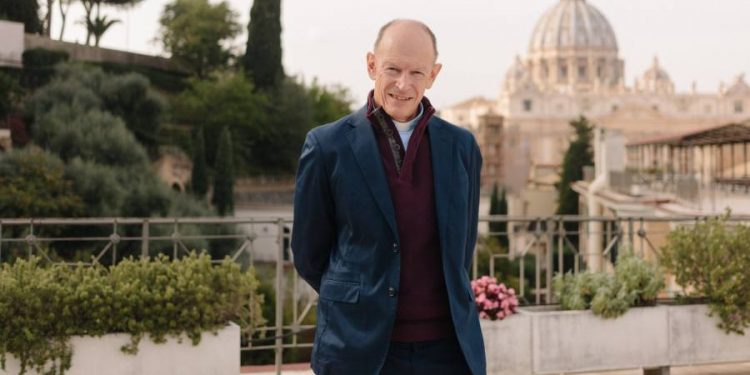
The aim of the Vatican-based course is to combine the latest research-based leadership and management skills from the best business schools with Catholicism’s moral and ethical values, says John Dardis, general counsellor for discernment and apostolic planning. It is the first secular leadership training course for senior clerics.
“The church needs to change, to renew itself, and it can do this in part by learning from the business world,” says Father Dardis who is one of four assistants to the head of the Jesuit Council in Rome. But “the church must not lose its soul”. He adds that the course has the personal backing of Pope Francis, the first Jesuit to lead the Catholic Church.
Management training is especially relevant for Jesuits, according to Father Dardis, as the order was founded in 1540 by St Ignatius of Loyola with a mission to carry out work that connects with people of all faiths and none.
He concedes the church has made many leadership mistakes, but that it also has much wisdom, and paired with business skills this can be useful in many different situations. “We want to positively impact current and future generations of global leaders,” he says.
The teaching in Rome is provided by Le Moyne College, a private Jesuit college in upstate New York, and two secular schools with strong Jesuit connections: Georgetown University’s McDonough School of Business in Washington DC and Barcelona’s Esade Business School.
Running a course for senior religious leaders is a first for the management professors from McDonough. But Paul Almeida, the school’s dean, says the curriculum for the school’s core MBA programme has long revolved around teaching about having a greater purpose in one’s work.
Mr Almeida points to the parallels: faith is about discovering purpose, something that many people applying to business school are seeking in their careers. “People say you get three things from an MBA: you get learning, you get a network and you get a sense of who you are,” he adds.
This first cohort for the church’s Discerning Leadership programme was picked by Father Dardis from among leaders with the rank of superior general — who can be women as well as men — as well as representatives from lay partners in leadership positions in the Vatican administration.
Among the participants is Carmen Sammut, leader of the International Union of Superiors General, which represents about 600,000 nuns from 80 countries. “I was curious how learning from the business world could help us,” Sister Sammut says during a break between sessions, which included a seminar on how to enable people to work together when they have what seem insurmountable differences.
She is not perturbed by being told what to do by people who normally teach executive education to board directors driven by the need to maximise profits. When making important decisions “it is vital to take the time to discern the viewpoints of different stakeholders whether they are religious or lay”, she says.


During his class, Prof Bies, who teaches at McDonough, tells the assembled monsignors and sister superiors that the challenges they face are not fundamentally different to those of the executive MBA students he teaches. “We are going to be talking about leading and managing change,” he says. “That is what you do.”
Prof Bies also borrows from religious language in his talk about management theory. The focus of his lesson is the eight-step process of leading change developed by John Kotter, a Harvard Business School professor. A key part of this process is “vision” and “a sense of mission”, he says.
Not all the secular leadership strategies translate for students who believe there is ultimately a higher power in charge. When Prof Bies tells the class about Kotter’s theory of creating a sense of urgency to encourage a change in behaviour, he is challenged by Juan Antonio Guerrero, a Jesuit general councillor from Spain.

“It is difficult to get a sense of urgency from people whose perspective is about life being eternal,” he says. “You can also say that urgency is created by material needs but in the church people think there are more important things than these.”
Prof Bies provides reassurance by quoting St Francis of Assisi. “Start by doing what is necessary, then what is possible, and suddenly you are doing the impossible.”
Words of wisdom that can be applied to both corporate and spiritual life.
Recent Comments