


Anna Nagurney, University of Massachusetts Amherst
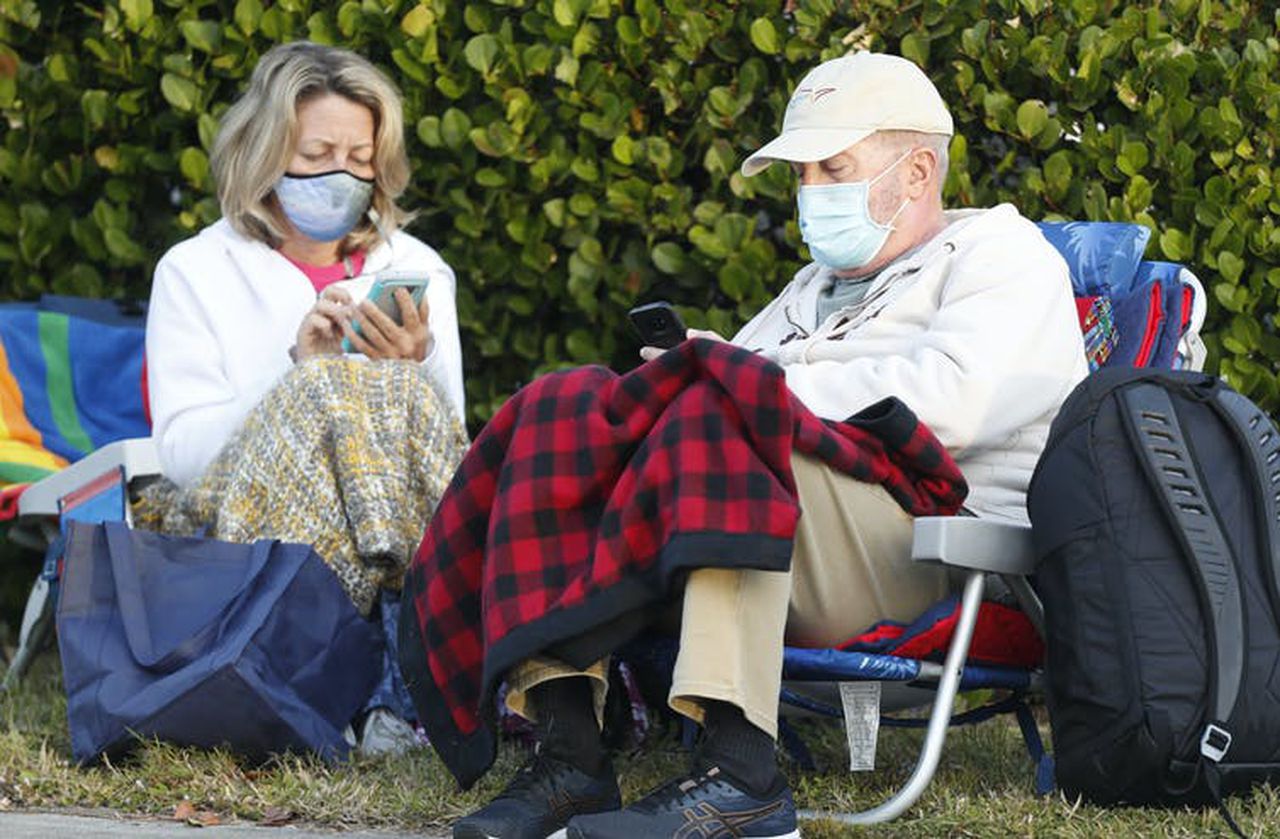
After the initial excitement following the authorization of the first COVID-19 vaccines, a harsh reality set in. People who want a vaccine can’t get it, some counties have more than others and older people are camping out for it the way they once might have for tickets to a Bruce Springsteen concert.
All of this would seem to be an indication of supply chain problems or systems breakdowns. In fact, it’s more about a shortage of employees to support the supply chains and distributions. Some states are even considering calling up the National Guard.
I am an expert on supply chains, and I construct models and algorithms to identify how to enhance their operations as well as to identify their vulnerabilities. Labor problems – and a lack of taking them into account – have contributed in a major way to these delays. My recent paper studied the effect of labor constraints on supply chains and possible disruptions. It quantifies the effects on product flows, firm costs and consumer prices of changes in labor availability and productivity.
From maker to market
As countries evolved from agrarian societies, where food and other goods were consumed close to where they were produced, businesses became more complicated and spread out. Supply chains emerged as networks that tie raw material providers with other suppliers, manufacturers and partners, such as warehouse managers and freight service providers.
Supply chains are networks with links corresponding to important activities of production, transportation, storage and distribution. Pathways in supply chains carry the flow of products from origin nodes to the destinations.
Before the 1990s, supply chains focused on cost, efficiency and speed but were not sufficiently agile to adapt to changing demands as well as possible disruptions. Just-in-time had become the dominant strategy for manufacturers of an immense range of products, from electronics to fast fashion.
With COVID-19, manufacturers quickly realized that just-in-time delivery no longer worked. Supply chains, from food to PPEs, medicines and vaccines, have been revolutionized by high technology over the past decade. Examples include using sensors to gauge temperature in cold chains and GPS to track valuable products as they move around the globe.
Sophisticated optimization programs ensure that delivery vehicles are routed in the most efficient manner, with packages that you order online arriving at your door within days. Algorithms anticipate your product needs and orders.
What the COVID-19 pandemic has dramatically revealed is that, without the human element, meatpacking plants cannot function; fresh produce cannot be picked; grocery stores cannot be shelved; PPEs cannot be produced and distributed, and that COVID-19 vaccine production may lack the manpower to ensure product quality and efficacy as well as its distribution.
Finally, without health care workers to administer the COVID-19 vaccines, the battle against the coronavirus cannot be won. And many hospitals are already short-staffed because of the pandemic.
Joe Raedle via Getty Images
Including labor in supply chain vulnerability analysis
In my work, I investigate how to optimize perishable product supply chains, from blood and food to pharmaceuticals and vaccines, so that needed products are delivered in a timely manner and in good quality and without spoiling.
To do this effectively, I calculate the resources that are needed and associated costs. I also investigate what happens if there are insufficient resources, whether the warehouses don’t have enough capacity, the supplies needed for production are limited or there are not enough trucks for deliveries.
Much of my work also entails mitigation against disasters. We are in the midst of a health care disaster that has adversely affected millions of workers in the United States and around the globe.
Much research has been done on identifying critical links in supply chains, inspired, in part, by various natural disasters impacting supply chain activities. But until recently, few researchers have quantified the impacts of labor disruptions on product supply chains, along with the associated costs.
This may be due, in part, to the fact that previous supply chain disruptions were localized in terms of both geography and time period. Mitigation and recovery procedures reduced the impacts.
Indeed, until the pandemic struck, few people paid much attention to the role of labor in the role of supply chains. And product shortages were few and far between for necessities from toilet paper to cleaning supplies.
Widespread pandemic
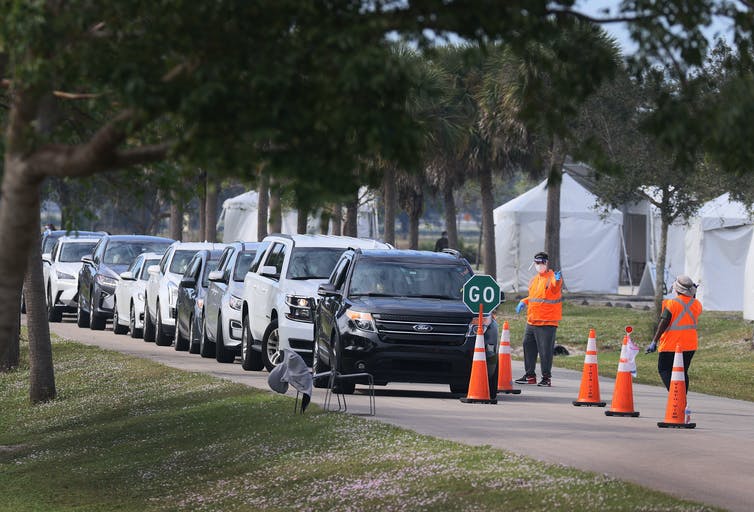
In this pandemic, the availability of labor for different supply chain network activities was disrupted due to illness, fear of contagion, morbidity, and the necessity of social and physical distancing. Grocery stores had bare shelves. Produce rotted in the fields since there was insufficient labor to pick and package it. Now vaccines lie fallow, while time is running out, since there are not a sufficient number of health care workers to administer them.
Furthermore, with the additional stresses and uncertainty placed on labor, the workers’ productivity suffered, some company leaders noted. It is estimated that disruptions to the labor force in fruit and vegetable production alone will cause millions of dollars in lost production, with the heaviest losses concentrated in large fruit‐ and vegetable‐producing states.
By mid-September, more than 42,534 workers at meatpacking plants had contracted the coronavirus, and over 203 had died. COVID-19 cases had been identified in at least 494 meatpacking plants.
Due to shortfalls in labor, competition among companies and organizations has also become an issue, with some nurses traveling thousands of miles to assist with COVID-19 patients. This has also resulted in increases in prices for labor with, for example, some traveling nurses getting paid as much as US$10,000 per week.
How workers are crucial to supply chains
I wanted to look at this in more depth, by quantifying the explicit inclusion of labor, its productivity and possible reallocations in the pandemic. To do so, I constructed computer-based models for product supply chains that are perishable, such as those for food, pharmaceuticals and vaccines. I also investigated the impacts of competition among organizations for labor.
The studies, currently in press, reveal the benefits of sharing workers as well as having labor reallocated to different supply chain network activities, as the needs arise. Proper training of workers may allow for greater mobility of labor across distinct supply chains. This has has been happening in Europe, where certain airline workers are being retrained to work in health care.
Relaxing constraints on labor, so that they can engage in other supply chain activities as needed, can have immense positive effects on product flows and even firms’ profits. On the other hand, a labor shortage in a single link, be it in freight, storage, manufacturing or processing, can result in a big decrease in product availability.
Until the days that supply chains are fully computerized and automated, labor will continue to be an essential resource that must be nurtured and supported. Getting through this pandemic will depend on labor as a critical resource in supply chains.
Anna Nagurney, John F. Smith Memorial Professor of Operations Management, University of Massachusetts Amherst
This article is republished from The Conversation under a Creative Commons license. Read the original article.
Recent Comments